REVIEW · VALENCIA
Essential Valencia: Local Culture and Gastronomy
Book on Viator →Operated by @curiosidadesvlc · Bookable on Viator
Valencia reads like a living photo album. I especially like Mercat Central for the real local-food vibe, and I also liked the way guide Gabriel ties the architecture to how Valencia thinks and governs itself. One thing to watch: each stop is brief, so this works best as an efficient sampler, not a slow, stay-forever kind of visit.
If you want an easy way to get your bearings, this is a great value: about 2.5 hours, English-led, and capped at 15 travelers. The route moves from Gothic landmarks to modernist streets, and you end at Restaurant Secret for a complimentary drink plus a reserved table, which is a smart way to turn sightseeing into a food plan.
In This Review
- Key highlights worth showing up for
- Getting started at Pl. de Manises for a smarter first walk
- Palau de la Generalitat: Gothic government that feels personal
- Torres de Serrans: the city entrance that frames your walk
- Barrio del Carmen: where old Valencia still breathes
- Valencia Cathedral: the largest Valencian temple, with strong presence
- La Lonja de la Seda (UNESCO): where trade looks like power
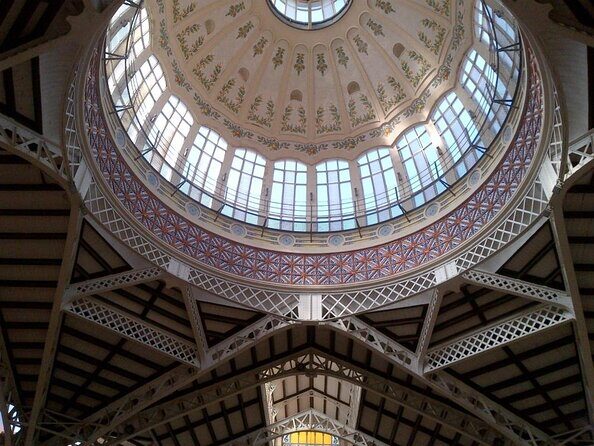
- Mercat Central de Valencia: a market stop that actually earns its time
- Estació del Nord: modernism in Spain’s best-seen form
- Ajuntament de Valencia: modernist civic style you can read fast
- Ending at Restaurant Secret with a reserved table and drink
- Price and value: why $39.72 feels fair for 2.5 hours
- Who this tour fits best (and who might want something else)
- Should you book Essential Valencia: Local Culture and Gastronomy?
- FAQ
- Is this tour offered in English?
- How long is the tour?
- What is the meeting point and where does it end?
- Are site admission tickets included?
- Is there a limit on group size?
- What happens if the weather is poor?
Key highlights worth showing up for
- Palau de la Generalitat: a Gothic palace that’s still tied to Valencian self-government
- La Lonja de la Seda (UNESCO): civil Gothic built for trade, not just worship
- Mercat Central de Valencia: a food-and-identity stop that feels proudly local
- Estació del Nord: modernism in full view at one of Spain’s most celebrated stations
- Small group pace: up to 15 people, so you actually get answers, not just walking
Getting started at Pl. de Manises for a smarter first walk
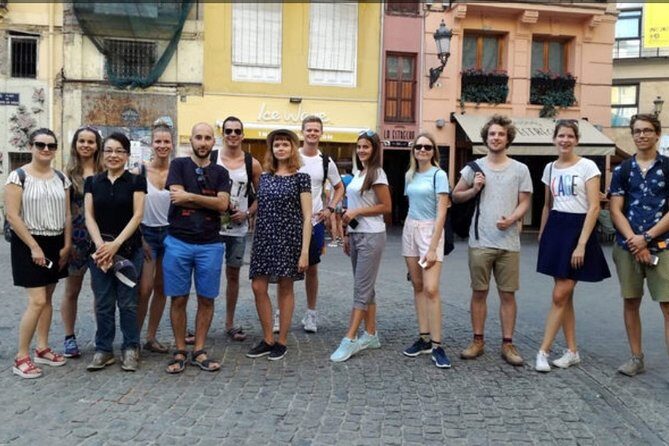
I like tours that help you read a city fast, and this one does. You meet at Pl. de Manises, right in Ciutat Vella, which puts you where Valencia’s story gets concentrated. Within minutes, you’re not just looking at buildings—you’re learning how they connect to civic power, trade, and everyday life.
The group size matters here. With a maximum of 15 travelers, it’s easier to keep track of where you are and to ask questions when something catches your eye. It also helps that the tour is designed for most travelers, and it’s offered in English with a mobile ticket, so there’s less fuss before you start moving.
Also: the route is weather-dependent. That’s not a dealbreaker, but it does mean you should wear shoes that handle cobblestones and be ready to keep the pace if the skies cooperate.
You can also read our reviews of more tours and experiences in Valencia.


Palau de la Generalitat: Gothic government that feels personal
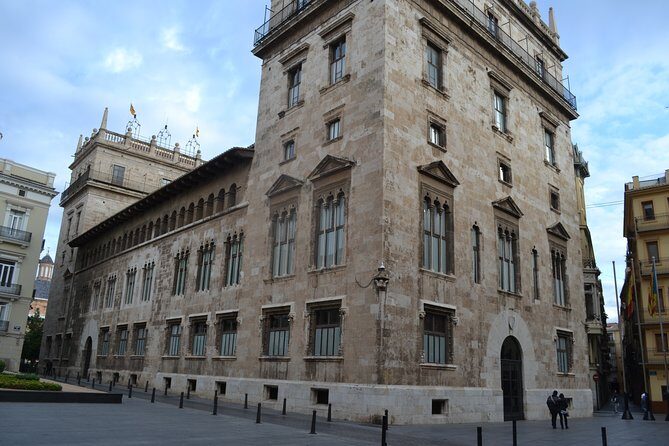
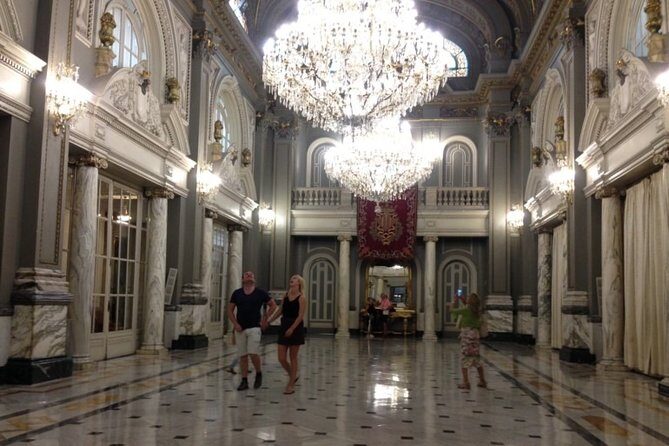
Your first major stop is the Palau de la Generalitat, a Gothic palace that served as the seat of Valencian self-government. I find it fascinating when a city’s political identity is baked into stone like this. It’s not some distant monument; it’s a place tied to how Valencians run their own affairs.
At this stop, look for the shift from church-shaped grandeur to civic grandeur. When you know what to watch for, you start spotting how authority is presented—through design choices meant to look stable, serious, and public-facing. Even when you only have around 15 minutes here, you can still get a clear sense of what makes the building feel unmistakably Valencian.
The big practical win: the stop includes a free admission ticket, so you aren’t managing extra ticket purchases while trying to absorb the details.
Torres de Serrans: the city entrance that frames your walk
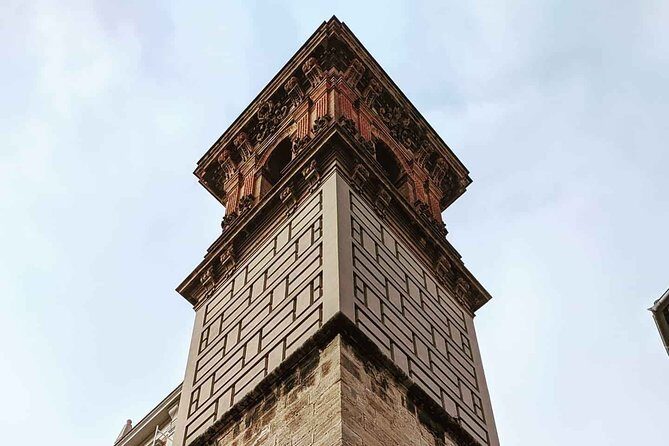
Next comes Torres de Serrans, a main entrance gate to the city. I love starting a day of wandering with a threshold like this, because gates act like the city’s punctuation mark. They help you understand where the old city begins and what the fortification mindset looked like in real urban life.
This is also a quick stop (about 10 minutes), but that’s not bad if you treat it like orientation. You’ll get the feeling of how Valencia was once protected and channeled into specific paths. When you’re later walking through Barrio del Carmen, it makes the narrow streets feel less random and more like a continuation of the same urban logic.
Again, free admission ticket is listed, so you can focus your attention on the architecture instead of the wallet.
Barrio del Carmen: where old Valencia still breathes
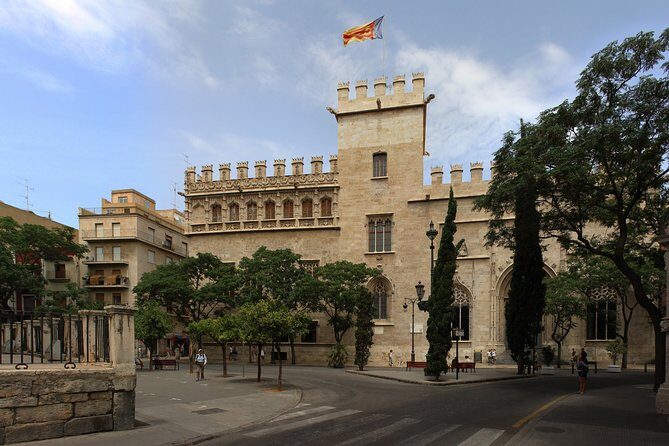
Then you step into Barrio del Carmen, old Valencia at its most classic. This is the kind of neighborhood you don’t really want to rush, but the tour gives you a useful first look. You get the feel of the area, the street scale, and the mood of the old city—before you decide where you’d like to linger afterward.
What makes this stop valuable is that it’s not just sightseeing. The goal is context: you’re learning why these buildings and streets matter. Once you know you’re in the historic core, you’ll start noticing details you would otherwise miss, like the way lanes bend, how entrances connect, and how daily life fits between major landmarks.
A small drawback for the neighborhood stop: since you’re spending about 15 minutes, you’ll likely want more time after the tour ends. That’s normal. Think of this as the map-reading phase, not the final wander.
Valencia Cathedral: the largest Valencian temple, with strong presence
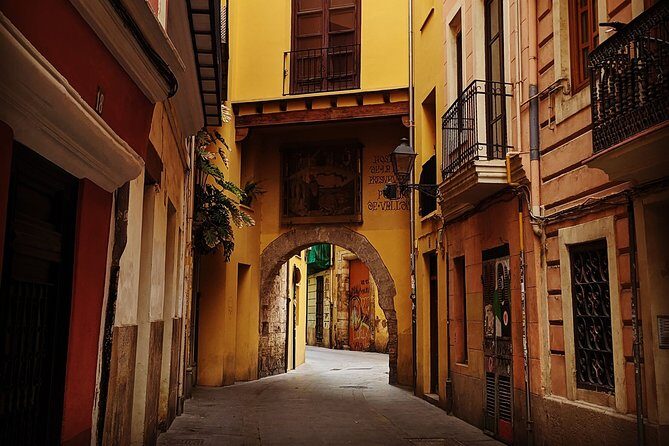
Valencia Cathedral is next, and it’s described as the largest Valencian temple. When you approach, you can feel why the tour includes it: it’s a statement building. Even if you’re not a hardcore cathedral person, the scale and central position change how you perceive the whole area.
This kind of stop works best when you treat it like a “big-picture” moment. Spend your short time noticing what dominates the space—how the cathedral’s size and style influence surrounding streets and squares. In just around 15 minutes, you can grasp why people in Valencia would consider it a cornerstone of local identity.
Admission is listed as free here too, which helps this tour keep its promise of being cost-friendly.



La Lonja de la Seda (UNESCO): where trade looks like power
One of the best stops is La Lonja de la Seda. It’s described as the best example of civil Gothic in the world and tied to UNESCO as intangible cultural heritage. That combo matters: you’re not just looking at decoration. You’re looking at a building that was designed for business, rules, and the kind of commerce that shaped the city.
This is the stop I’d recommend you pay extra attention to, even with only about 20 minutes. Civil Gothic can be hard to understand at first, especially if you’re more used to church Gothic. But once you’re thinking about function—contracts, meetings, the public face of merchants—the building’s design starts making sense.
If you want to get the most out of your time here, keep an eye on how the space communicates order. In a place like this, details often feel less like ornament and more like a system. And because it’s UNESCO-linked, it’s one of those moments where Valencia’s influence feels bigger than a single neighborhood.
Free admission is listed, which is a real advantage in terms of value.
Mercat Central de Valencia: a market stop that actually earns its time
Then you reach Mercat Central de Valencia, described as the market and pride of Valencians. This is where the tour name starts to make sense. Even though the route is architecture-forward, a market stop anchors the day in real taste.
I like markets for three reasons: you see what locals buy, you learn what’s in season, and you get a sense of everyday culture. Mercat Central is a place that can be enjoyed quickly, but it still gives you enough to understand why Valencians care about it. Even in about 10 minutes, you can take in the energy and the way the market supports daily life.
Practical tip: after this kind of stop, take mental notes of what you’d want to try later. The tour doesn’t give you a full meal experience inside the market (at least from the info you’re given), but it sets you up for better choices once you’re hungry and ready to eat.
Admission is listed as free, which is a nice way to keep the day simple.
Estació del Nord: modernism in Spain’s best-seen form
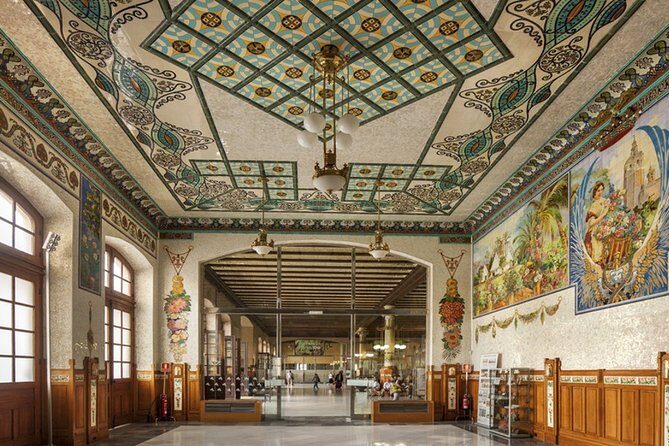
If you’re a fan of design, Estacio del Nord will likely be your favorite “wow” moment. It’s described as the most beautiful station in Spain, and the point is more than hype—it’s a celebration of Valencian modernism in full view.
This is one of those stops where the architecture isn’t a backdrop. The station is the attraction. In about 20 minutes, you can see how modernism uses line, form, and materials to make movement feel elegant. It also gives your feet a rest between tighter old-city streets.
I also appreciate that this stop changes the mood. You’ve been dealing with Gothic and old Valencia, and now you’re in a more modern visual language. That contrast helps the whole day feel balanced instead of repetitive.
Admission is listed as free, which keeps the experience accessible.
Ajuntament de Valencia: modernist civic style you can read fast
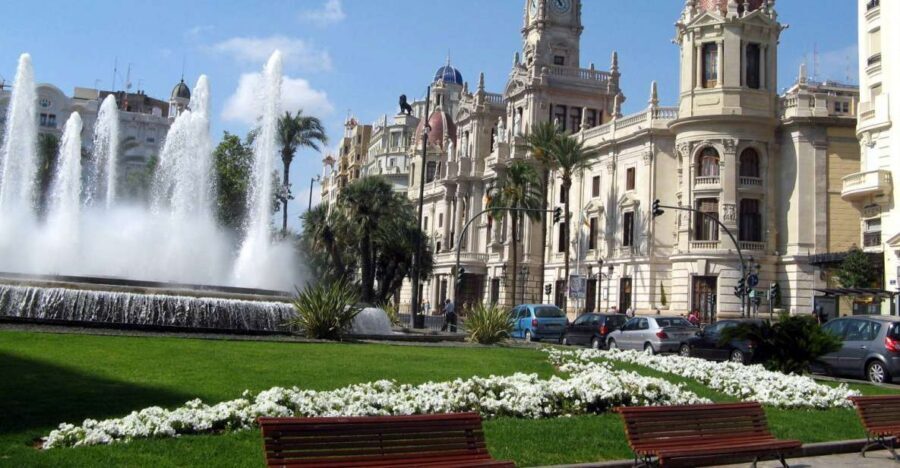
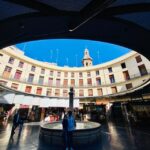
Next up is Ajuntament de Valencia, the modernist municipal seat. Civic buildings like this have a different vibe than churches and markets. They’re meant to look official, orderly, and forward-facing—even when they’re surrounded by older structures.
This stop is about 20 minutes, so it’s long enough to actually notice the design choices rather than just pass by. I’d use this time to think about how Valencia presents itself to residents and visitors: not only as a historic city, but as a city with modern identity.
Again, admission is listed as free for this stop, and that matters because it keeps your total spend aligned with what you’re paying for the guide and the route.
Ending at Restaurant Secret with a reserved table and drink
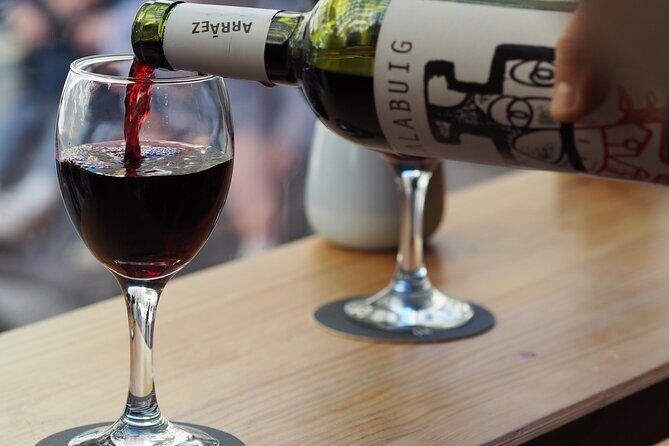
You finish at Restaurant Secret in Ciutat Vella (C/ de Sant Martí, 11). The tour includes a complimentary drink and a reserved table, which is a smart way to end a sightseeing day without forcing you to solve everything at the last second.
This is also where you can connect the culture to gastronomy in a practical way. Even if you’re not in the mood for a full sit-down meal right away, the reserved table lowers the stress level. You can order what fits your appetite and energy instead of grabbing the first thing you see.
One note: since the tour doesn’t specify what you’ll eat here, treat this as a start point for your own decision-making.
Price and value: why $39.72 feels fair for 2.5 hours
At $39.72 per person for about 2 hours 30 minutes, you’re paying for guided context across major stops—government architecture, a UNESCO-linked trade site, a major market, and a top modernist station. The value is strongest because multiple sites list free admission tickets, which means you don’t face surprise add-on costs.
The group cap of 15 people also helps justify the price. In a larger group, you’d lose time and attention. Here, you can ask questions, and you’re less likely to get left behind when the route moves briskly.
The main “value trade-off” is time per stop. You only get about 10 to 20 minutes at each location, which is perfect for sampling and orientation, but not for deep, slow exploration. If you love spending hours inside museums or lingering for photos, you’ll probably want to come back later on your own.
Who this tour fits best (and who might want something else)
This experience is ideal if you:
- want a structured introduction to Valencia’s big landmarks without overplanning
- like architecture with local meaning, not just photo ops
- want a short market moment to connect the day to food culture
- prefer an English guide who can explain what you’re seeing
You might want a different style of tour if you:
- hate walking on cobblestones and would rather stick to one area for a long time
- expect lots of time inside each site
- want a full food-and-drink program with specific tastings (this ends with a drink and reserved seating, but it’s not presented as a detailed tasting tour)
Should you book Essential Valencia: Local Culture and Gastronomy?
I think you should book it if you want an efficient, meaningful introduction to Valencia with stops that cover civic power, trade heritage, old streets, and modernist design. The price feels reasonable, the group size is small, and the end at Restaurant Secret makes it easy to keep eating local instead of hunting around hungry.
I’d hold off only if you need long time at each site or if you’re traveling during a period where you expect rain. The tour requires good weather, and with a route that moves between multiple outdoor and street-facing stops, bad weather can change the feel fast.
If you’re the type who likes to return later for deeper dives on your favorites, this tour is a great way to pick those favorites quickly.
FAQ
Is this tour offered in English?
Yes. The tour is offered in English.
How long is the tour?
It runs for about 2 hours 30 minutes.
What is the meeting point and where does it end?
You start at Pl. de Manises, 4, Ciutat Vella, 46003 València, Valencia, Spain. You end at Restaurant Secret, C/ de Sant Martí, 11, Ciutat Vella, 46002 València, and the tour includes a complimentary drink and a reserved table there.
Are site admission tickets included?
Yes. Each listed stop shows admission ticket free.
Is there a limit on group size?
Yes. The tour has a maximum of 15 travelers.
What happens if the weather is poor?
The experience requires good weather. If it’s canceled due to poor weather, you’ll be offered a different date or a full refund.