REVIEW · VALENCIA
Valencia: Historic Center Audio-Guided Tour with Earphones
Book on GetYourGuide →Operated by Tourism Hub (Valencia) · Bookable on GetYourGuide
One audio set can make the old streets feel readable again. This Valencia Historic Center tour uses provided earphones and a preloaded guide, so you get the story of the sights without hunting for service or pulling out your phone. I like that it’s paced for you, not for a group stampede, and you can pause when a façade or chapel detail catches your eye.
What I really liked is how it steers you through major stops you’d otherwise piece together on your own—think La Lonja de la Seda and the Valencia Cathedral—while also weaving in smaller architecture cues. The second win: it offers the audio in English, Spanish, and Russian, which matters in a city where a few extra minutes of language clarity can turn a quick glance into real understanding. The one drawback to consider is that you’re tied to the audio flow: if you miss a section, you can’t easily rewind, and the experience isn’t meant for detours or random reroutes.
In This Review
- Key highlights you’ll feel fast
- Starting at Estación del Norte’s Art Nouveau Tourism Hub
- How the audio works (and what it means for your pacing)
- The must-hit route through Valencia’s main squares and markets
- Plaza de la Virgen and Neptune’s Turia fountain
- Plaza de la Reina and the central market area
- Central Market stop feel: great if you want orientation
- La Lonja de la Seda: Valencia’s 15th-century power stop
- Religion on every corner: from Santos Juanes to the Cathedral complex
- Church of Santos Juanes: Baroque meets Valencian Gothic
- Valencia Cathedral and Archbishop’s Palace area
- Additional church stops you’ll encounter
- Modern Valencia’s civic and museum layer: Silk Exchange, markets, and more
- Ceramics Museum: Rococo and Neoclassical tones
- Historical Library of the University of Valencia and Royal Seminary complex
- Almoina Museum and Casa de Punto de Gancho (Art Nouveau)
- Central Valencia’s theatrical and financial architecture
- Post Office building: modernist style
- Main Theatre and the Bank of Valencia
- Price and logistics: where the $9 value really comes from
- Who this tour is best for (and who should skip it)
- My booking advice: should you go?
- FAQ
- Where do I pick up the audio guide?
- Is a live guide included?
- How long is the tour?
- What languages are available on the audio guide?
- Do I need to use my mobile phone?
- Are earphones included?
- Is transportation included?
- Is the tour wheelchair accessible?
- What should I bring?
- FAQ
- Is cancellation free?
Key highlights you’ll feel fast
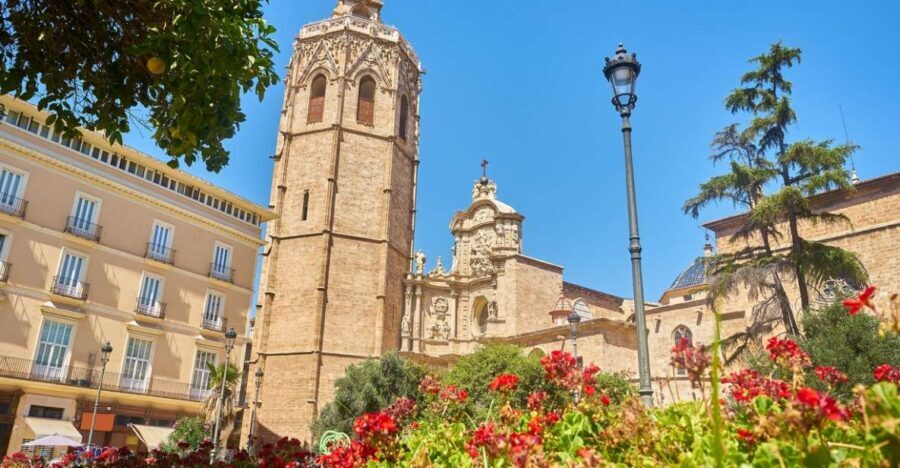
- Start at Estación del Norte at the Tourism Hub in Valencian Art Nouveau style
- Earphones included so you can listen hands-free without using your phone
- 15th-century focus at La Lonja de la Seda, plus modernist and museum stops
- Religious architecture route covering multiple churches and palaces
- Your pace matters, but you’re still following the built-in order of the audio
- Short, practical explanations—great if you want highlights, annoying if you want deep details
Starting at Estación del Norte’s Art Nouveau Tourism Hub
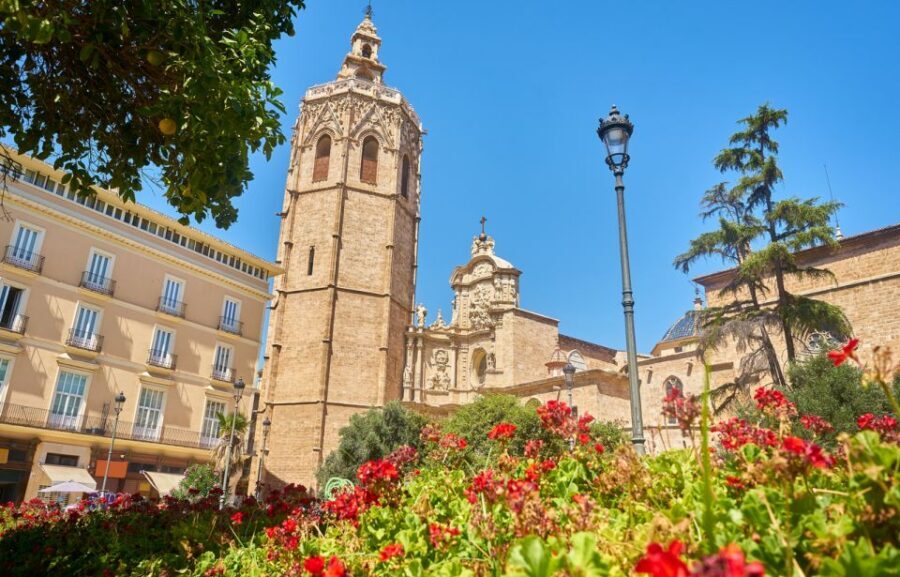
Your tour begins at the Tourism Hub office inside Valencia’s Estación del Norte. This matters more than you might think, because you’re not just collecting a device—you’re starting in a place that already looks like a “site.” The Estación del Norte hub is known for its Valencian Art Nouveau character, and it’s a good first hit of local style before you step into the older historic lanes.
When you get set up, you’ll receive the audio guide and earphones. This is the practical difference versus many self-guided tours that basically hand you a phone and hope you’ll manage everything. Here, the system is built for listening while walking. If your phone battery is already stressed or you don’t want to mess with maps in the middle of a walking route, that’s a real quality-of-life win.
You’ll also choose among English, Spanish, and Russian audio. If you’re the kind of traveler who wants history in your mother tongue, pick carefully here. One thing I’d say is that the best audio tours still depend on language fit: you’ll follow the story better and notice more when the explanations land instantly.
You can also read our reviews of more guided tours in Valencia


How the audio works (and what it means for your pacing)
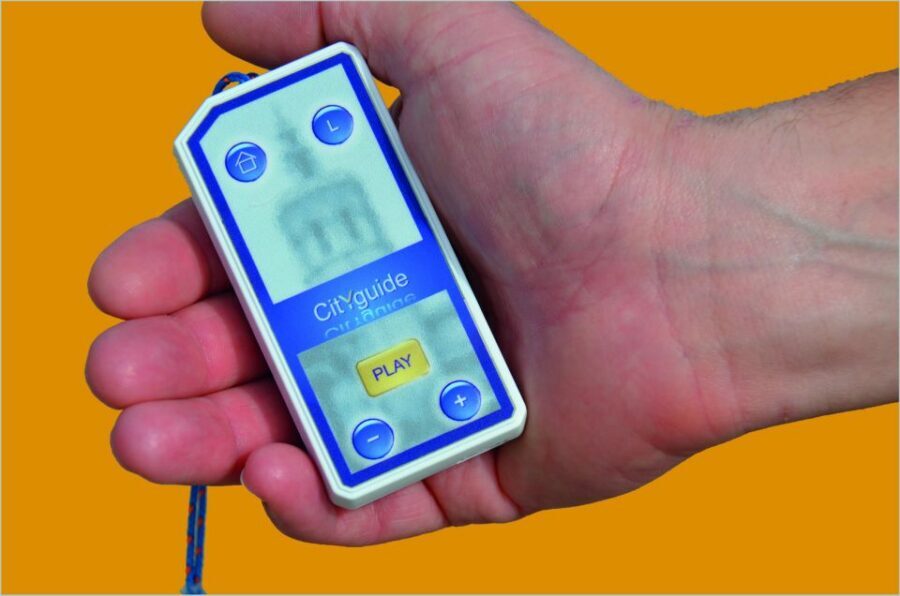
This tour is designed for solo walking at your pace. You don’t need your mobile phone, and the audio guide is what drives the sequence. The route is focused on central Valencia’s architecture and key sights, with a steady march from market squares to Gothic-Baroque churches to museums and civic buildings.
Here’s the practical meaning of that: you can linger. You can step back to frame a church doorway, or stop for a photo, without worrying that you’ve “lost” a live guide or that your timing is now ruined. That flexibility is part of why self-guided audio tours can feel calmer than group tours.
Now the other side. Audio tours work only if you stay attentive to the device. One traveler’s experience was negative for a reason that’s common in self-guided systems: if you miss a chunk of audio and you can’t easily go back, you may feel like you didn’t get the point at that stop. Also, the built-in order limits detours—this isn’t the kind of tour where you can freely reorder the stops when something else catches your eye.
So my advice is simple:
- Plan to keep your ears on for the whole route.
- Give yourself small “listening breaks” at major points, not constant multitasking.
- If you’re the type who wanders off the path a lot, consider whether you’d rather use your phone for a more flexible plan.
The must-hit route through Valencia’s main squares and markets
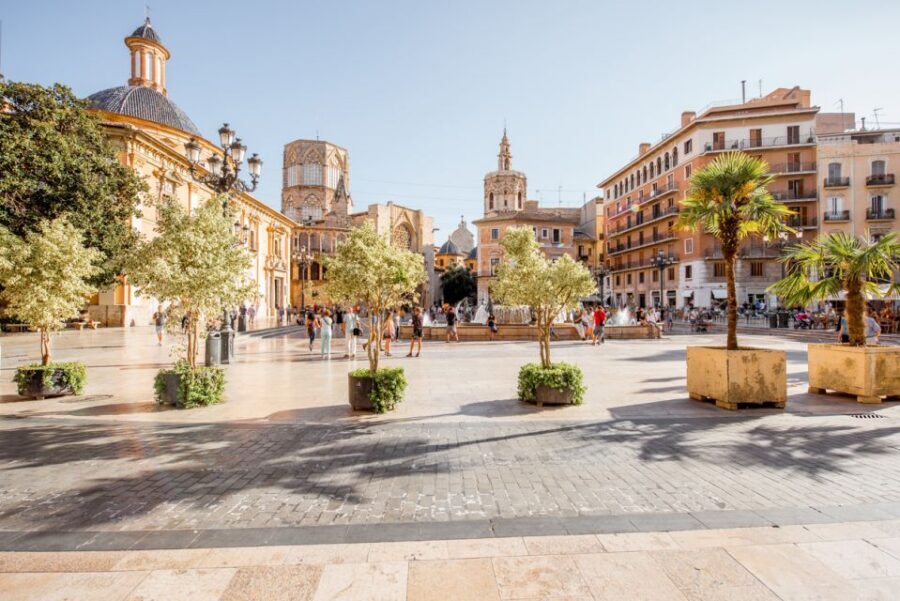
Your audio route loops through some of Valencia’s core public spaces, and that’s where the city texture comes through: fountains, domes, plazas with people moving in every direction, and buildings that make the past feel present.
Plaza de la Virgen and Neptune’s Turia fountain
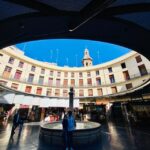
You’ll reach Plaza de la Virgen, a classic central square where the main visual anchor is the Turia fountain featuring Neptune. In an audio format, it helps to know what you’re looking at: you’re not just passing through. You’re learning why the city puts myth and identity into public art.
If you’re short on time in Valencia, a square like this is a good “anchor point” because it’s both a landmark and a social hub. Even without entering every building, the plaza gives you a sense of how locals use the center.
Plaza de la Reina and the central market area
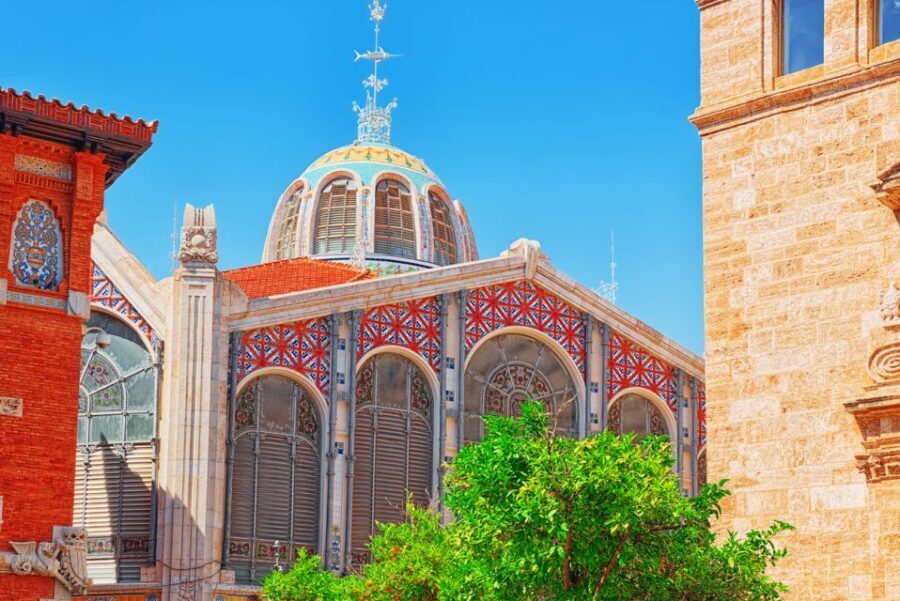
Next, your route goes to Plaza de la Reina and brings you into the atmosphere around the central market. The audio guide helps connect what you see to what it represents—especially the colorful dome that signals the market’s importance. If you love architecture, markets are often where styles and craftsmanship get expressed most confidently.
One practical tip: don’t treat the market area like a quick photo stop. Plan a few minutes to look up at the dome and scan the façades around you. That’s usually where the audio will make sense, because the explanation can point you toward details you’d otherwise miss.
You can also read our reviews of more historical tours in Valencia




Central Market stop feel: great if you want orientation
This part of the route is especially useful if you’re not sure where Valencia’s “old center” narrative starts. The audio guides you through the city’s rhythm so you don’t have to guess which street matters most.
La Lonja de la Seda: Valencia’s 15th-century power stop
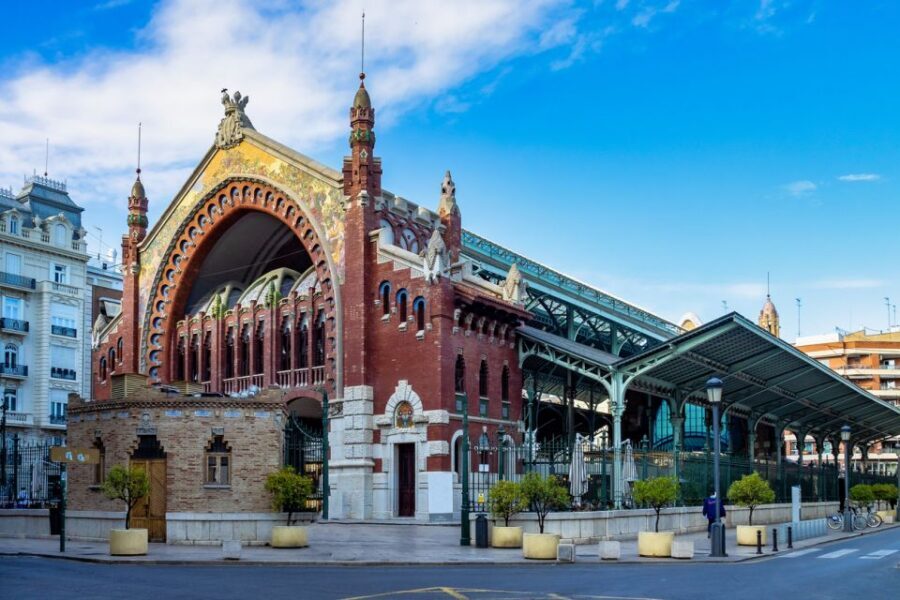
One of the strongest segments of this tour is the jump back to the 15th century at La Lonja de la Seda (Silk Exchange). Even if you only catch a summary, this is the kind of site that rewards paying attention. It’s a major moment in Valencia’s story, and the audio doesn’t just label it—it frames it as part of the city’s golden-age trading power.
Why this is valuable on an audio tour: you’re surrounded by stone and scale, but without context those impressions can stay vague. When the audio explains what the Silk Exchange represented and how it fits Valencia’s growth, the building stops being “a beautiful structure” and becomes a clue to the whole city.
If you’re the type who likes to move briskly, this is still a good stop. If you like details, you’ll also appreciate that this segment is built into the route’s flow, so you can linger without losing the plot.
Religion on every corner: from Santos Juanes to the Cathedral complex
Valencia’s center is packed with churches, and this audio route leans into that. You’re guided to multiple religious sites, and the explanations focus on architecture and identity rather than only religious function.
Church of Santos Juanes: Baroque meets Valencian Gothic
You’ll visit the Church of Santos Juanes, a 14th-century church known for the mix of Baroque influence and Valencian Gothic features. This is a good example of why the audio format works: when you know what styles to look for, you start seeing transitions in the façade and layout.
Also, this is the kind of stop where you might be tempted to rush because there’s no single “one perfect view.” The audio helps you slow down with purpose.
Valencia Cathedral and Archbishop’s Palace area
Next comes the Valencia Cathedral and the Archbishop’s Palace. Even if your interest in cathedrals varies, this is a key civic-religious cluster that shows how power, faith, and architecture overlap in one neighborhood.
The drawback to mention is also relevant here: some audio tours can end up feeling like a list—look, admire, move on. The route you’re following here does include specific points, but if you’re craving very detailed explanations per stop, you may find the information a bit compressed. That said, a compressed approach can be perfect if you want “the essentials” instead of reading for an hour.
Additional church stops you’ll encounter
Your audio route also points you toward churches such as:
- Church of San Juan Bautista
- Church of Santo Tomás Apóstol and San Felipe Neri
- Church of San Juan del Hospital
- Basilica de la Vigen de los Desamparados
- Church of Santa Catalina
That’s a lot of stops, and it can feel like sensory overload if you’re trying to memorize every fact. The smart move is to pick one style theme to focus on during this stretch—for example, “where do I see Gothic elements versus later Baroque touches?” Then let the rest be context, not homework.
Modern Valencia’s civic and museum layer: Silk Exchange, markets, and more
After the religious block, the tour shifts to civic and cultural architecture—where Valencia’s later centuries show up in different styles and purposes.
Ceramics Museum: Rococo and Neoclassical tones
You’ll get to the Ceramics Museum, where the audio references Rococo and Neoclassical styles. Even if ceramics museums sound niche, the architectural wrapper is part of the story. And if you’ve been seeing churches for a while, a museum stop helps reset your brain while still keeping the “architecture first” approach.
Historical Library of the University of Valencia and Royal Seminary complex
The audio also brings you to the Historical Library of the University of Valencia and the Royal Seminary complex. This is one of those segments where the “why it matters” can be easier to miss unless you listen. Educational and religious institutions often share architectural habits: symmetry, authority in scale, and design choices that signal learning and permanence.
If you’re into the mechanics of cities—who educated people, where tradition lived, why buildings were built in certain eras—these are the stops that turn the center from a pretty walk into a coherent story.
Almoina Museum and Casa de Punto de Gancho (Art Nouveau)
You’ll also hear about the Almoina Museum and the Art Nouveau Casa de Punto de Gancho. This is helpful for two reasons:
- You see how Valencia doesn’t only live in Gothic churches.
- You get at least a sample of Art Nouveau’s influence, which also matches the Art Nouveau theme of your meeting hub.
It also makes the start-to-finish arc feel tighter: you begin with Art Nouveau in the Tourism Hub area, then later you’ll see examples of that same styling language around the center.
Central Valencia’s theatrical and financial architecture
This audio route doesn’t limit itself to “old stuff.” It also points you toward modernist and civic landmarks you can walk past with better understanding.
Post Office building: modernist style
You’ll hear about the Post Office building with its modernist look. That’s a useful contrast after centuries of stone religious architecture. It also trains your eye: you start noticing how a style signals function—communications in one era, authority in another.
Main Theatre and the Bank of Valencia
The route includes the Main Theatre and the Bank of Valencia. Even if you don’t go inside (and the tour is self-guided by audio, so you may or may not enter anything depending on access), these exteriors anchor the story of how the city organized culture and finance in later periods.
If you like architecture but hate long museum time commitments, these stops can be a perfect middle ground. You get context without having to plan tickets and entry windows around your listening pace.
Price and logistics: where the $9 value really comes from
At around $9 per person and roughly 1.75 hours, this tour is priced for short, high-impact sightseeing. The value isn’t that you’re getting a live expert for hours. The value is that you’re getting a structured narrative you can follow without your phone, plus provided earphones.
Is it the cheapest way to see Valencia’s center? Maybe not. But compared to paying for multiple individual tickets or hiring a live guide for every topic, this price can still make sense if you:
- want orientation fast,
- enjoy hearing architectural explanations while walking,
- and prefer not to manage an app on your device.
Two caution notes, based on how the experience actually works:
- If you lose audio or don’t pay attention, the system can leave you feeling like you missed the point.
- If you expected “monument list at the start” to guide your priorities, this format may feel less helpful unless you’re okay following the order as given.
And if you love deep, detailed history at each stop, this style might feel too summarized. One positive experience noted that the historical data was reduced to key points. That’s a feature for some people and a bug for others.
Who this tour is best for (and who should skip it)
You’ll likely enjoy this tour if you want:
- a walkable introduction to central Valencia’s architecture, with listening support,
- a route built around major landmarks like Central Market and La Lonja de la Seda,
- and enough structure to feel like you’re not guessing your way through the city.
It may not be ideal if:
- you strongly prefer a live guide who can answer questions on the spot,
- you need frequent replays or rewinds (the audio experience is more linear),
- you want to freestyle your itinerary and reshuffle stops whenever you feel like it,
- or you’re hoping for very long, detailed explanations for every monument.
Also, consider language fit. You’ll have options, but if you pick a language you’re less comfortable with, you’ll understand less than you think you will—especially in churches, where architecture terms can get specific.
Good news: the tour is listed as wheelchair accessible, so it’s at least designed with that in mind.
My booking advice: should you go?
If your goal is a focused, 1.75-hour walk that connects Valencia’s big-name sights—market, Silk Exchange, cathedral-area churches, and a few cultural stops—then this tour is a solid buy for the money. The provided earphones and the no-phone setup help you stay in “walk mode,” which is a big part of why self-guided audio works at all.
I’d book it when:
- you want an easy way to understand what you’re looking at,
- you’re okay with a more highlight-style narrative,
- and you can stay attentive while listening.
I’d skip it (or plan differently) if you:
- need flexibility to reorder the route,
- rely on the ability to rewind when you miss a section,
- or want a slower, more interactive style of history.
If you match the tour’s rhythm, you’ll leave with a clearer map of Valencia’s center and a better eye for architectural details you can spot long after the earphones come off.
FAQ
Where do I pick up the audio guide?
You pick up the audio guide at the Tourism Hub office in Valencia’s Estación del Norte.
Is a live guide included?
No. This experience is audio-guided and does not include a live guide.
How long is the tour?
The tour runs for about 1.75 hours.
What languages are available on the audio guide?
The audio guide is available in English, Spanish, and Russian.
Do I need to use my mobile phone?
No. The tour is designed so you don’t need your mobile phone.
Are earphones included?
Yes. Earphones are included with the audio guide.
Is transportation included?
No. Transportation is not included.
Is the tour wheelchair accessible?
Yes, the tour is listed as wheelchair accessible.
What should I bring?
Bring a passport or ID card, and wear comfortable shoes.
FAQ
Is cancellation free?
The experience offers free cancellation up to 24 hours in advance for a full refund.