REVIEW · VALENCIA
Essential Valencia Tour
Book on Viator →Operated by TRENCADÍS Turisme Cultural · Bookable on Viator
A good first walk makes a city click. This Essential Valencia Tour gives you a fast, friendly route through the historic core, from grand buildings to everyday market life. You’ll move at an easy walking pace and get a clear sense of what matters most in Valencia’s old center.
I especially loved how the guide focused on the big stories without making it feel like a lecture. Two highlights for me were the time at La Lonja de la Seda and the way the Mercat Central stop connects architecture to real local rhythms.
One thing to consider: the tour depends on good weather, and on a rare occasion timing can feel a little off if the group falls behind.
In This Review
- Key things to know before you go
- Getting oriented in Valencia’s old center in two hours
- Torres de Serranos to Plaça de la Mare de Déu: your practical route
- Ajuntament de Valencia: neoclassical power up close
- Mercat Central de Valencia: quick market flavor, not a food tour
- A major Baroque church and the city’s first commercial square
- La Lonja de la Seda (UNESCO): the longest stop for a reason
- Santa Catalina Church and the Caterineta bell tower
- Valencia Cathedral: three doors, one big architectural lesson
- Basilica de la Virgen de los Desamparados and the mood of Valencia
- The Gothic headquarters of Valencian government and the surrounding squares
- Price and value: why $15.42 can work for the Essentials
- The guide quality: what you should expect in practice
- Weather, walking pace, and who it suits best
- Should you book the Essential Valencia Tour?
- FAQ
- What’s the duration of the Essential Valencia Tour?
- How much does the tour cost?
- Where does the tour start and end?
- Is there a mobile ticket?
- Are admission tickets included for all stops?
- What’s the maximum group size?
- Is the tour dependent on weather?
- What’s the cancellation timing?
Key things to know before you go
- Starts at Torres de Serranos and finishes near the Cathedral area, so it’s simple to layer on your own exploring after.
- UNESCO-listed La Lonja de la Seda gets the longest stop, so you’re not just snapping photos and moving on.
- Mercat Central is short but real—you get the market atmosphere without eating up your whole morning or afternoon.
- Several major sights have free entry, but City Hall and La Lonja don’t, so plan for that.
- Small group size (max 20) keeps the experience personal and helps you ask questions along the way.
- Mobile ticket means you can keep it on your phone and go.
Getting oriented in Valencia’s old center in two hours
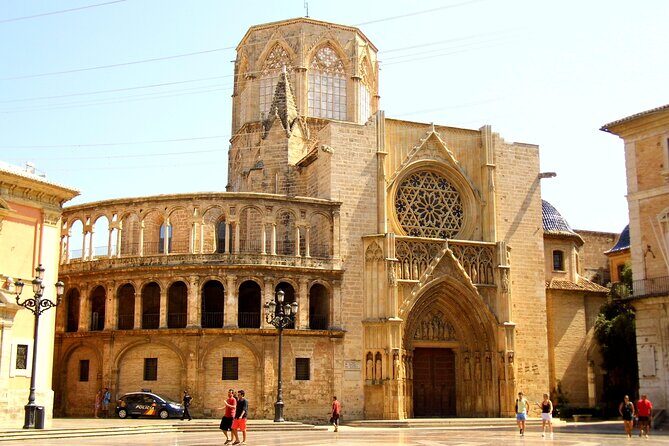
Valencia can feel big at first, especially if you land near the beach and then try to picture the old city. This tour is designed to solve that problem. In about two hours, you’ll hit the center’s most recognizable landmarks and learn how they connect.
The route is compact, and the itinerary is built around walking between major points: government, trade, religion, and public squares. That mix matters, because Valencia isn’t only about one “must-see.” It’s about how different eras shaped the same streets you’ll walk today.
You’ll also end in a smart spot. Finishing at Plaça de la Mare de Déu puts you right where it’s easy to keep going on your own—especially if you want to linger near the Cathedral complex and nearby lanes.
You can also read our reviews of more tours and experiences in Valencia.


Torres de Serranos to Plaça de la Mare de Déu: your practical route
Your walk begins at Torres de Serranos (C. de la Blanqueria, 1). That’s a landmark you can’t miss, and it helps you anchor the whole tour mentally from the first minute. If you’re trying to learn Valencia fast, starting by the city’s defensive gate is a good cue: you’re entering the older heart of the city.
The tour ends at Plaça de la Mare de Déu (Carrer de Plaça de la Mare de Déu, 4). That location is useful because it naturally funnels you toward the Cathedral area. After your guide finishes, you won’t feel like you’ve been dropped in an empty corner—you’ll be set up for a smooth continuation.
The tour is near public transportation, which is handy if you want to combine it with another activity later. And because it’s limited to up to 20 travelers, it’s easier to keep track of where you are in the group.
Ajuntament de Valencia: neoclassical power up close
The tour opens with Ajuntament de Valencia, the City Hall. It’s Neoclassical, which is a nice change of pace if you’re expecting only Gothic and Baroque. The building is known for its striking presence, and you get a quick, focused look early on so you can calibrate the style of the city.
The stop is brief—about one minute—so think of it as an orientation moment. Your guide’s job here is to point out what you should notice rather than trying to cover everything. If you want photos, this is where you’ll want your camera ready.
One consideration: since admission isn’t included for this stop, don’t plan on going inside unless you’ve arranged entry on your own. Even if you skip the interior, it’s still a strong “first impression” structure.
Mercat Central de Valencia: quick market flavor, not a food tour
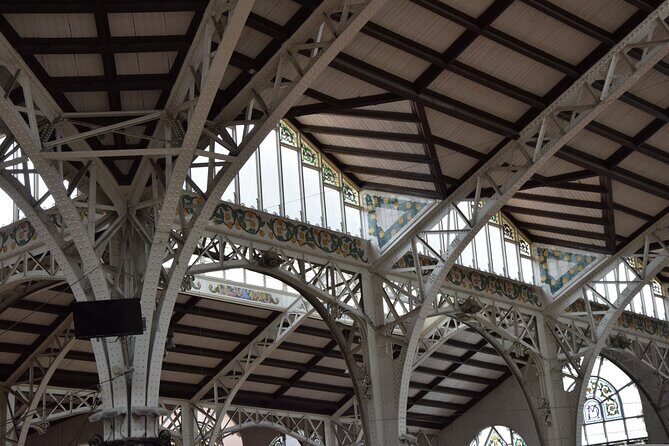
Next comes Mercat Central de Valencia, the central market and a symbol of the capital’s daily life. The time is about five minutes, so this is more about atmosphere and context than browsing every stall.
This stop is valuable because it shows Valencia as a living city, not a museum. The market keeps supplying fresh products, and that continuity is part of why Valencia feels so grounded. Even if you only take a quick look, you’re reminded that the city’s big monuments grew from real economic and social needs.
Admission is free here, which makes it easy to enjoy without extra planning. If you want to extend the market experience after the tour, you’ll know exactly where to return.
A major Baroque church and the city’s first commercial square
Midway through, the walking route includes two stops that tell you how Valencia moved between spiritual life and commerce.
First is an important church in Valencia with a very prominent Baroque style. Baroque tends to be dramatic, and even when you’re only stopping briefly, it helps you understand how later styles layered on top of earlier city identity.
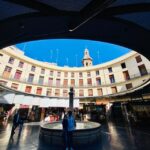
Then you’ll pass by the first commercial square in the city, famous for its shape. This kind of stop is sneaky-useful: it teaches you that the layout of streets and squares wasn’t random. It was built to support trade and public activity.
Because the itinerary doesn’t give detailed entry information for these two moments, I suggest treating them as “look and learn” stops. Get the big visual ideas, then come back later if you want deeper exploration.




La Lonja de la Seda (UNESCO): the longest stop for a reason
The most time goes to La Lonja de la Seda, and with good reason. It’s one of the great examples of European Civil Gothic architecture and it’s a UNESCO World Heritage Site. This is where the tour shifts from quick photo stops into a deeper architectural moment.
The stop is about 25 minutes, which gives you enough time to actually notice details instead of rushing. You’ll see why this building is tied to Valencia’s trading past, and the guide’s explanation helps you read the structure like a story.
Admission isn’t included here, so plan for possible entry costs if you want to go inside. If you’re the type who loves architecture and symbolism, this is the stop where it’s most worth it to pay attention to what’s being pointed out. If you’re less interested in ticketed interiors, you can still benefit from the exterior and the guide’s framing—but your experience will feel fuller if you enter.
Santa Catalina Church and the Caterineta bell tower
After La Lonja, you reach Iglesia de Santa Catalina (Santa Catalina Church). The standout here is the bell tower called the Caterineta, one of the city’s symbols. Even if you only get a quick look (about two minutes), this is a classic “Valencia skyline” stop.
This part of the tour works well because it balances the heavier architectural tone of La Lonja. You’re back in the street-level feel of the city, with a landmark that’s immediately recognizable.
Admission is free, so there’s no added decision cost. If you like to collect symbols while you travel—bell towers, domes, unique facades—this is a solid one to add to your mental map.
Valencia Cathedral: three doors, one big architectural lesson
The next section centers on the Cathedral of Valencia. The guide will help you observe its three doors and its peculiar architecture, which is a great way to approach a huge building without getting lost in details you didn’t come for.
It’s smart to focus on the doors and style rather than trying to memorize everything. Cathedrals can be overwhelming, and a short tour stop works best when you leave with 2-3 clear things you noticed.
If you’re planning to spend more time on your own later, this is a good moment to identify the overall layout. You’ll know what to look for when you return.
Basilica de la Virgen de los Desamparados and the mood of Valencia
Then you’ll visit Basilica de la Virgen de los Desamparados, which holds the image of Valencia’s patron saint. This stop is about religious identity, not just architecture, and it adds an emotional layer to the tour’s earlier focus on power and trade.
The stop is only about five minutes, with free admission, so it’s not meant to replace a longer cathedral visit. Still, it’s a meaningful “why this city cares” moment. You’ll get a sense of the living cultural importance behind the historic center.
I like how the itinerary includes this because it prevents the tour from feeling like a checklist. You see how Valencia protects and celebrates its identity right in the heart of the city.
The Gothic headquarters of Valencian government and the surrounding squares
The last stretch includes the headquarters of the Valencian Government, described as one of the city’s Gothic jewels. That matters because it completes the story arc the tour set up earlier: trade, faith, and civic authority all show up in different styles in the same compact area.
You’ll also spend time around the squares that surround the Cathedral, described as the historic heart of the city. This is the “pause and look” part. Squares are where you absorb the scale of the place and figure out what direction you want to head next.
This is a great moment to slow down, especially if you plan to continue on your own after the guided portion. You’ll understand where you are and why those streets and open areas feel central.
Price and value: why $15.42 can work for the Essentials
At $15.42 per person, the tour is priced to be low-stress and easy to add to your itinerary. The main value isn’t only that you see famous places. It’s that you get a guided route that prioritizes the right mix of civic, commercial, and religious landmarks.
Be realistic about one detail: some entries are not included. Ajuntament de Valencia and La Lonja de la Seda are listed as not included, while other stops like Mercat Central, Santa Catalina, and Basilica de la Virgen de los Desamparados are free. That means the final cost can rise if you choose to go inside the non-included stops.
Still, for two hours in a small group, it’s a good deal if you want orientation plus context. It’s especially worth it if it’s your first day in Valencia or you only have a short window before your schedule fills up.
The guide quality: what you should expect in practice
One of the strongest parts of this tour is the guide’s delivery. The experience has high praise for a guide who is friendly, funny, passionate, and knowledgeable, with English that lands well. You don’t just get dates; you get practical insights and personal context that make monuments feel less like objects and more like chapters.
That said, one downside does show up in the feedback: the pacing can sometimes feel a bit disorganized even when the guide is still friendly. Translation: you might want to keep this tour early or mid-morning/afternoon when you’re not rushing to a timed reservation right after.
Also, while the tour has a set structure, there is one reported issue of a guide not showing up. That seems rare, but it’s a reminder to double-check your day-of details so you’re not left waiting.
Weather, walking pace, and who it suits best
This is a walking tour, and while the stops are relatively short, you’ll still be on your feet. Most people can take part, and the group stays small with a maximum of 20—so it’s not a long slog across the city.
The tour requires good weather. If rain or storms hit, you may be offered a different date or a full refund. I’d plan it for a day when you’re not counting on wearing your best shoes, because the city center includes uneven sidewalks and lots of stopping-and-starting.
This works especially well for:
- Your first time in Valencia and you want the essentials fast
- Architecture and city history lovers who want a guided route without committing to a full-day plan
- Travelers who like short visits that give you direction for later independent exploring
Should you book the Essential Valencia Tour?
If you want a fast, practical introduction to central Valencia, I’d book it. The big winners are the UNESCO stop at La Lonja, the chance to see major landmarks in two hours, and a guide style that tends to make the city feel personal rather than distant.
I’d think twice if your schedule is razor tight right after the tour, since pacing can vary. Also, if you specifically plan to go inside Ajuntament and La Lonja, budget for entry since those are not included.
If this is one of your only guided options, it’s a strong choice. It gives you the “map in your head” you need to enjoy the Cathedral area, the surrounding squares, and the surrounding streets long after the tour ends.
FAQ
What’s the duration of the Essential Valencia Tour?
It runs for about 2 hours.
How much does the tour cost?
The price is $15.42 per person.
Where does the tour start and end?
It starts at Torres de Serranos (C. de la Blanqueria, 1) and ends at Plaça de la Mare de Déu (Plaça de la Mare de Déu, 4).
Is there a mobile ticket?
Yes. The tour uses a mobile ticket.
Are admission tickets included for all stops?
No. Admission isn’t included for Ajuntament de Valencia and La Lonja de la Seda. Stops such as Mercat Central, Santa Catalina, Basilica de la Virgen de los Desamparados, and parts of the Cathedral area are free.
What’s the maximum group size?
The tour has a maximum of 20 travelers.
Is the tour dependent on weather?
Yes. It requires good weather and may be canceled due to poor weather, with an option for a different date or a full refund.
What’s the cancellation timing?
You can get a full refund if you cancel at least 24 hours before the experience starts. If you cancel within 24 hours, the amount paid isn’t refunded.