REVIEW · VALENCIA
Valencia: Aquatic Caving in Sumidero de Vallada
Book on GetYourGuide →Operated by Jose Francisco Carbonell Oltra · Bookable on GetYourGuide
Underground water sport is rarely this well organized. This aquatic caving trip takes you into the Sumidor Tunnel, one of the deepest gypsum aquatic caves, where slow geology meets real adrenaline and a proper swim inside natural lakes.
I especially like two things: the professional guidance (including safety briefing and route knowledge), and the chance to see how water shapes the cave over millions of years, then feel that process firsthand while you move through the tunnel and lakes. You’re not just going for a thrill—you’re learning the cave story while you live it.
One consideration: this is not an easy walk. The cave environment involves unstable materials and cold, wet conditions, and it’s not suitable if you don’t swim confidently or if you’re prone to claustrophobia.
In This Review
- Key points to know before you go
- Why Sumidor Tunnel feels different from a regular cave visit
- Getting started at Paraje Las Ermitas in Vallada
- Safety briefing and gear: what you’ll actually rely on underground
- The Sumidor Tunnel experience: 1,300 meters of guided underground movement
- The permanent stream and unstable materials: how to think about risk
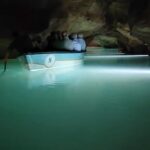
- Swimming the natural lakes inside the cave
- Itineraries in practice: how your 4 hours inside likely feels
- What to bring: the water-shoes checklist that matters
- Price and value: what $57 is buying you
- Who should book this tour (and who should skip it)
- The guide makes the difference: Jose, Omar, and the human side of safety
- Should you book Valencia Aquatic Caving in Sumidero de Vallada?
- FAQ
- How long is the aquatic caving experience?
- Where does the tour start and end?
- How much does it cost?
- Do I get a swim in the caves?
- What’s included with the tour?
- What should I bring?
- What language is the guide?
- Is the tour suitable for children or everyone with mobility needs?
- Can non-swimmers join?
- Is food and drink included?
Key points to know before you go
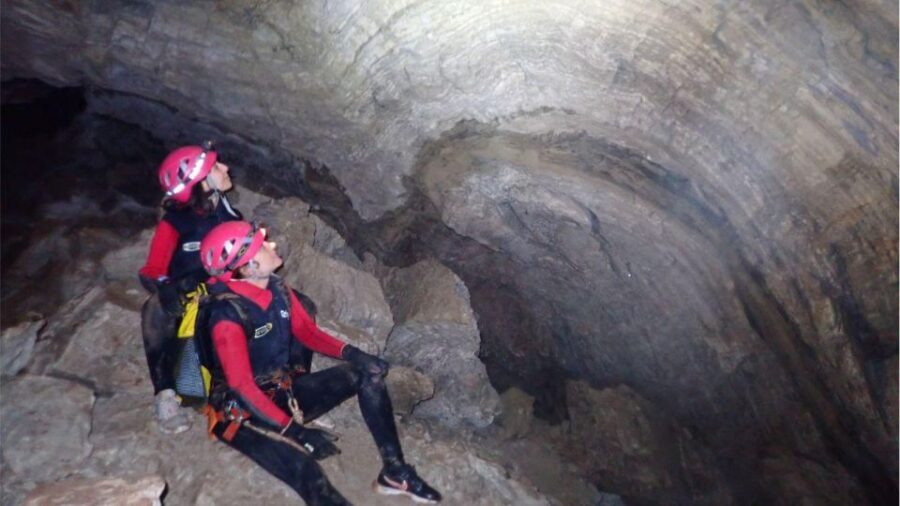
- Sumidor Tunnel’s scale: about 1,300 m long with a provisional drop of 205 m.
- Real water + real safety: a permanent stream means you’ll use proper caving/water gear.
- Gypsum cave formation lesson: you’ll observe and learn how the cavities form and what makes them singular.
- Swim time inside the cave: you get a swim in natural lakes, not just sightseeing.
- Top gear and insurance: helmet/harness and both company CR insurance and accident insurance are included.
- Photo report included: you’ll have images after the fact, which is a nice bonus in a place where it’s hard to capture your own experience.
Why Sumidor Tunnel feels different from a regular cave visit
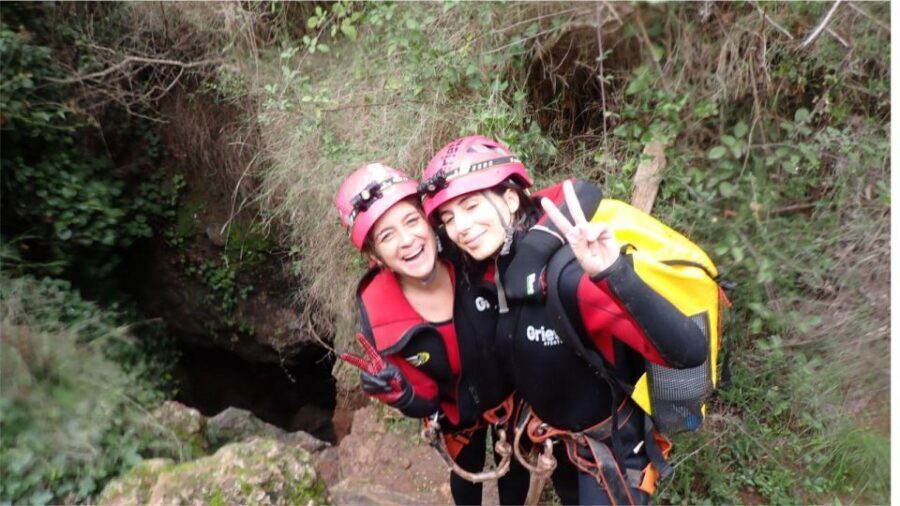
If you’ve done dry caves where you mostly look at walls and read signs, this experience changes the rules. Here, the cave is an active system: water is moving through it, and you physically travel through that environment. That turns “underground exploring” into something more physical and more memorable.
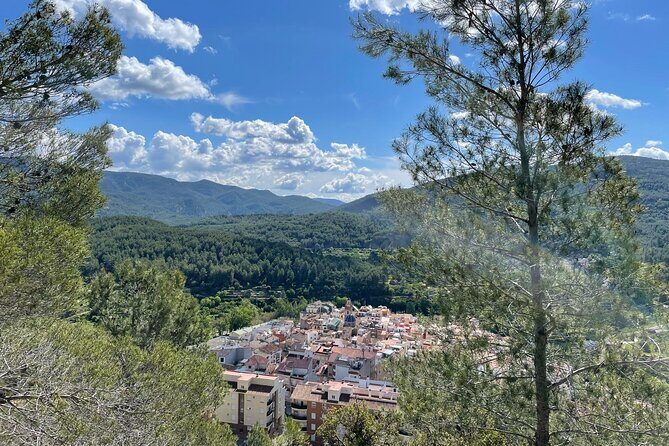
What makes the Sumidor Tunnel especially compelling is its geology and depth. It’s recognized as one of the deepest aquatic caves, with a provisional drop of 205 m and a length of about 1,300 m. And it sits in the Barranco del Penyó area, part of the Vallada National Heritage—so you’re not just chasing an activity, you’re visiting a protected natural feature shaped by long-term water action.
You can also read our reviews of more tours and experiences in Valencia.



Getting started at Paraje Las Ermitas in Vallada
Your experience begins at Paraje Las Ermitas Vallada, meeting your guide at the parking of the hermitages in Vallada. Even if the cave part is the headline, this first step matters, because it sets the tone: you’ll be with a professional team and you’ll get set up before you ever enter the underground world.
This starting point also gives you a clear, practical rhythm. You meet, you gear up, you do your safety briefing, and then you head into the cave environment for the core 4 hours of guided activity (with the full experience lasting about 5 hours).
A small practical drawback: because you’re changing into swim and water-ready clothing and wearing caving gear, you’ll want to arrive prepared. This isn’t the kind of activity where you can wing it with whatever you wore that morning.
Safety briefing and gear: what you’ll actually rely on underground
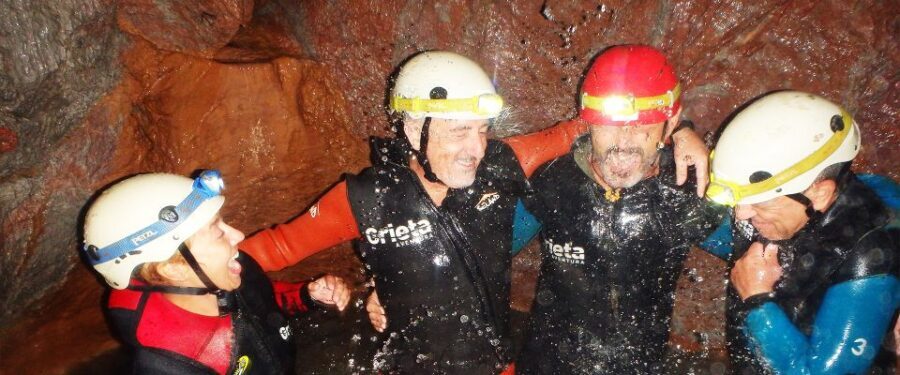
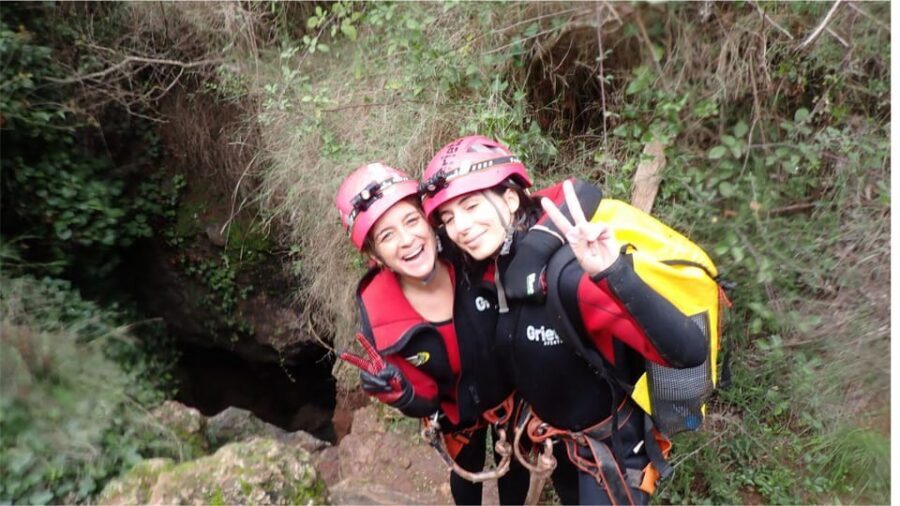
The center of your time is a guided tour with a safety briefing. You’ll be using specific equipment such as a helmet and harness, which is crucial here because the cave environment includes notable risk. The cave materials are described as quite unstable, and there’s a permanent stream of water—so you can’t treat it like a casual walk-through.
Also, pay attention to the “knowing the route” part. In a tunnel cave system with unstable plaster and wet surfaces, route guidance isn’t just helpful—it’s essential. The team, including guides like Jose Francisco Carbonell Oltra and other guides you may be teamed with (from previous experiences, Jose and Omar show up in the storytelling), are there to keep you moving safely and efficiently.
You’ll also learn what to watch for as you go. The cave isn’t just a passageway; it’s a set of formations produced by long-term water action. That’s where the guide’s job shifts from logistics into interpretation—turning what could feel chaotic into a clear path with meaning.
The Sumidor Tunnel experience: 1,300 meters of guided underground movement
Once you’re in, the Sumidor Tunnel becomes the main event: a long aquatic passage (around 1,300 m) that’s famous for its depth and its gypsum character. The cave’s provisional drop is listed at 205 m, which tells you this isn’t a flat tunnel stroll. You’ll be moving through changes in terrain while water is continuously part of the system.
What I like about this part is that it doesn’t feel like you’re guessing. The activity is led by a guide team who bring you through the depths with route knowledge. That matters because you’re dealing with both physical effort and a cave environment where instability and water make footing and movement more complex than normal trekking.
You’ll also likely spend time observing the cave environment beyond your own movement. The cave formation process is part of the experience, including “singular elements” explained along the way. In plain terms, it’s the difference between seeing wet rock and understanding why those cavities exist and how water shaped them over long periods.
The permanent stream and unstable materials: how to think about risk
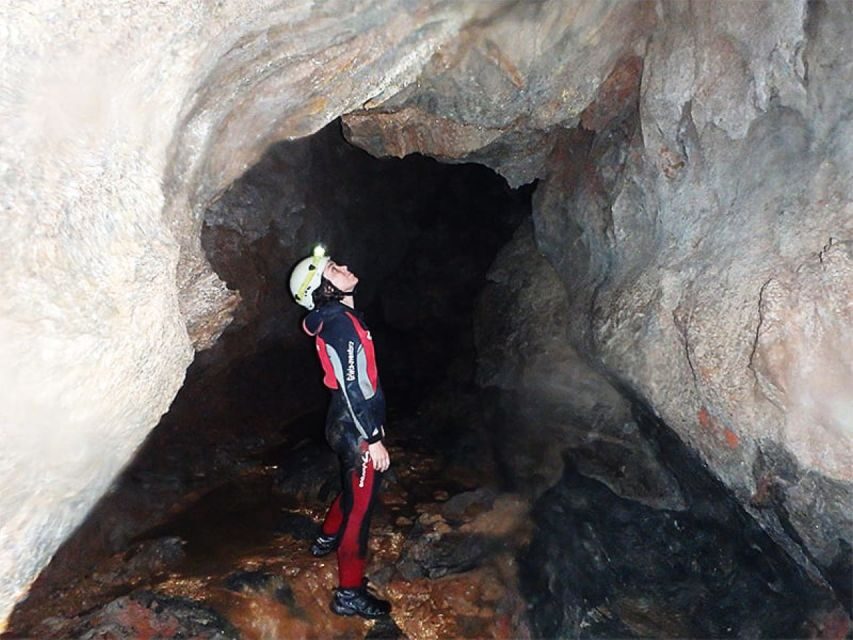
Here’s the real-world way to think about this activity: the cave is described as having notable risk because plaster materials are unstable. In other words, the rock and surfaces aren’t meant for you to treat them like solid, dry walls.
On top of that, there’s a permanent stream of water. You’re not just going in the cave and taking a brief rinse. Water is part of the ground, part of your movement, and part of the overall experience from start to finish.
That’s why the included gear and the professional supervision matter so much. When the cave conditions are like this, having a helmet and harness isn’t a marketing detail—it’s what lets the activity work as a guided sport rather than a risky self-adventure.
If you’re sensitive to discomfort (wet gear, cold water, slippery surfaces), plan your mindset accordingly. This is a “do it safely, follow instructions, stay focused” experience.





Swimming the natural lakes inside the cave
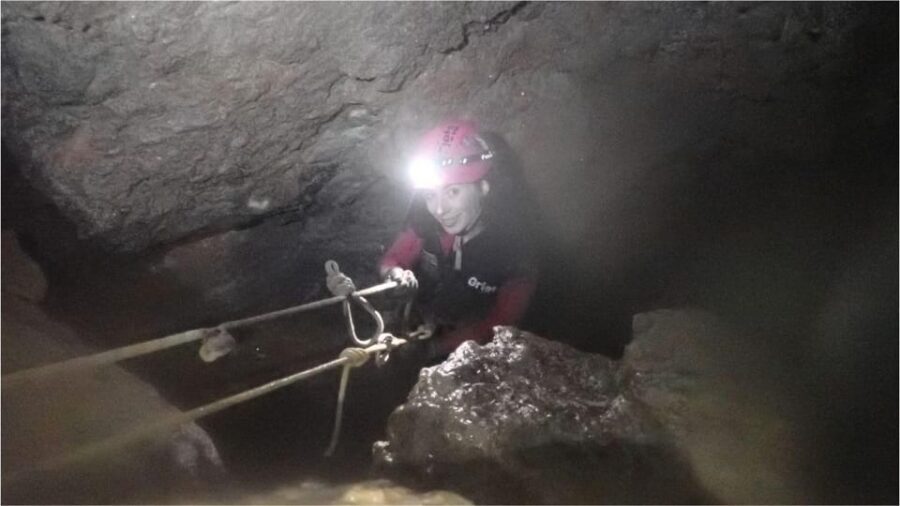
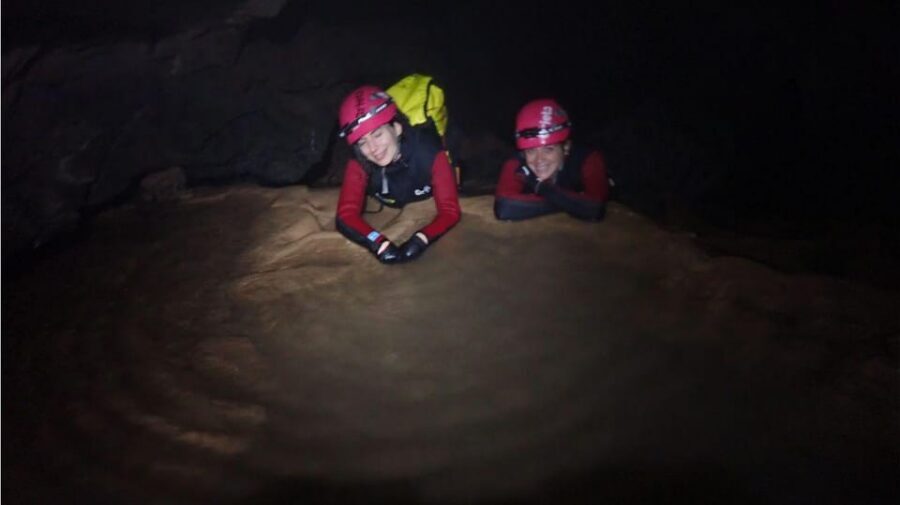
The headline for many people is simple: you get to swim in natural lakes inside the caves. This isn’t a metaphor. Your swim is part of the guided activity, and it’s one of the reasons the trip stands out from typical cave tours.
Swimming in a cave setting changes everything. It’s not just about fitness; it’s about comfort in enclosed, wet conditions. Your guide’s role becomes even more important here, because you need to stay oriented while you move through water in an underground space.
So be honest with yourself when you read the requirement: the activity is not suitable for non-swimmers. If you swim well in open water but aren’t comfortable in rougher conditions or in unexpected cold, that’s still a concern. If you have any doubt, you should treat the swim requirement as a hard filter rather than a “maybe I’ll be fine” situation.
The payoff is big. You’re experiencing the cave as a living system—water shaped by geology, now shaping your body’s experience of it. And it’s the kind of moment you’ll remember long after the rest of the day feels sore and damp.
Itineraries in practice: how your 4 hours inside likely feels
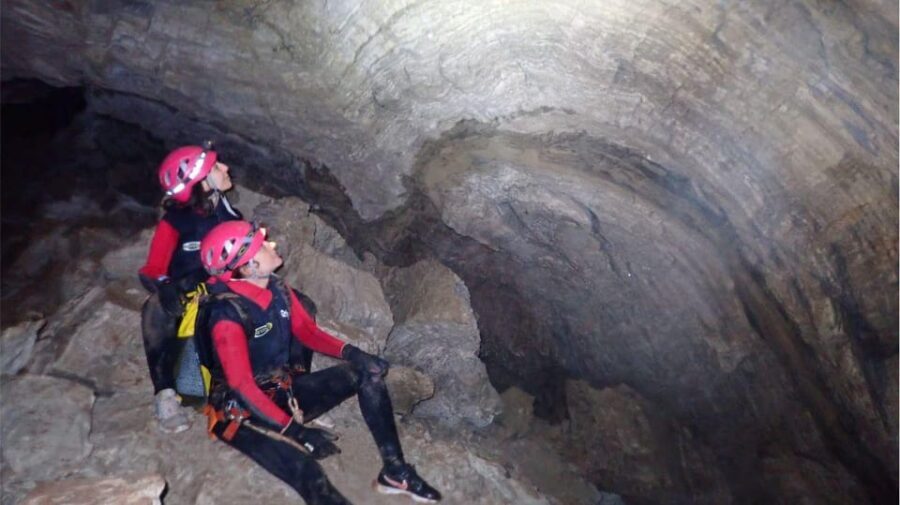
You’ll typically spend about 4 hours on the guided tour portion, with a safety briefing as part of that. Even though the route details aren’t spelled out here step-by-step, the structure is clear: you start at the hermitage parking area, you get prepared and briefed, you go into the tunnel, you move through key cave sections with formation observations, and you finish back where you started.
You’ll want to pace yourself mentally. Aquatic caving is physical, and the time under gear can tire you faster than you expect, especially when you’re concentrating on movement. One strength of this company approach is that the tour is guided from the top down—route, equipment, safety habits—so you’re not wasting energy figuring things out.
The end is a return to Paraje Las Ermitas Vallada. Plan to give yourself time after the tour to dry off and decompress, especially because you’ll likely leave feeling wrung out rather than just “done.”
What to bring: the water-shoes checklist that matters
Because the cave environment involves water, your kit list is practical, not optional. Bring:
- Swimwear
- Change of clothes
- Towel
- Water shoes
Water shoes are the quiet hero here. They help protect your feet on wet, cave surfaces, and they’re much easier than trying to make regular shoes work in a soaked environment.
Also, think about comfort. The requirement that you provide your height and weight when booking is a hint that sizing is important for the equipment fit. If you show up under-prepared, gear fit won’t be as comfortable, and you’ll feel it during the more physical parts.
Food and drinks are not included, so plan your day around that. Eat before you go (or have a solid plan for after), and bring what you need to stay comfortable before the tour starts.
Price and value: what $57 is buying you
At $57 per person, this is a mid-low cost option for a guided aquatic adventure, and the value comes from what’s included. You’re getting:
- qualified guides
- specific material (helmet, harness, etc.)
- company CR insurance and accident insurance
- a photo report
In a cave activity, gear and guidance are the cost drivers, because they affect safety and execution. Here, you’re not renting random items and hoping for the best. You’re showing up to a structured sport with equipment and trained supervision.
The price also makes the trip more accessible than many “big adventure” experiences that charge far more just to get you outfitted. If you want to do this kind of underwater cave sport without turning your travel day into a full-day planning project, this price point is a strong reason to consider booking.
Who should book this tour (and who should skip it)
This experience is best for people who:
- can swim confidently
- are comfortable with wet, underground conditions
- want an adrenaline activity with coaching and clear safety guidance
- like learning through doing, including cave formation observations
The “not suitable” list is important, and you should treat it seriously:
- children under 10
- pregnant women
- people with mobility impairments
- people with claustrophobia
- non-swimmers
If you’re claustrophobic, aquatic caving isn’t going to become a comfortable challenge. Don’t gamble. If you’re a strong swimmer but have doubts about enclosed spaces, consider whether you can handle the mental side of being in tight underground water.
The guide makes the difference: Jose, Omar, and the human side of safety
In these kinds of activities, the guide isn’t only there for rules. A good guide helps you move with confidence. In prior experiences connected to this team, guides such as Jose and Omar have been singled out as friendly, professional, and part of what made the trip feel unforgettable.
That matters because you’ll be combining effort, water, and concentration. When the guide team keeps the pace and communicates clearly, you spend less time anxious and more time enjoying the cave’s weird beauty and the swim moment.
A practical way to judge this before you go: be ready to follow instructions closely, ask questions during the briefing, and use the guide’s knowledge during tricky moments. You’ll get more out of the experience if you treat it like a partnership instead of a solo expedition.
Should you book Valencia Aquatic Caving in Sumidero de Vallada?
I’d book it if you want a guided underground water adventure with real safety support, solid equipment, and a genuine cave experience that includes a swim. The combination of cave depth, gypsum formations, and a permanent-stream environment makes this feel more substantial than a simple cave tour.
I would skip it if you don’t swim well, you get anxious in tight spaces, or you’re expecting a low-effort sightseeing day. This is active, wet, and physically demanding in the way only aquatic caves can be.
If you’re on the fence, use the trip’s structure to your advantage: you get a clear set-up, a guided tour with safety briefing, and you’re back to the starting point afterward. Book smart, show up prepared, and you’ll be in the right mindset for the tunnel, the lakes, and the route that gets you there.
FAQ
How long is the aquatic caving experience?
The activity lasts about 5 hours, with the guided tour and safety briefing taking around 4 hours.
Where does the tour start and end?
You meet your guide at the parking of the hermitages in Vallada, at Paraje Las Ermitas Vallada. The tour ends back at the same meeting point.
How much does it cost?
The price is $57 per person.
Do I get a swim in the caves?
Yes. The experience includes a swim in natural lakes inside the cave.
What’s included with the tour?
Included are qualified guides, specific equipment (like helmet and harness), company CR insurance, accident insurance, and a photo report.
What should I bring?
Bring swimwear, a change of clothes, a towel, and water shoes.
What language is the guide?
The tour has a live guide in English and Spanish.
Is the tour suitable for children or everyone with mobility needs?
No. It’s not suitable for children under 10, pregnant women, people with mobility impairments, or people with claustrophobia.
Can non-swimmers join?
No. The activity is not suitable for non-swimmers.
Is food and drink included?
No. Food and drinks are not included, so plan to eat before or after your tour.