REVIEW · VALENCIA
Valencia, Biketour of all the city with a local guide
Book on GetYourGuide →Operated by Bikes4tours · Bookable on GetYourGuide
Pedaling Valencia with a local guide makes the city click fast. I love the small-group feel and the way Eduardo stitches together street-level stories with real photo moments. And yes, the orxata tasting and xufa snack make a practical, tasty break.
One thing to plan for: the bike itself isn’t included, so you’ll need to rent one nearby if you don’t arrive with your own.
In This Review
- Key highlights you’ll care about
- From Plaza de la Crida to the Serranos: the tour’s easy start
- Plaça de la Verge and Plaza de la Reina: short stops that actually mean something
- Plaza del Ayuntamiento and the big-sight feeling in the city center
- Plaza de Toros de Valencia: a landmark stop that breaks up the route
- Valencia’s buried layers: hearing the past as you ride
- Crossing from historic streets to Modernist Valencia
- City of Arts and Sciences: the photo stop that feels like a reset
- Turia River Park: a calm finish on the old river line
- The food moment: xufa and orxata (plus practical snack advice)
- What you’ll feel during the ride: pacing, effort, and group size
- Price and value: is $23 worth 2.5 hours of Valencia on wheels?
- Meeting point details that prevent stress
- So who should book this bike tour?
- Should you book? My honest call
- FAQ
- How long is the Valencia bike tour?
- What is included in the tour price?
- Are bikes included?
- Where is the meeting point?
- What languages are the tours in?
- Is the tour suitable for children?
Key highlights you’ll care about
- Eduardo’s stop-by-stop storytelling that ties plazas, neighborhoods, and landmarks together
- Photo-focused routes with advice on where to stand and what to notice
- Historic core to Modernist contrasts, moving through Valencia’s different eras on a bike
- Xufa and orxata included, so you’re not hunting for snacks mid-ride
- Turia River Park finish that keeps the tour from feeling rushed or all “monuments only”
From Plaza de la Crida to the Serranos: the tour’s easy start
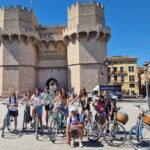
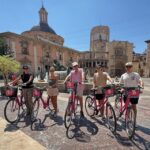
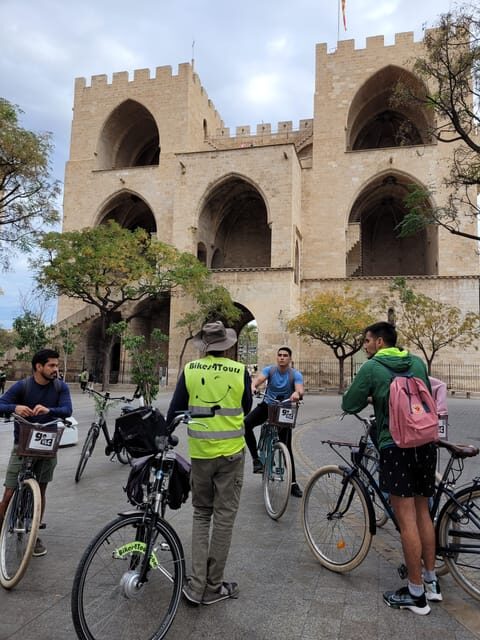
The tour begins at Plaza de la Crida, and the guide meets you between the Serrano Towers and Serrano Bridge—look for the fluorescent jacket. That matters more than you’d think. If you’ve ever shown up to a city tour and spent 20 minutes trying to find the group, you know how quickly plans get annoying.
Right away, you’ll get oriented the Valencian way: not just a list of sights, but a route that flows. The bike format helps here. Instead of getting stuck in one area for too long, you glide between neighborhoods and eras without “backtracking fatigue.”
There’s also a useful vibe in how the tour is described: it’s not pitched as a classroom. It’s meant to feel like fun biking through history and good streets, with anecdotes and quick context at each stop.
You can also read our reviews of more guided tours in Valencia

Plaça de la Verge and Plaza de la Reina: short stops that actually mean something
One of the smartest parts of this experience is the pacing. You spend only a few minutes at each plaza—think around five minutes—so you don’t get dragged through slow storytelling. Instead, you get a focused snapshot: what the place is, why it matters, and what to watch for while you’re standing there.
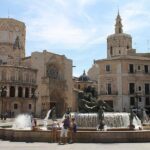
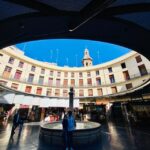
You’ll roll through Plaça de la Verge and then Plaza de la Reina, both solid anchor points for Valencia’s historic center. Even if you’ve been to big European cities before, these plazas tend to land differently because they’re lived-in spaces. The tour nudges you to look beyond the obvious angles for photos and notice details you might otherwise miss—like the way the square connects to surrounding streets and the overall feel of the neighborhood.
For photo lovers, these early stops are where you practice your rhythm. You’ll get a feel for how the streets open up, how the light hits, and where the guide encourages you to pause for shots without turning the whole experience into a traffic jam.
Plaza del Ayuntamiento and the big-sight feeling in the city center
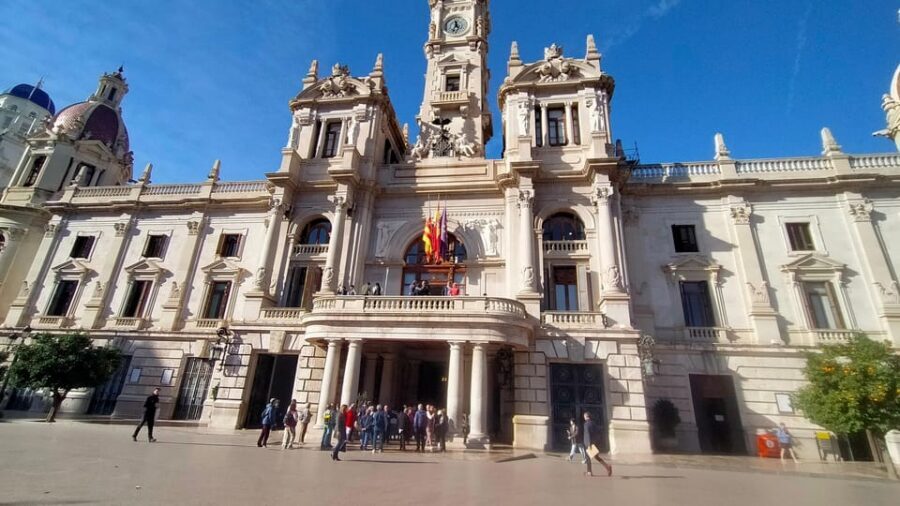
Next comes Plaza del Ayuntamiento, and this is where the tour leans into the classic “Valencia in full view” moment. It’s still brief—again, you’re not stuck forever—but it’s a good kind of quick. You arrive, you understand what you’re seeing, and you get a clean chance to photograph the space before moving on.
I like that this section balances scale and context. Plaza del Ayuntamiento isn’t just a backdrop; it’s the center of gravity for a lot of what people associate with the city. With a guide talking through what you’re looking at, it stops being random stone and turns into a sense of how the city organizes itself.
If you’re the type who likes your sightseeing with a little structure, this stop is a win. If you’re more laid-back and just want views, it still works because you’re moving on quickly instead of getting stuck in a long explanation.
Plaza de Toros de Valencia: a landmark stop that breaks up the route
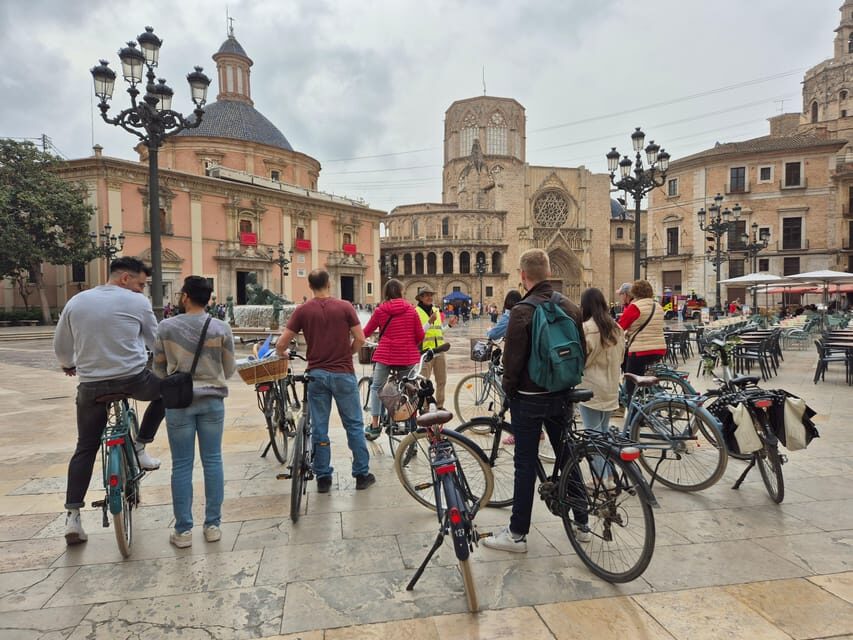
After the main squares, you’ll reach Plaza de Toros de Valencia. This is the sort of place that can be easy to overlook if you’re wandering alone, because a bullring isn’t always on everyone’s must-see list for Valencia.
On the bike, though, it becomes a useful change of pace. You’re still in the city’s historic fabric, but the vibe shifts. The guide’s short stop here helps you frame the building so it clicks instead of just passing as another large structure you pose in front of.
Practical note: because you’re on a bike tour, it helps if you stay aware and keep your camera action simple. There’s time for photos, but it’s not a “park and shoot for 30 minutes” setup. Think quick compositions and move.
Valencia’s buried layers: hearing the past as you ride
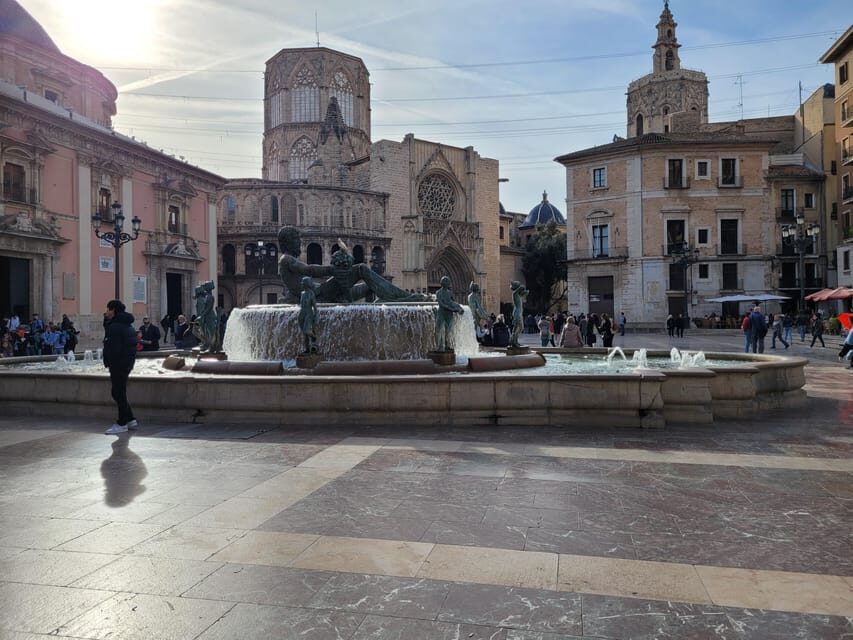
One of the themes you’ll pick up is the idea of Valencia as layered history—talking about Valentia, the buried city. That framing is valuable for a simple reason: it changes how you read the streets.
When you hear that the past sits under today’s sidewalks and plazas, the city stops feeling like a museum you visit and starts feeling like a place you’re moving through. Even if you don’t see archaeological features directly on every block, the guide’s anecdotes give you a mental map. You’ll look at older neighborhoods differently afterward.
It’s also why the “not a history class” style can still work. You get story cues that help you connect what you’re seeing to the wider timeline—without drowning in dates.
You can also read our reviews of more city tours in Valencia

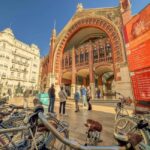

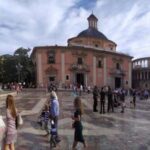
Crossing from historic streets to Modernist Valencia
After the center, the route carries you across Modernist neighborhoods. This is where Valencia’s identity gets more playful, and the bike tour makes it easier to experience that transition in real time.
Modernist areas can feel abstract if you’re just reading about them, because the details live in patterns and building choices you notice when you’re moving. On a bike, you catch glimpses and perspectives at the right speed. You see facades, you notice rhythm, and you don’t get stuck waiting for someone else to finish a slow photo setup.
The guide’s role here is especially helpful. Without context, you can end up treating the whole district as pretty buildings. With the right explanations, you begin to recognize what makes the style distinct and what to look for in the next stop.
City of Arts and Sciences: the photo stop that feels like a reset
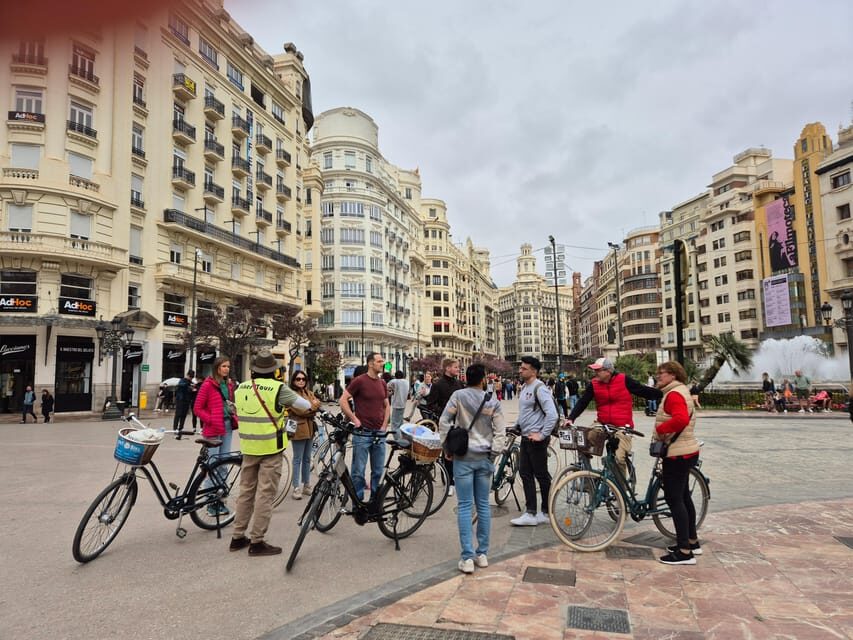
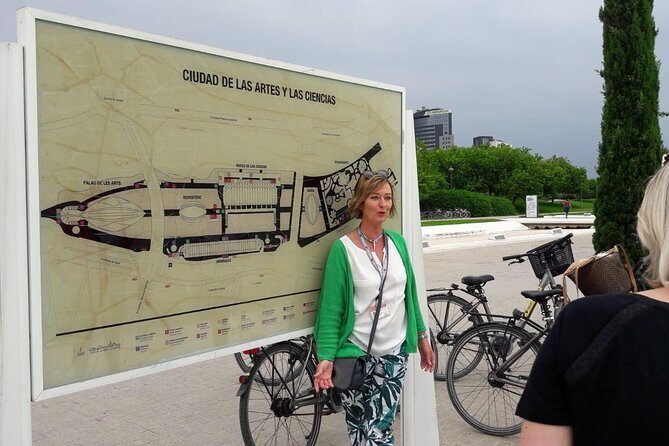
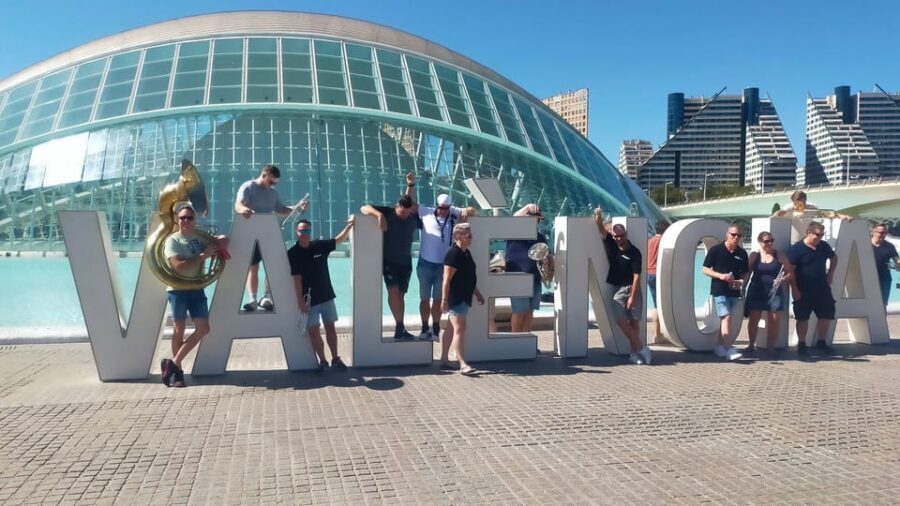
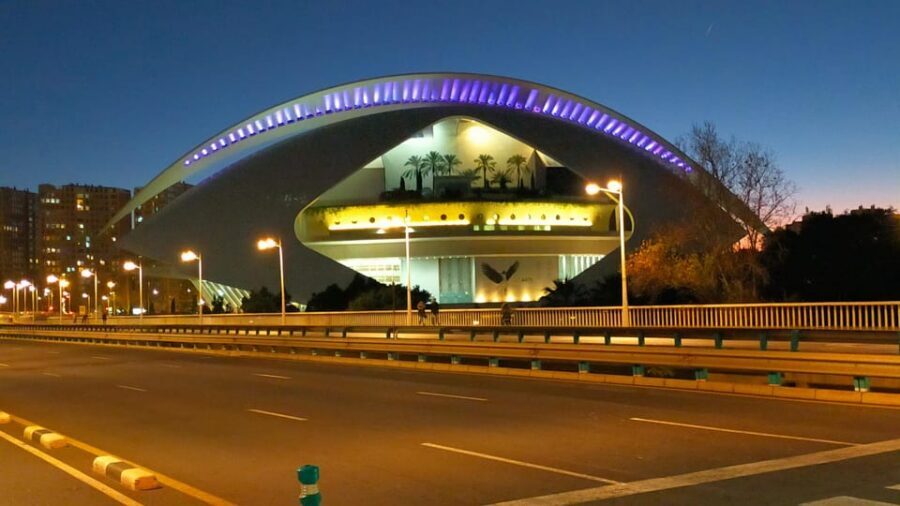
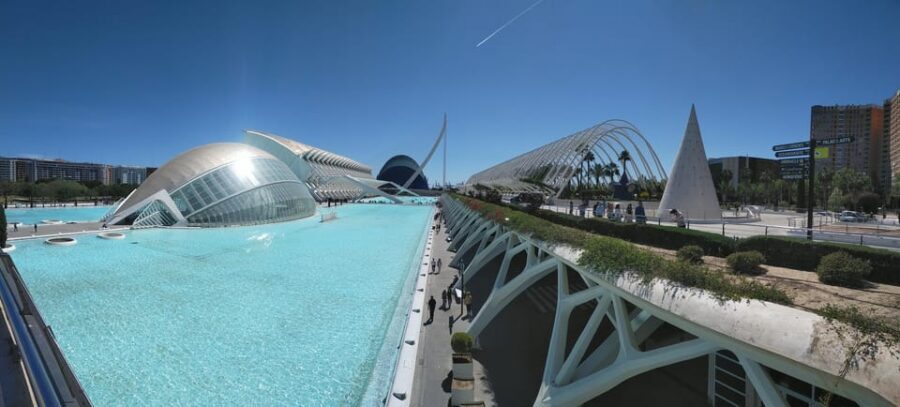
Then you roll into the City of Arts and Sciences, and it’s a dramatic change from the older plazas. The architecture here is the star, and the guide gives quick direction on what’s worth aiming at and how to frame it for photos.
This stop is described as a guided short visit (around five minutes), and that’s actually a smart choice on a bike tour. The complex is huge, and if you try to do it like a full museum visit, you’ll feel rushed or start missing details. Here, it works like a snapshot. You get the iconic look, the key angles, and the sense of why this area became one of Valencia’s modern symbols.
If you want to do more later, you’ll have a head start on what to revisit. You’ll also likely feel less overwhelmed than you would if you arrived cold.
Turia River Park: a calm finish on the old river line
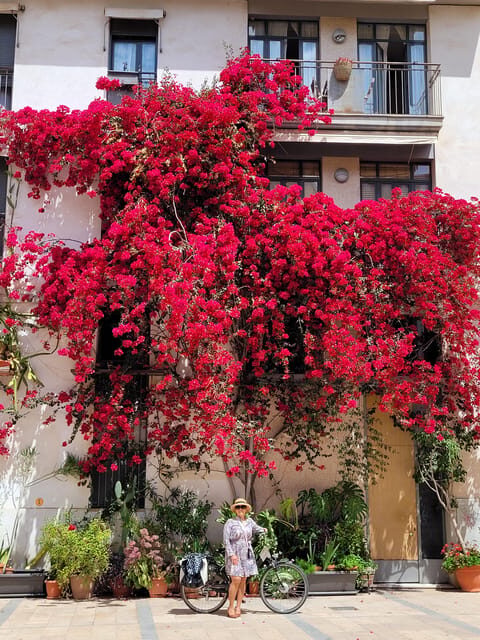
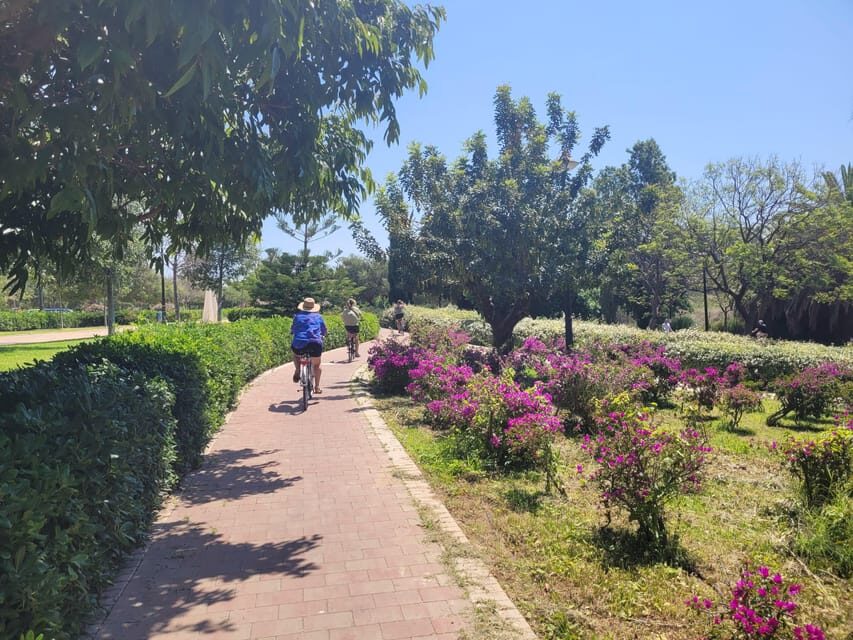
To close, you’ll return with a pleasant final walk through the park of the old Turia River. This is the tour’s “breather” moment. After squares and big landmarks, the park gives you space to slow down and take it in without constantly scanning for the next monument.
The guided time here is longer—about 15 minutes—and you can feel the shift. You’re not sprinting to the next photo. You’re letting the greenery and open paths make the ride feel less like a checklist and more like a Valencia afternoon.
Even if you’re not a “parks person,” this ending matters. It softens the contrasts the tour creates: old Valencia to modern Valencia, stone and spectacle to calmer streets. It’s a nice way to end without your legs and attention both running out.
The food moment: xufa and orxata (plus practical snack advice)
One of the best values in this tour is that xufa and orxata are included. You don’t have to stop mid-ride to find where to eat, and you’re tasting something that’s tied to the local culture.
Orxata is a classic Valencia drink, and the tour makes it easy to experience it at the right time—when you’ve been riding long enough to want a break, but not long enough to feel done with your day. The included snack also helps you keep energy up for the rest of the route.
A small but meaningful detail from guide feedback you can rely on: the orxata often comes with the common pairing people look for in Valencia, and the guide tends to recommend it as part of the local snack routine. If you’re the type who wants to know what to order next time, this tour gives you that starting point.
Tip for the day: bring a phone with enough battery, because the best photo moments tend to happen right around when you’re stopping—when you’ll also want to capture the food.
What you’ll feel during the ride: pacing, effort, and group size
This tour runs about 2.5 hours, which is long enough to cover meaningful ground, but not so long that you start bargaining with your own legs. Small group size keeps the experience from turning into a herd: it’s limited to 10 participants.
That group size matters when you’re on a bike. You’ll need smooth coordination for starts, stops, and safe crossing points. A smaller group usually means fewer bottlenecks when the guide stops for photos or explains a landmark.
The tour also has a clear requirement: you must be able to ride a bike. That sounds obvious, but it’s important. If you’re even slightly unsure on a bike, you’ll spend your attention worrying instead of enjoying the places.
One more practical note: children under 16 need to cycle with a helmet. (And if you’re traveling with teens, it’s worth planning to bring one rather than assuming you’ll have access at the start.)
Price and value: is $23 worth 2.5 hours of Valencia on wheels?
For $23 per person with an official guide, included local snacks (xufa and orxata), and a route that covers both historic squares and the City of Arts and Sciences area, the value is pretty solid. The big reason is not just the sights—it’s the efficiency.
On your own, you’d likely spend time figuring out:
- where to pause for the best photo angles,
- which plazas connect logically by bike,
- and how to connect the old city story to the modern landmark contrast.
Here, the guide helps you do that in a structured way, at a relaxed pace. The small-group size also adds value because you’re not fighting for attention at each stop.
The only financial “gotcha” is bike rental. Bikes aren’t included, so you’ll pay that separately if you don’t bring one. Still, bike rental options tend to be common in Valencia, and having the tour handle the sightseeing structure makes the rental feel less like extra work and more like a normal day cost.
Meeting point details that prevent stress
Show up at the right spot and you’ll glide right into the experience. The guide waits between the Serrano Towers and Serrano Bridge, and wears a fluorescent jacket. If you’re meeting people or traveling on a tight schedule, this clarity is useful.
Also, bring your camera or plan your phone setup before you start. The tour is photo-friendly, but it’s built around quick stops, not slow photo sessions. If your phone is at 5% battery when you arrive, you’ll miss the best moments.
So who should book this bike tour?
This is a good fit if you:
- like your sightseeing with a guide’s street-level context,
- want to cover both historic Valencia and modern landmarks without spending the whole day on public transit,
- and enjoy taking photos but also want someone to tell you where to stand.
It might not be the best choice if you:
- can’t ride a bike confidently,
- want a long, in-depth visit inside museums,
- or prefer fully self-paced walking tours where you decide every stop with no structure.
Should you book? My honest call
If you want a fun, efficient way to see Valencia with local storytelling and built-in photo stops, I’d book it. The combo of Eduardo-style guidance, the included orxata and xufa, and the smooth arc from historic plazas to the City of Arts and Sciences makes this feel like a smart afternoon plan, not a random “look at buildings” ride.
Just make sure you handle the one key logistics item first: your bike. If you’re comfortable renting, you’re set. If you’re not comfortable riding, skip this one and choose a walking or static activity instead.
FAQ
How long is the Valencia bike tour?
It lasts about 2.5 hours.
What is included in the tour price?
You get an official bike guide, a tourist map with local recommendations, xufa (valencian dry fruit), and orxata (typical valencian drink).
Are bikes included?
No. Bike rental is not included, so you’ll need to bring your own bike or rent one nearby.
Where is the meeting point?
The guide meets between the Serrano Towers and Serrano Bridge, with the start at Plaza de la Crida.
What languages are the tours in?
The live guide speaks English and Spanish.
Is the tour suitable for children?
Children under 16 need to cycle with a helmet. The tour is not suitable for people who can’t ride a bike.