REVIEW · VALENCIA
City of the Arts and Sciences
Book on Viator →Operated by Guía Valencia · Bookable on Viator
Valencia’s science buildings feel like outer space. This half-day private tour strings together the big-name landmarks of the City of the Arts and Sciences in about 3 hours, so you still have room for beaches, tapas, or the old city. I like that it’s a walking tour focused on the architecture, not a rushed museum sprint.
You also get a real guide to point out what you’re seeing—whether it’s the Prince Philip Museum area, the Hemisfèric, the Umbracle gardens, or the Opera House zone at Palau de les Arts. I especially like that the guide’s commentary is interactive, with time for questions rather than a one-way lecture.
One thing to consider: this tour is mostly outdoor viewing, and it doesn’t include entrance fees to places like the Principe Felipe Museum, the Hemisfèric, or the Oceanogràfic. If you want interiors, you’ll buy those tickets separately.
In This Review
- Key highlights
- Why This City of Arts and Sciences Walk Fits a Half Day
- Getting Oriented: The Complex From Santiago Calatrava’s Lens
- Prince Felipe Museum, Planetarium, and What You Can See Without Tickets
- Hemisfèric (IMAX) and the Science-Entertainment Link
- Umbracle: Palm Trees, Bitter Oranges, and a Breather in the Middle
- Agora and the Performance Buildings: Reina Sofia at Palau de les Arts
- Oceanogràfic Isn’t Part of This City Complex
- Tour Logistics: Meeting Point, Pickup, and How Long You’ll Actually Walk
- Price and Value: What $216.25 Really Means for Your Group
- The Guide Factor: What You’ll Actually Get From the Commentary
- Who Should Book This Tour (and Who Might Skip It)
- Should You Book This City of the Arts and Sciences Tour?
Key highlights
- Outdoor architecture tour, not a museum marathon across the main complex
- Two major “must-see” zones in one walk (science buildings plus the Palau de les Arts / Reina Sofia area)
- Professional guide with flexible Q&A to make the modern design click
- Pickup offered so you’re not stuck figuring out logistics first thing
- No entrance fees included for interiors, so you control what you add
Why This City of Arts and Sciences Walk Fits a Half Day
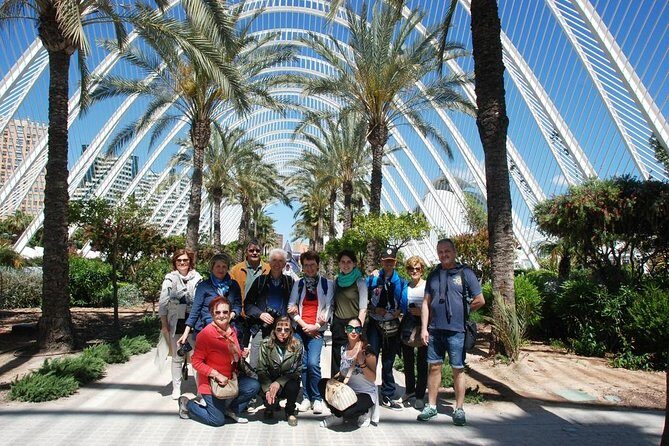
If you only have a short window in Valencia, this is a smart way to spend it. The City of the Arts and Sciences is one of those places where the outside already tells the story. You’ll walk around the key buildings, take in the scale, and get context for how the complex came together.
The tour runs about 3 hours. That matters because it keeps your day open. You can do this in the morning (great light for photos) and still have time later for the Central Market area, a seaside stroll, or a relaxed lunch.
This is also a private tour for your group, up to 15 people. That size is important. It’s big enough that families and friends can travel together, but small enough that your guide can still adjust the pace and answer questions.
You can also read our reviews of more city tours in Valencia



Getting Oriented: The Complex From Santiago Calatrava’s Lens
The City of the Arts and Sciences is shaped by architect Santiago Calatrava’s distinctive style: sweeping forms, dramatic geometry, and a look that feels futuristic without being cold or sterile. The point of the tour is to help you “read” the complex, so it doesn’t just look impressive—it makes sense.
You start with a walking loop that focuses on the main structures in sequence:
- Prince Felipe Museum zone
- Hemisfèric (the IMAX cinema building)
- Umbracle (the palm-tree promenade with plants and citrus)
- Agora area
- Opera House zone linked to Palau de les Arts / Reina Sofia
Even if you’re not a design nerd, this order helps. You begin with the science institutions, transition into the landscaped promenade, and finish near the performance buildings. It’s a nice rhythm, and it’s the kind of route that keeps you moving without constant time pressure.
Prince Felipe Museum, Planetarium, and What You Can See Without Tickets
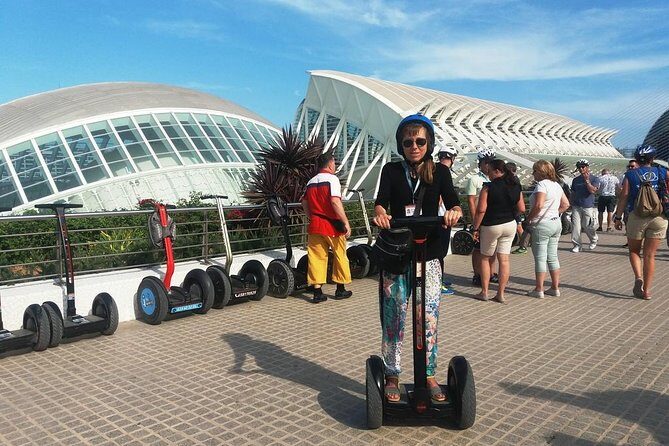
In the Prince Felipe Museum area, your guide can show you what the building represents and what you’ll find if you choose to go inside later. This is where the tour keeps things practical: you get the context on the outside, and then you decide if you want to pay for specific interior experiences.
Depending on the schedule and what you care about, you might be interested in:
- Temporary exhibitions in the museum (science and technology themed)
- The planetarium area associated with the complex
That said, the key point for your planning is simple: this tour does not include entrance fees. So if your must-do list includes museum halls or the planetarium shows, you’ll need to purchase those tickets directly.
The upside? You’re not locked into a set of indoor stops. If you’d rather keep the day moving, you can enjoy the exterior architecture and skip the ticket line work.
Hemisfèric (IMAX) and the Science-Entertainment Link
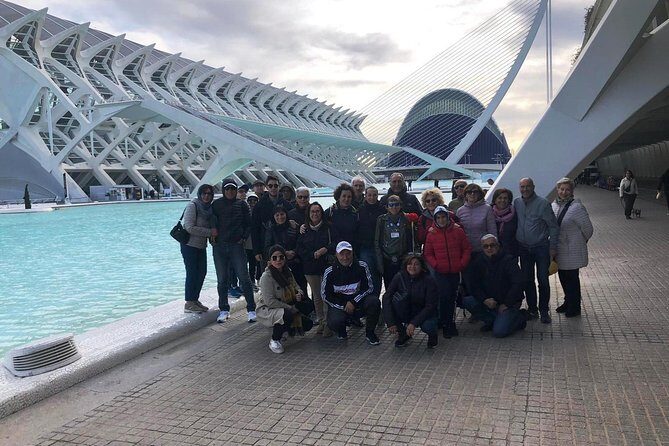
The Hemisfèric is the visually striking building that many people picture first when they think of this complex. It’s essentially the entertainment face of the science theme—especially because it’s connected to cinema-style programming (including IMAX).
On this tour, you’ll walk past and around it with guidance so you understand why it’s there and how it fits the overall mission of the complex. You’re not just taking photos; you’re learning what each building is meant to do.
If you want the indoor experience—like a screening or film format—this is one of the places where you’d need to add a ticket on your own. It’s also one of the easiest “upgrade” choices because the building is so central to the site’s identity.
Umbracle: Palm Trees, Bitter Oranges, and a Breather in the Middle
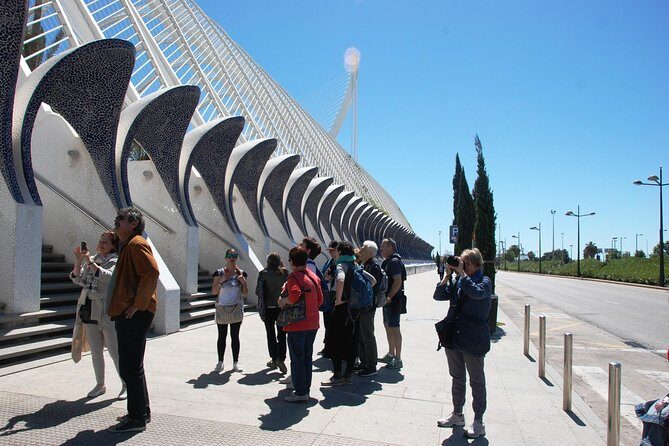
Not every landmark day needs more concrete. The Umbracle is a landscaped promenade designed to slow you down without stopping the tour.
Here’s what to look for:
- Palm trees
- Bitter oranges
- Aromatic plants
It’s a change of pace from the big architectural forms. You’ll get a pleasant stretch of walking space where the guide can point out details, but you’re also free to take in the garden feel. For many people, this is the part that makes the complex feel human-scale—something you can actually relax in for a moment.
Also, if you’re traveling with kids or anyone who gets tired of “stand and listen” tours, this section helps. It’s still structured, but it doesn’t demand constant attention.






Agora and the Performance Buildings: Reina Sofia at Palau de les Arts
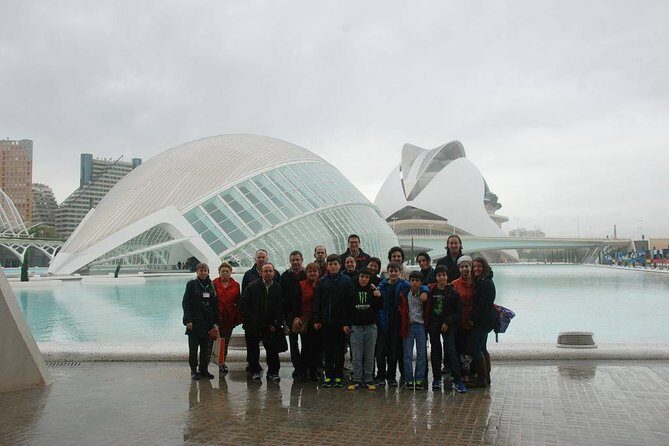
As you move toward the Agora and the Opera House area, the mood shifts again. The City of the Arts and Sciences isn’t only about science. It’s also a major arts venue.
The tour includes access to the exterior and outdoor areas around the performance spaces linked with Palau de les Arts, including the zone associated with the Reina Sofia Opera House. The guide can explain how these spaces work across the season, since opera and musical performances happen at different times.
A useful planning note: the interior performances and shows are not part of the included tour structure. If you want to access specific interior spaces tied to performances—like areas connected to the Principe Felipe Museum, the Hemisfèric, or opera-related spaces—you’ll need to buy tickets directly.
Still, even without an interior ticket, being near the performance architecture is worthwhile. These buildings are built to feel dramatic, and the exterior perspective helps you understand why the arts belong in the same complex as the science.
Oceanogràfic Isn’t Part of This City Complex
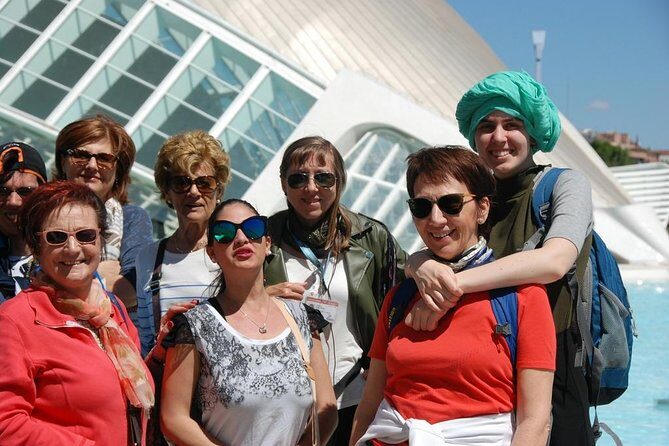
Here’s a point worth getting right before you arrive: the Oceanogràfic is behind the City of the Arts and Sciences, and it’s a separate project. It has “nothing to do” with the City of the Arts and Sciences itself in terms of the architectural concept and identity.
It’s associated with another architect, Félix Candela. So if you’re mixing up Oceanogràfic with this tour’s City focus, you’ll end up with disappointment—or extra ticket costs you didn’t plan.
For this experience, you can view around the main Calatrava-driven complex. If you want Oceanogràfic proper, you’ll purchase that ticket directly and treat it as its own add-on plan.
Tour Logistics: Meeting Point, Pickup, and How Long You’ll Actually Walk
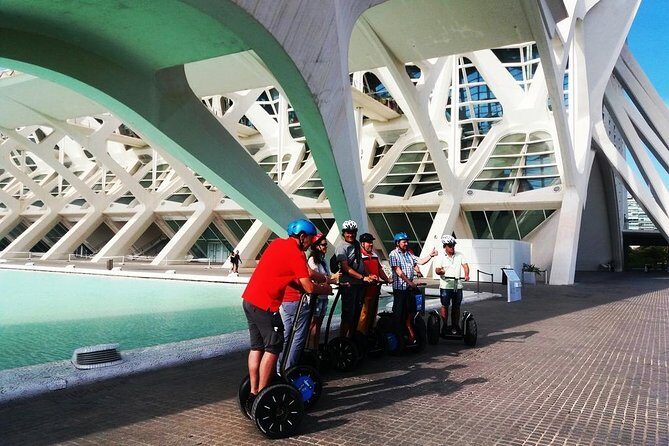
This is where a lot of Valencia plans get messy—so it’s good that this one has a clear framework.
You meet at Av. del Professor López Piñero, 7, Quatre Carreres, 46013 València, Spain. The tour ends at the Ciudad de las Artes y las Ciencias area (also in Quatre Carreres).
Pickup is offered at apartments and hotels where you’re staying, but the details are agreed with you. Translation: you get convenience, but you still need to coordinate the exact pickup arrangement ahead of time.
During the tour itself, you’re walking the exterior route around the buildings. Your guide leads the pace, so you don’t have to figure out how to connect the stops on your own.
The tour is also near public transportation, which gives you a backup plan if you don’t want pickup or your hotel is hard to route.
Price and Value: What $216.25 Really Means for Your Group
The price is $216.25 per group, up to 15 people, for an approximately 3-hour private tour. That’s a per-group rate, not per person, so value depends on how many people you bring.
Here’s a quick reality check:
- If you’re a party of 2, the cost per person is high.
- If you’re a family group of 5–8, it starts to feel much more reasonable.
- If you fill the max group size, the per-person cost gets low fast.
The value isn’t only the price tag. It’s the fact that you’re getting a guide who helps you make sense of multiple major landmarks in one go, without paying for entrances you may not care about. You also get pickup options, which can be the difference between a smooth first half-day and a day that starts with transit stress.
If you’re the kind of traveler who wants your time to count, this tour tends to be a good match. You can decide on the fly whether to add interior tickets later based on your interests and energy.
The Guide Factor: What You’ll Actually Get From the Commentary
A modern architecture site can feel like a lot of shapes unless someone explains what you’re looking at. That’s the point of hiring a guide here.
On past groups, guides have been praised for:
- Making the complex easy to understand
- Keeping the experience fun, not stiff
- Pointing out unique features and design intent
Guides have also shown initiative—like expanding the day when interior areas are closed. If that happens on your date, you might get more flexibility in where you spend your time, instead of standing around.
Language coverage is practical too. The tour is offered in English, and it may be operated by a multi-lingual guide depending on demand. If you prefer questions and back-and-forth discussion, private format makes that easier.
Who Should Book This Tour (and Who Might Skip It)
This tour is a great fit if you:
- Want the City of the Arts and Sciences highlights without spending a full day
- Enjoy architecture and design explanations
- Prefer a structured outdoor route with time for questions
- Are traveling with a small group and want a private guide
You might skip it (or only do it if you’re also adding tickets) if you:
- Only care about indoor exhibitions, planetarium shows, or screenings
- Don’t want any walking at all
- Expect entrances to be included automatically
Remember: this experience is about outdoor access and context. Interiors are an optional add-on you’ll handle separately.
Should You Book This City of the Arts and Sciences Tour?
Yes, if you want a high-impact half day with a guide and you like architecture. It’s the kind of plan that reduces decision fatigue: you’ll see the main buildings, you’ll get the background, and you won’t burn your time waiting in separate queues for every interior stop.
If you’re the type who must see the inside of the museum or a specific planetarium/IMAX show, you can still book this—but treat it as the foundation. Then add your interior ticket(s) directly based on what you care about most.
If you’re booking for a group, it’s especially good value at the per-group rate. And since the average booking window is about a month out, grabbing a slot early can help you lock in the timing you want.
In short: for most people, this is the smart way to do the City without turning your Valencia day into a schedule fight.