REVIEW · VALENCIA
Class of Valencian Paella with welcome drinks and tapas
Book on GetYourGuide →Operated by Valencia Gourmet · Bookable on GetYourGuide
Paella class beats guessing at dinner. In Valencia Gourmet’s kitchen school, you’ll cook Paella Valenciana (or a seafood paella) and a Spanish potato omelette with a professional chef, then sit down to taste what you make with a welcome drink. It’s hands-on, fast-moving, and built for real learning—not just watching.
What I like most is how the class ties together the main hits of the meal: the comfort food of the omelette, the bright bite of Valencian tomato, and the warm, seasoned heart of paella. You also finish with a diploma, which sounds simple, but it’s a nice souvenir that makes the effort feel official.
One thing to watch: meeting logistics. Some people have had trouble finding the place when signage wasn’t clear or staff weren’t ready, so I’d double-check the exact address and plan to arrive early.
In This Review
- Key highlights you’ll care about
- A 2-hour plan for real Valencia flavors
- Welcome drinks, quick orientation, then you start cooking
- Potato omelette: the warm-up dish that teaches technique
- Valencian tomato with olive oil: the fresh reset between hot dishes
- Paella Valenciana (or seafood paella): what you’ll actually learn
- What the meal setup gets you (and why it feels like more than a class)
- Price and value: is $65 fair for two hours of cooking?
- The chef factor: what makes a class like this work
- Logistics that can make or break your evening
- Who should book this paella-and-omelette class
- Should you book Valencia Gourmet’s paella class?
- FAQ
- FAQ
- How long is the cooking class?
- What will I cook during the class?
- What drinks are included?
- Is there a diploma at the end?
- Does the class include extra food or more drinks beyond what’s stated?
- What languages are the instructors?
- What should I bring with me?
- Is the activity wheelchair accessible?
- What if my plans change?
Key highlights you’ll care about
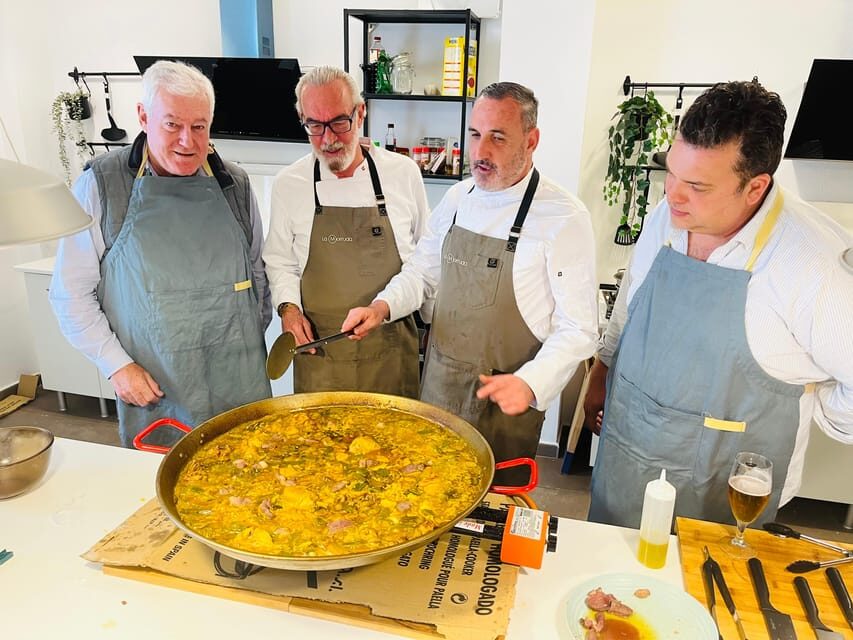
- Hands-on cooking of both potato omelette and paella (not a demo)
- Welcome drink of Valencia water plus wine or craft beer
- Valencian tomato served with extra virgin olive oil
- Paella Valenciana (or seafood paella) made in a real kitchen setup
- Diploma at the end, to mark your time in the class
- Spanish and English instruction with wheelchair access
A 2-hour plan for real Valencia flavors
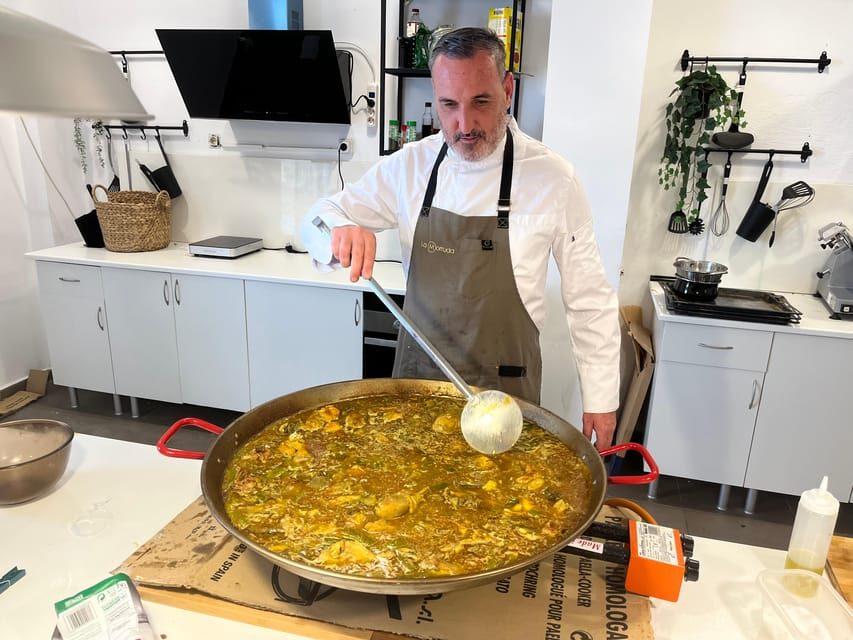
This is a compact cooking class in the Valencian Community, designed for people who want to eat well and learn something practical without spending the whole day on food. The full experience runs about 2 hours, which means you’ll move through multiple steps, taste along the way, and still leave with full confidence about the dishes.
I like that the menu is smart and balanced. You’re not just chasing one fancy specialty. You practice a classic potato omelette, then you build flavor with Valencian tomato and olive oil, and finally you cook paella—Spain’s best-known party food for a reason. When you make them yourself, you start to understand how Spanish home-cooking works: simple ingredients, careful timing, and seasoning you can actually repeat later.
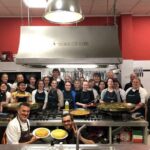
Also, this class is very social by design. You’ll be guided by a professional chef, and the whole setup pushes you to participate. If you’re the type who learns best by doing—chopping, mixing, cooking, tasting—you’ll feel at home.
You can also read our reviews of more tours and experiences in Valencia
Welcome drinks, quick orientation, then you start cooking
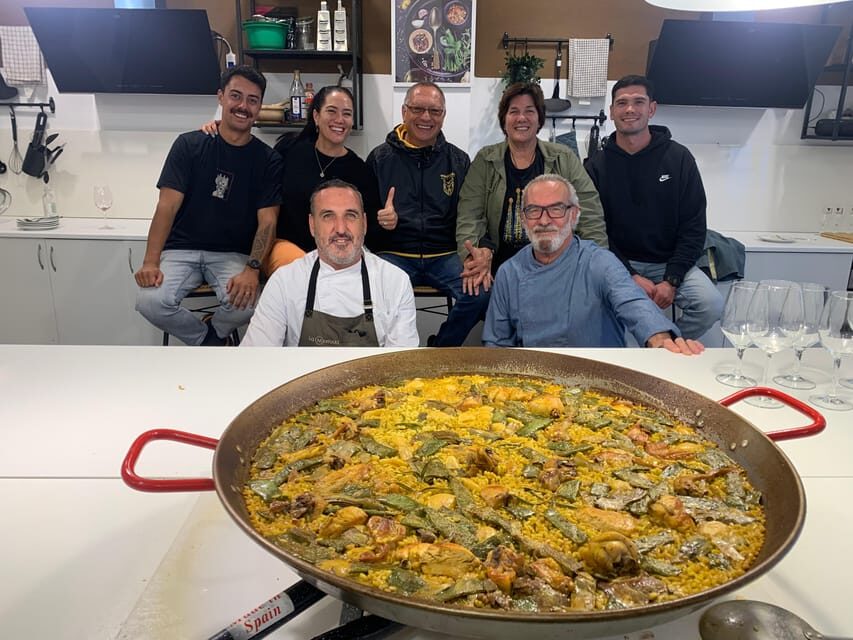
You begin with a welcome drink experience. The course includes Valencian water and a glass of wine or craft beer, with options pulled from well-known Spanish regions like Rioja or Ribera del Duero (and Valencia). It’s a nice way to ease in before the stove time starts.
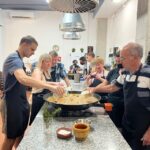
Then the class shifts right into action. You’re not left waiting while the chef does everything. You follow along step-by-step and help prepare each part of the meal. That matters because paella and omelette are not complicated in ingredients, but they’re picky in technique. The only way to really learn is to touch the process.
If you’re planning for photos, bring your camera, and wear comfortable clothes. The class is listed as wheelchair accessible, so the space is built with access in mind, but kitchens still work with real cookware and real heat—so comfortable shoes and sleeves that don’t trip over you are a good idea.
Potato omelette: the warm-up dish that teaches technique
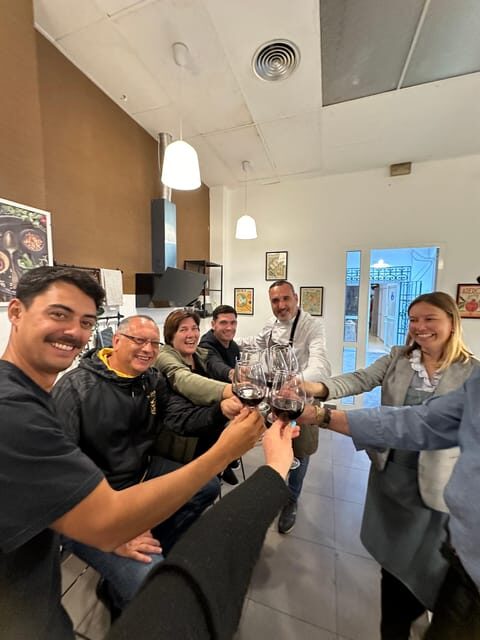
The first cooking step is the potato omelette. This is a great starter because it’s forgiving enough to learn in a group setting, but specific enough to matter. You’ll work directly with the ingredients and cooking steps while the chef guides you.
Here’s what you’ll walk away with conceptually: the omelette is about texture and timing. Potatoes need to cook through without turning into mush, and eggs need careful heat so they set properly without going dry or rubbery. You’re learning the rhythm—mix, cook, and finish with control.
Even if you’ve eaten Spanish omelette before, making one yourself changes how you judge it. You stop thinking in vague terms like fluffy or tasty and start thinking in mechanics: how the potatoes are handled, how the pan is heated, and when the eggs go in. That’s valuable because it’s the kind of skill you can repeat at home with mostly pantry-staple ingredients.
Valencian tomato with olive oil: the fresh reset between hot dishes
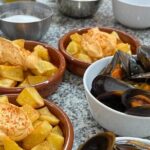
After the omelette step, you prepare Valencian tomato, served with extra virgin olive oil. This is a simple course, but it plays an important role. It balances the richness of egg and potatoes, and it keeps the meal feeling light instead of heavy.
In Spain, good olive oil is never just a topping—it’s part of the ingredient. When you assemble the tomato with olive oil in a guided setting, you’ll notice how much difference it makes to flavor. It’s also a reminder of why Spanish cooking works so well with minimal fuss: strong ingredients, treated gently, and served at the right moment.
This step also helps the group pause and breathe. Two hours can move fast in a cooking class. Tomato is a good reset, and it gives you a chance to taste and adjust your own sense of seasoning before you move into paella.
Paella Valenciana (or seafood paella): what you’ll actually learn
Next comes the main event: Paella Valenciana (or a seafood paella, depending on your session). The chef guides you through the steps, and you prepare the paella as part of the class—not just by watching.
Paella has a reputation for being intimidating, but this kind of class is designed to reduce that fear. You’re working through a structured process with help, so you learn what to focus on: heat control, timing, and getting the ingredient order right.
What makes this practical is that paella is more than the rice. It’s the seasoning and the way the dish develops as it cooks. When you’re guided while making it, you start to understand why the dish tastes like itself even when you’ve never cooked it before. And since you’ll be tasting what you make at the end, you can connect technique to flavor immediately.
If you care about authenticity, paella is one of the best ways to get it—because “paella learning” is really a lesson about regional ingredients and method. You’ll come away knowing what matters most, not just what it looks like on a plate.






What the meal setup gets you (and why it feels like more than a class)
The experience is built around eating your own cooking together. You make the potato omelette, the Valencian tomato, and then the paella, and you taste them as part of the course. That matters because cooking classes can be either educational or just fun. This one is both, thanks to the built-in tasting and the sequence of dishes.
Welcome drink included also changes the vibe. It’s not a formal tasting room, but it does make the experience feel like a real evening meal in miniature. Plus, a wine or craft beer pairing is a simple, satisfying way to connect local flavors to what you’re cooking.
One extra detail I appreciate: you receive a diploma at the end. It’s not going to improve your paella at home, obviously, but it turns a short course into something you’ll remember and want to show off. It’s the kind of little touch that makes the value feel more real.
Price and value: is $65 fair for two hours of cooking?
At $65 per person for a 2-hour class, you’re paying for more than an hour of instruction. You’re getting:
- Guided cooking for two major dishes (omelette + paella)
- Preparation of Valencian tomato with olive oil
- A welcome drink (Valencia water plus wine or craft beer)
- A diploma
- Instruction in Spanish and English
In plain terms, you’re paying for ingredients, a professional chef, and a kitchen setup that supports real participation. That’s why it can feel like good value compared to paying for a meal where you never learn anything repeatable.
That said, the value depends on the session running smoothly. Because there have been occasional problems with entry and readiness at the location, I think this is a class where your preparation matters. If you show up on time with the exact address confirmed, you’ll get the full value. If you arrive late or can’t locate the place, you may waste time that you can’t get back in a 2-hour format.
The chef factor: what makes a class like this work
The biggest differentiator is the chef’s energy and clarity. The best versions of this experience feel interactive, with a host who keeps you engaged and explains what you’re doing as you do it.
One positive theme from real experiences: people describe a friendly chef who makes the class feel fun and keeps different ages participating. There’s also mention of a host named Jorge who helps keep teenage kids engaged, so the class may work well for families who want something active rather than purely observational.
But here’s the honest counterpoint: while the class is listed as Spanish and English, some participants have described communication issues. If English instruction quality is important to you, arrive early, be ready with basic questions, and don’t assume every chef will explain at the same pace.
Logistics that can make or break your evening
This is where I’d be practical. A cooking class succeeds when you can actually get into the place and start on time. Some people have reported missing signage and staff not being reachable when they arrived.
So do this:
- Confirm the exact address before you go.
- Give yourself extra time to find the entrance.
- Have a backup plan if you don’t see staff right away (for example, nearby landmarks you can use to regroup).
Also, kitchens can feel more chaotic than restaurants. Bring comfortable clothes and a camera if you want photos during prep. You’ll likely be standing and moving a bit, so keep your outfit simple.
If you’re sensitive to cleanliness, trust your instincts. A kitchen should feel organized and hygienic. If something looks off when you enter, speak up immediately rather than trying to power through.
Who should book this paella-and-omelette class
This fits best if you:
- Want a hands-on food experience rather than a tour that ends at a table
- Like structured learning with a chef guiding each step
- Prefer a shorter activity you can complete in an evening
- Are comfortable cooking alongside others in a real kitchen setting
It can also work well for families and mixed groups, especially if you have teens who get bored easily. The class’s interactive approach tends to help keep everyone involved.
You might skip it if:
- You’re extremely anxious about finding the location and you need zero uncertainty
- You’re expecting a long, quiet, high-end tasting format
- You want extremely detailed English instruction guaranteed at the same level every time
Should you book Valencia Gourmet’s paella class?
If you’re looking for a fun, practical way to learn core Valencian flavors in just two hours, I think this is a solid choice—especially because it includes real cooking, a meal you taste, and a diploma you can take home. The potato omelette and paella combination is a strong one, and the included wine or craft beer makes the whole thing feel like a complete experience, not a snack-and-sit exercise.
I’d book it with one condition: do your location homework. Confirm the address and arrive early so you don’t lose time. If that’s handled, you’re very likely to walk away with skills you can actually use at home.
FAQ
FAQ
How long is the cooking class?
It lasts about 2 hours.
What will I cook during the class?
You’ll make a potato omelette and Paella Valenciana (or a seafood paella, depending on your session), plus Valencian tomato.
What drinks are included?
The class includes Valencia water and a glass of wine or craft beer.
Is there a diploma at the end?
Yes. You receive a diploma after the course.
Does the class include extra food or more drinks beyond what’s stated?
No. Extra drinks or food are not included.
What languages are the instructors?
The instructor speaks Spanish and English.
What should I bring with me?
Bring a camera and wear comfortable clothes.
Is the activity wheelchair accessible?
Yes, it is listed as wheelchair accessible.
What if my plans change?
You can cancel up to 24 hours in advance for a full refund, and the option to reserve now & pay later is available.