REVIEW · VALENCIA
Seafood paella cooking class, tapas and visit to Ruzafa market.
Book on Viator →Operated by My First Paella · Bookable on Viator
Paella starts in a real market. This hands-on seafood paella class layers Mercado de Ruzafa shopping with a kitchen lesson, plus plenty of food and drink. I especially like that you’re not just tasting your way through Valencia—you’re learning what goes into paella and why it matters to local life.
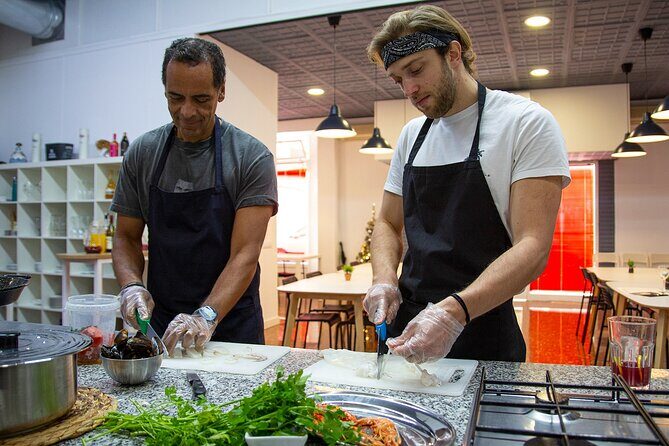
Next, I love the teaching style: you cook alongside Chef Ana and Chef José, with Chef Christine guiding the sangria part. The class is small, and that means you actually get involved—everyone has a job when it’s time to cook.
One thing to keep in mind: the schedule includes a walk to the kitchen, and the route can feel a bit of a hike if you’re less mobile or not steady on your feet.
In This Review
- Key highlights to know before you go
- Mercado de Ruzafa: where paella ingredients start making sense
- Getting to the kitchen: meeting point and the short walk
- Tapas and sangria: the pre-pain part of your paella day
- Cooking seafood paella: hands-on roles, clear step-by-step guidance
- What you eat after you cook: salad, wine, dessert, coffee, and sweet finish
- Price and value: is $78.64 per person a fair deal?
- Who this class fits best (and who should plan carefully)
- Should you book this seafood paella-and-sangria class?
- FAQ
- What’s the meeting point for the class?
- What time does it start, and how long is it?
- Is the Ruzafa market visit included?
- What’s included in the food and drinks?
- Do you cook the paella yourself or is it just watching?
- How big is the group?
Key highlights to know before you go
- Mercado de Ruzafa ingredient hunt: fresh produce and seafood, with real talk about paella customs
- Sangria workshop first: learn the basics before you even touch the paella
- Small-group cooking: hands-on roles instead of watching from the sidelines
- Classic seafood paella focus: you’ll cook the seafood version of the dish
- A lot of included food: tapas, salad, dessert, coffee, and mistela/sweet wine
Mercado de Ruzafa: where paella ingredients start making sense
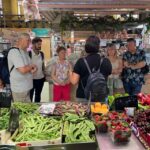
The day begins at Parroquia de San Valero in L’Eixample, right by Mercado de Ruzafa. From there, you’ll head into the market with your group and your guide, looking at the ingredients that show up in a proper paella—especially seafood and seasonal vegetables.
This isn’t a quick photo stop. You’ll get context as you shop: where ingredients come from, how locals think about quality, and how paella fits into Valencian culture. I like this approach because paella can feel mysterious until you see the components in person.
At the market, you’ll also learn how Valencians shop day-to-day. It helps you understand why paella isn’t one rigid recipe. It’s a method and a mindset—built on what’s fresh, what’s local, and what your people are eating together.
You can also read our reviews of more shopping tours in Valencia
Getting to the kitchen: meeting point and the short walk
Your start time is 11:00 am, and the tour runs about 3 hours 30 minutes end-to-end. The meeting address is clear on paper: Parroquia de San Valero, Carrer del Pare Perera, 6, L’Eixample, 46006 València. Still, a couple details can make or break your first five minutes.
In practice, the meeting point can be a little hard to spot if you arrive without looking carefully at the exact entrance area. If you’re early, take a moment to confirm you’re at the correct door and keep an eye out for your group.
After the market, you’ll walk to the kitchen—about 8 minutes—and that’s where comfort matters. Some people find the route manageable; if you have mobility limits, plan for a bit of walking and standing while ingredients are explained.
Tapas and sangria: the pre-pain part of your paella day
Before cooking starts, you’ll get tapas and sangria. The chef team typically arrives ready with drinks, snacks, and a playful, confident vibe that makes the class feel like a local family meal instead of a lecture.
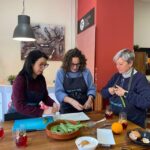
The sangria workshop is a real moment of its own. Christine and the kitchen team walk you through how to make it and what makes it taste right. You’ll also be served drinks beyond sangria—there’s beer and water/soft drinks available as part of the included setup.
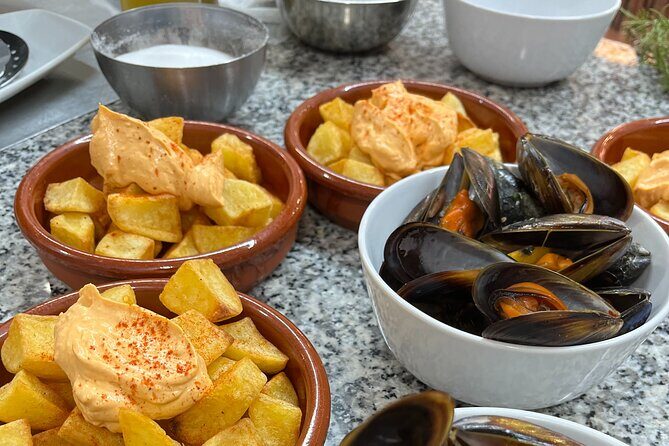
Then the food starts stacking up. Your class includes several tapas options, and they’re the kind you’ll actually recognize as Spanish bar staples. The sample tapas list includes:
- Patatas bravas with sojanesa
- Jamón serrano
- Manchego cheese
- Steamed mussels
- Olives
This matters for two reasons. First, you’ll be fed while you learn, so you’re not rushing through explanations on an empty stomach. Second, tapas gives you a taste-map for the flavors you’ll later see in paella and sides.
Cooking seafood paella: hands-on roles, clear step-by-step guidance
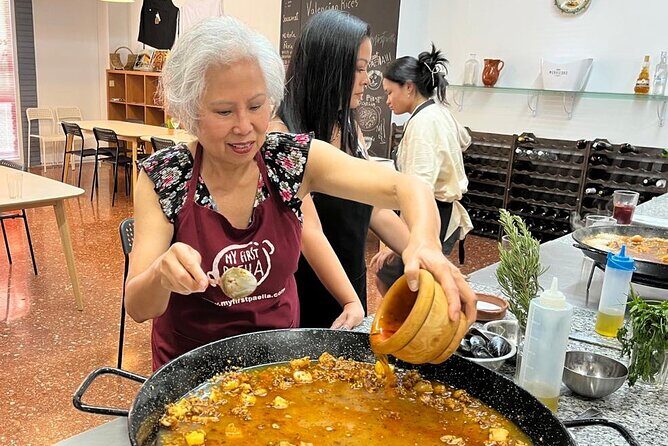
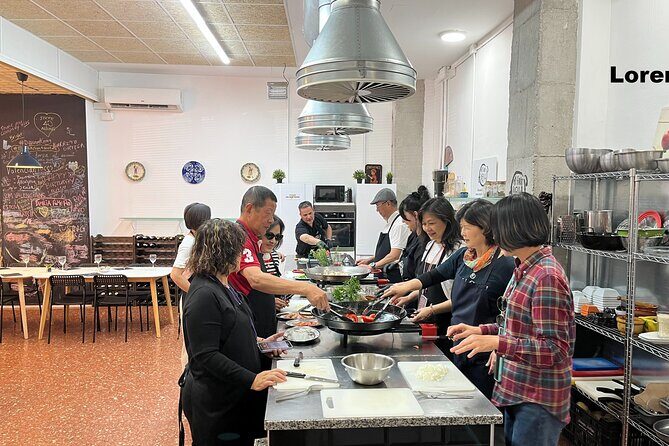
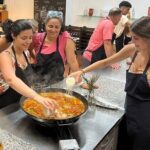
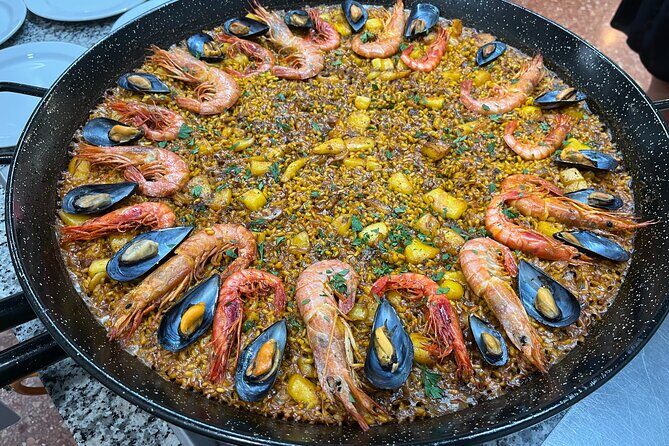
The main event is seafood paella, taught step by step by the chefs. You’re not just watching rice and broth go from pot to plate. You’ll handle ingredients and participate in the cooking process with guidance.
One smart thing this class does is keep the pace practical. The chefs break tasks into stages so you’re not overwhelmed. From what I’ve seen in how this is run, you’ll likely work with others at stations, especially since some sessions handle more than one type of paella at a time (seafood and another traditional option).
If you signed up for the seafood version, that’s what you’ll cook and eat. Expect to learn:
- how ingredients are prepped so they cook correctly
- how to manage the timing so the rice ends up right
- how to understand the dish as a process, not just a single recipe
The chefs’ best trick is making it feel doable. Paella has a reputation for being hard, but the class approach turns it into a sequence of manageable steps. And when you finally taste what you made, it clicks: paella is teamwork, plus heat control and timing.
What you eat after you cook: salad, wine, dessert, coffee, and sweet finish
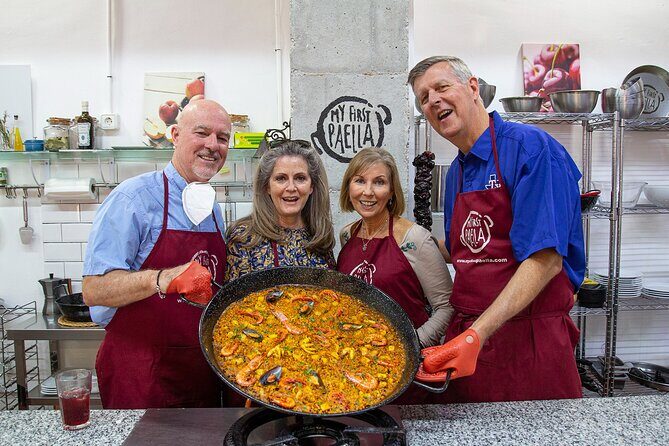
Once the paella is ready, you sit down and eat what you cooked. Your included meal isn’t just one plate—it’s a full Valencia-style spread with sides and dessert.
You’ll get a Valencian tomato salad, which is a great palate reset after seafood and rice. Drinks include Valencia wine, plus sweet wine (mistela), and coffee.
Your sample menu covers the full arc:
- Starter (Tapas): patatas bravas with sojanesa, jamón serrano, manchego cheese, steamed mussels, olives
- Main: paella + Valencian tomato salad
- Dessert: seasonal fruit, Valencian sponge cake, sweet wine + coffee
Two details I like here. First, the meal includes both savory and sweet elements, so you don’t leave craving dessert somewhere else. Second, the coffee and sweet wine finish make it feel complete, not like a “class that happens to include food.”
You can also read our reviews of more tours and experiences in Valencia


Price and value: is $78.64 per person a fair deal?
At $78.64 per person (for a 3.5-hour class), you’re paying for more than a cooking demo. You’re paying for:
- ingredient shopping and instruction tied to what you buy
- kitchen time and equipment
- a hands-on seafood paella lesson
- tapas, plus sangria, wine, and other drinks
- dessert and coffee, including mistela/sweet wine
When you break it down, it starts looking like good value for Valencia. Many “food tours” give you samples and stop there. This one feeds you properly and teaches you how to reproduce at least the method at home—then serves the results with wine and dessert.
And the small group size (up to 20) matters. With smaller groups, you get more attention while you’re handling ingredients and cooking steps. It’s the difference between feeling like part of the class and feeling like you’re waiting in line for your turn.
Who this class fits best (and who should plan carefully)
This is a strong fit if:
- you want a Valencia paella experience with real cooking practice
- you like pairing food with culture, including market shopping and local customs
- you enjoy drinks like sangria and wine as part of the meal rhythm
It can be a bit less ideal if:
- you have limited mobility, because there’s walking involved and you’ll stand at least part of the time while shopping and cooking
- you prefer low-alcohol experiences, since alcohol is part of the included setup (sangria, wine, and sweet wine)
It’s also a good option if you’re traveling solo or as a couple. The class format naturally mixes people into cooking roles, and that tends to make the conversation flow.
Should you book this seafood paella-and-sangria class?
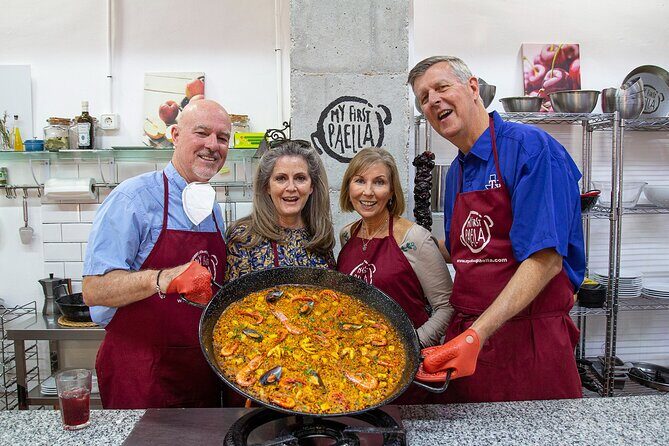
If you want a paella day that’s more than just eating, I’d book it. You get the full loop: market shopping in Ruzafa, sangria instruction, hands-on seafood paella cooking, then a proper sit-down meal with salad, dessert, coffee, and sweet wine.
Two practical call-outs before you decide:
- If you’re going on a Sunday, note that the Ruzafa market visit doesn’t run, since the market is closed.
- If you’re picky about meeting points or walking comfort, arrive a few minutes early and plan for the short transfer to the kitchen.
FAQ
What’s the meeting point for the class?
You meet at Parroquia de San Valero (Carrer del Pare Perera, 6, L’Eixample, 46006 València). The activity ends back at the meeting point.
What time does it start, and how long is it?
It starts at 11:00 am and runs for about 3 hours 30 minutes.
Is the Ruzafa market visit included?
Yes, the plan includes a stop at Mercado de Ruzafa. On Sundays, the market visit does not run because it’s closed.
What’s included in the food and drinks?
You’ll have tapas, paella, Valencian tomato salad, dessert, and coffee. Drinks included include sangria, wine, beer, plus water/soft drinks. Mistela and sweet wine are also part of the included dessert/coffee service.
Do you cook the paella yourself or is it just watching?
You’ll cook. The class includes ingredients and equipment, and you’ll follow the chef’s step-by-step instructions while participating in the cooking process for the seafood paella.
How big is the group?
The tour has a maximum size of 20 travelers.