REVIEW · VALENCIA
Grand City Bike Tour of Valencia
Book on Viator →Operated by Sky Bike · Bookable on Viator
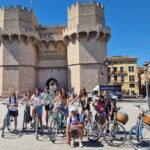
Valencia by bike beats the usual checklist. This 3-hour ride strings together iconic sights with quick stops and plenty of city-street views, ending where you start with no stressful shuttling. It’s a private tour, so your guide can pace things to your group and answer the questions that pop up.
I love the focus on contrasts: Mercat Central de Valencia for market-life and iron-and-glass architecture, and Jardi del Turia for a slower, greener stretch that gives your legs a breather. You get a real sense of how Valencia works, from daily shopping to grand public spaces.
The one trade-off is time. Most major sights get about 10 minutes, so if you want to linger inside churches or do careful interior stops, budget extra ticket time or plan for a second visit later.
In This Review
- Key highlights at a glance
- Why This Valencia Bike Route Feels Efficient (Without Feeling Rushed)
- Meeting Point at C/ de les Carabasses: Starting in Ciutat Vella
- Mercat Central de Valencia: A Market Building That Looks Like a Landmark
- La Lonja de la Seda: Gothic Power, Silk Money, UNESCO-Level Craft
- Dos Aguas Palace (Rococo) and Plaza de la Virgen: Valencia’s 18th-Century Glam Meets Everyday Life
- Valencia Cathedral: Big Gothic Presence and a Real Ticket Planning Moment
- Jardi del Turia: The 1957 Flood Story You Can Feel in the Park
- City of Arts and Sciences: Calatrava’s Futuristic Valencia in One Stop
- Price and Value: What $82 Buys You (and What You May Need to Pay Extra)
- The Guide Factor: Santiago’s Depth, Patience, and Love of Valencia
- What You’ll Really Be Doing While You Ride
- Who This Tour Fits Best (and Who Might Prefer Another Plan)
- Should You Book the Grand City Bike Tour of Valencia?
- FAQ
- FAQ
- How long is the Grand City Bike Tour of Valencia?
- How much does the tour cost?
- What is included in the price?
- Are admission tickets included at every stop?
- Is this tour private?
- What’s the cancellation policy?
Key highlights at a glance
- Mercat Central (1914): Modernist iron-and-glass building, built for everyday produce and still a showstopper from the outside
- La Lonja de la Seda: Gothic silk exchange in UNESCO territory, with big “who had the power?” energy
- Rococo Dos Aguas Palace: 18th-century glamour that feels like Valencia flexing a little
- Jardi del Turia: A longer pause in the former riverbed park, built after the 1957 flood changed the city
- City of Arts and Sciences: Calatrava’s futuristic complex, with multiple signature venues in one area
Why This Valencia Bike Route Feels Efficient (Without Feeling Rushed)
This tour is designed for people who want the best of Valencia in one go, but don’t want to spend the day bouncing between far-apart sites. In about three hours, you cycle through the city, then get short, meaningful stops at major landmarks.
The structure is also practical. You’ll spend a chunk of time at the big sights, but the tour still accounts for travel time between them, so the plan doesn’t fall apart when the streets get busy. And because it’s private, your guide can adjust how quickly you move from one stop to the next.
You can also read our reviews of more cycling tours in Valencia
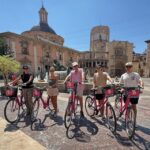
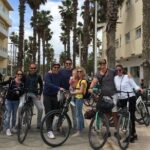
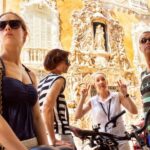
Meeting Point at C/ de les Carabasses: Starting in Ciutat Vella
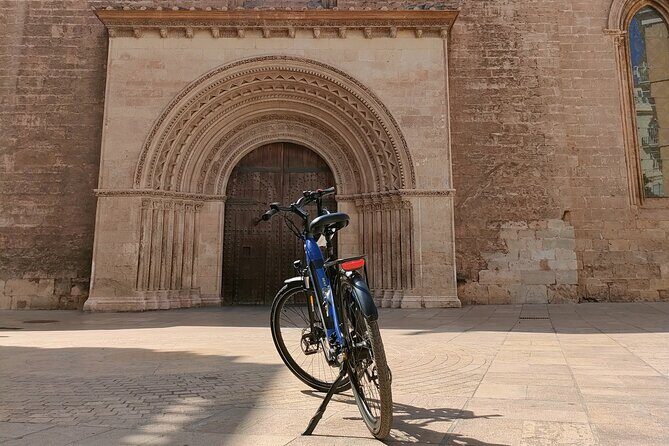
The tour meets at C/ de les Carabasses, 15, Ciutat Vella, 46003 València. That location is helpful because it puts you in the heart of the historic core, where a lot of Valencia’s classic sights cluster.
It’s also nice that the activity ends back at the meeting point. That means you’re not stuck figuring out how to get back after you see the last attraction—your day closes cleanly where it started.
Mercat Central de Valencia: A Market Building That Looks Like a Landmark
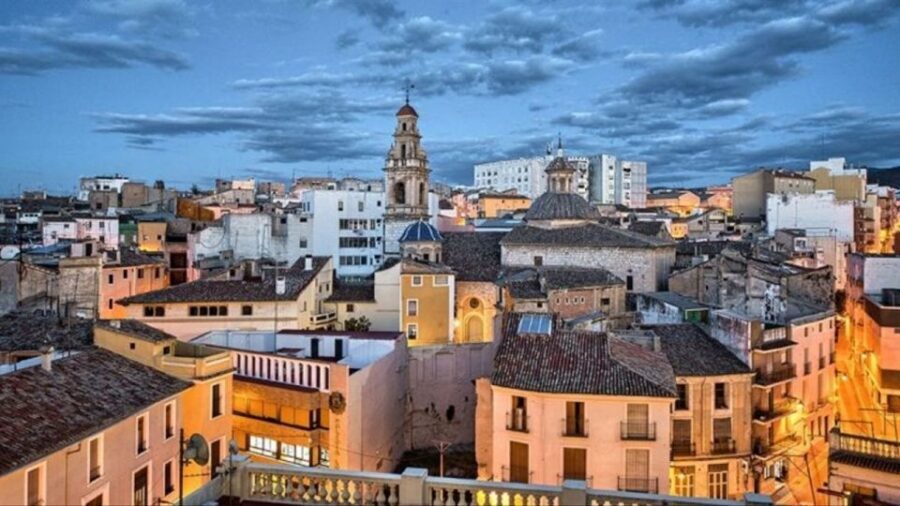
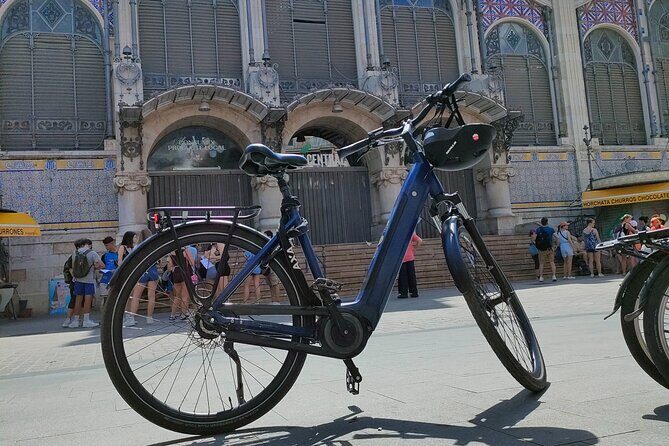
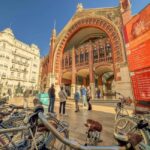
Stop one is Mercat Central de Valencia, locally called Mercat Central. This is one of the city’s signature attractions because it isn’t just a market—it’s a statement. The building dates to 1914 and is known for its modernist iron-and-glass look.
What I like about starting here is the immediate payoff. Even if you’re not there to shop, you’re still stepping into an atmosphere that feels tied to real Valencia routines. The market’s variety of fresh products and the architectural drama make it an easy win for your first stop.
A quick note on pacing: the stop is listed at about 10 minutes, and admission isn’t included for this one. If you want to do any extra time inside, plan to arrive hungry (for food) and also ready to choose what matters most.
La Lonja de la Seda: Gothic Power, Silk Money, UNESCO-Level Craft
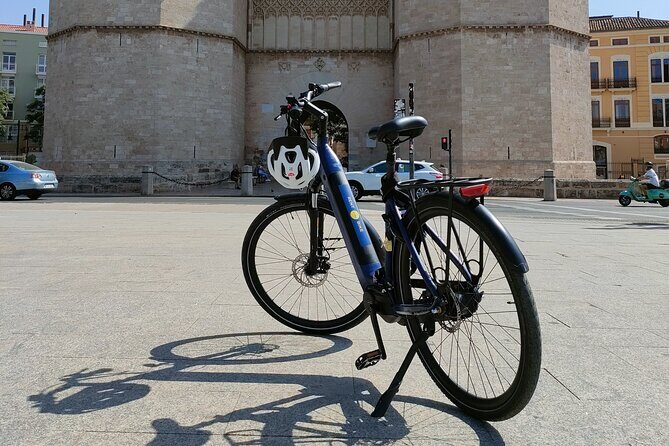
Next up is La Lonja de la Seda (the Silk Exchange), a historic building from the 15th century. This one is a UNESCO World Heritage site, and the focus here is architecture—especially the Gothic design style that shows up in the details.
The silk trade era matters because it explains why buildings like this got made. You’re not just looking at pretty stone; you’re seeing evidence of wealth built from global commerce. That makes the stop feel more meaningful, even if you’re only there briefly.
Again, expect about 10 minutes here and note that admission isn’t included. If you’re the type who loves stepping inside and reading every wall plaque, you might want to treat this as a quick orientation stop during the bike tour—and schedule a deeper visit on another day.
Dos Aguas Palace (Rococo) and Plaza de la Virgen: Valencia’s 18th-Century Glam Meets Everyday Life
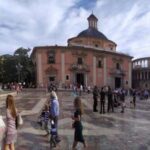
The tour then passes Palacio del Marqués de Dos Aguas, known for its Rococo style and 18th-century aristocratic grandeur. This is a sharp shift from the medieval trade feeling of La Lonja. The contrast helps you understand Valencia isn’t stuck in one era.
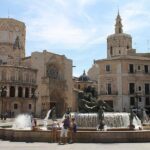
From there, you hit Plaza de la Virgen, a historic square at the center of city life for centuries. This stop is timed at about 10 minutes, and in this itinerary it’s listed as having admission included.
What makes the plaza a smart stop on a bike tour is its role as a “pause and look” zone. You’re surrounded by landmark buildings and fountains, so it’s an easy place to take in the vibe without turning it into a half-day detour. It’s the kind of stop where you can reset your attention and enjoy the street scene as much as the architecture.
You can also read our reviews of more city tours in Valencia


Valencia Cathedral: Big Gothic Presence and a Real Ticket Planning Moment
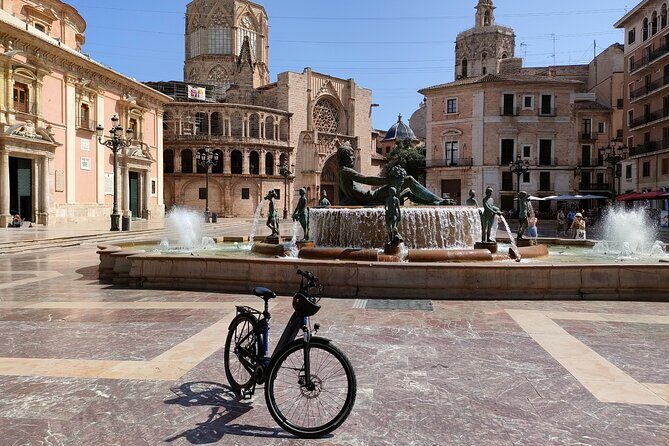
After the plaza comes Valencia Cathedral (also known as the Cathedral of Santa Maria). This is one of the most significant Gothic cathedrals in Spain.
Even if you only see it briefly during the tour, the scale and presence are hard to miss. The listed time at this stop is about 10 minutes, and admission isn’t included.
If the cathedral interior is a must-do for you, this is where you should plan carefully. The bike tour is a moving snapshot. You’ll get your bearings, but you may still want a separate time slot later for a slower, ticketed visit.
Jardi del Turia: The 1957 Flood Story You Can Feel in the Park
This is the longest stop on the itinerary: Jardi del Turia (Parque del Turia), with about 40 minutes. It’s an urban green space running along the former course of the Turia River, which was diverted after a devastating flood in 1957.
This is one of the best parts of the tour because it changes the pace. After quick sightseeing stops, you get a proper stretch of time to slow down, breathe, and absorb the city’s transformation from river history into park life. It also helps that it’s listed as having admission included here.
If you’re traveling in hotter months or you’ve been walking all morning, this is the stop that helps your day feel balanced. It’s not just a “see it” moment—it’s a chance to reset.
City of Arts and Sciences: Calatrava’s Futuristic Valencia in One Stop
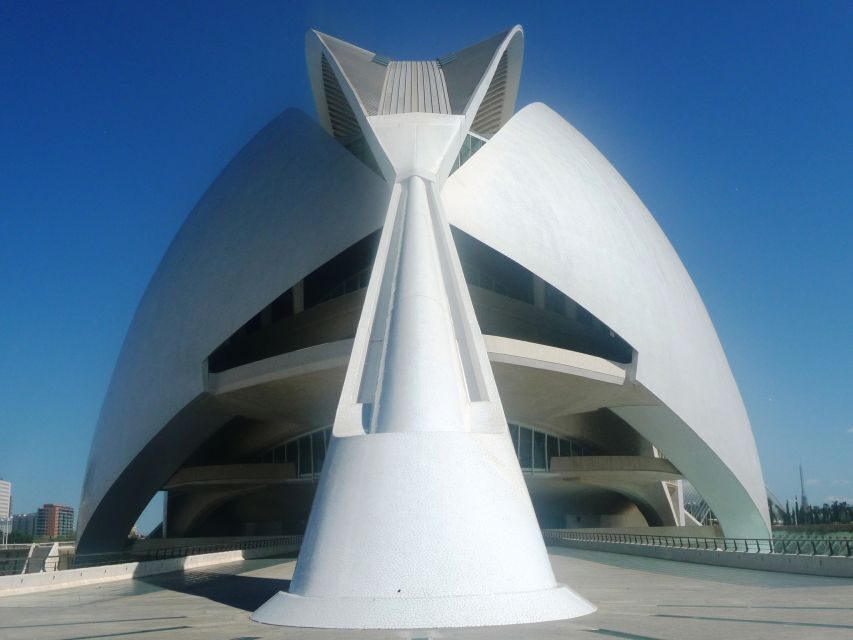
The final highlight is Ciudad de las Artes y las Ciencias, Valencia’s world-famous science and culture complex. Designed by architect Santiago Calatrava, it’s known for bold, futuristic architecture.
The itinerary flags a 30-minute stop and notes that admission isn’t included for this segment. The complex is associated with multiple venues, including the Hemisfèric, science museum, and the Oceanographic area.
Here’s how I’d think about this stop: treat it as a scenic and architectural finale. You’ll get a strong sense of how contemporary Valencia looks when you compare it to the medieval and classical stops earlier in the route. If you want to do any of the museums or specific indoor attractions, plan to purchase tickets separately and consider a follow-up trip.
Price and Value: What $82 Buys You (and What You May Need to Pay Extra)
The tour costs $82 for about 3 hours and includes bottled water. You also get a mobile ticket, which is a small thing that helps on travel days when you’re bouncing between apps and confirmations.
Where value gets interesting is admissions. In the itinerary, some stops show admission as included (Plaza de la Virgen and Jardi del Turia), while others explicitly say admission is not included. That means the base price is paying for the guide, the bike route, and the time management—not a blanket ticket package.
So I’d treat the $82 as a great deal for the route and guidance, then budget for optional or separate tickets for interior visits at places like the market, silk exchange, palace, cathedral, and City of Arts and Sciences. If you’re okay with “see the exterior + quick orientation” during the bike tour, the value stays very strong.
The Guide Factor: Santiago’s Depth, Patience, and Love of Valencia
One of the best parts of this experience is the way the guide style shows up in the result. In the info you’ll see about the experience, a guide named Santiago is described as a delightful, history-and-nature oriented professional with serious academic background—he has a master’s in political science and is working on an economics PhD.
That mix matters on a walking or bike tour. It’s not just facts; it’s how the facts get stitched into real context you can remember. And the same notes describe real patience with lots of questions, which is exactly what you want when your group includes curious people, friends chatting, and the occasional tangent request like: why did they build it this way?
Santiago’s broader travel and tour experience is also mentioned, including tours in places like Patagonia, the fiords of Norway, and Paris and Italy. That kind of “I’ve done this in many cities” skill often translates into smoother pacing and smarter explanations—especially on a route where time is tight.
What You’ll Really Be Doing While You Ride
This is not a sit-down museum crawl. You’re on a bike for the connective tissue—travel between sights—and then you’re using short stops for orientation and key photo angles.
The itinerary also makes it clear that remaining time is spent traveling from one attraction to another. That’s important: it tells you this is built as a route, not a collection of isolated attractions. If you like the idea of getting your bearings quickly and seeing how the city lays out, you’ll likely enjoy the rhythm.
And because it’s a private tour, you won’t be trying to keep up with a large schedule imposed on strangers. The guide can slow down when someone lags, answer follow-ups, or shift the order slightly if a street or crowd situation changes.
Who This Tour Fits Best (and Who Might Prefer Another Plan)
This tour fits you if you:
- Want the “best of Valencia” highlights in one organized loop
- Like architecture and city storytelling, not just ticking off names
- Appreciate a longer green-space break at Jardi del Turia
- Travel with a small group and want a guide’s attention
It might not be ideal if you:
- Want long interior visits at every major site
- Plan to spend lots of time in museums or on detailed self-guided reading
- Expect the full complex ticket experience at the City of Arts and Sciences during the bike stop
In that case, you can still enjoy the tour as a high-quality overview, then come back later for the specific interiors.
Should You Book the Grand City Bike Tour of Valencia?
If you want a smart, efficient introduction to Valencia—medieval silk wealth, modernist market architecture, cathedral scale, a park born from disaster recovery, and Calatrava’s sci-fi complex—this tour is a strong pick.
Book it especially if you enjoy guided context and you want a guide who can handle lots of questions without turning the day into chaos. At $82 for about three hours, with bottled water included and time built into a route that makes sense, it’s good value as long as you’re realistic about the stop lengths and admission costs.
FAQ
FAQ
How long is the Grand City Bike Tour of Valencia?
The tour lasts about 3 hours.
How much does the tour cost?
The price is $82.
What is included in the price?
Included items are bottled water. The tour also uses a mobile ticket.
Are admission tickets included at every stop?
No. Some stops list admission as not included, while Plaza de la Virgen and Jardi del Turia are listed as admission included.
Is this tour private?
Yes. It’s a private tour/activity, and only your group participates.
What’s the cancellation policy?
You can cancel for free up to 24 hours in advance of the experience start time for a full refund. If you cancel less than 24 hours before, the amount paid is not refunded.