REVIEW · VALENCIA
Valencia: 2-hour City Highlights Guided Tuk-Tuk Tour
Book on GetYourGuide →Operated by TukTuk-i · Bookable on GetYourGuide
Valencia moves fast, so this ride helps. A 2-hour private tuk-tuk tour turns the city’s big sights into a smooth, photo-friendly loop with a guide who keeps things moving. I especially like that it mixes classic landmarks with sea air, so you get more than just one side of town.
What I like most is the personalized pace and route attention. Guides such as Luda, David, Lucas, and Oscar are repeatedly praised for making stops feel informative (not rushed) and for helping with photos on the spot. The second big plus: you cover real variety in just 120 minutes, from historic old-city gates and bridges to the beach area and Valencia’s modern showpiece.
The only real drawback to think about is the tuk-tuk setup: there’s no trunk, so children’s chairs, wheelchairs, suitcases, or large packages can’t be carried. Also, street noise can make audio tricky if you’re farther back—so pick a spot where you can hear your guide clearly.
In This Review
- Key things to know before you go
- Starting at C. de la Blanqueria 3: a simple meet point, minimal fuss
- The 2-hour game plan: a smooth loop through Valencia’s contrasts
- Puerta del Mar and Puente de las Flores: first stop, quick city orientation
- Mestalla Stadium and La Marina de València: where Valencia breathes beyond the center
- Malvarrosa Beach and Platja de Llevant: sea air plus photo opportunities
- City of Arts and Sciences plus Mercado de Colón: modern architecture and real local life
- The ending stretch: Plaza de Toros, Central Market, and tower viewpoints
- Why people rate this tour so highly: guide-driven value in a small window
- Who this tuk-tuk highlights tour suits best (and who should think twice)
- Should you book the 2-hour Valencia tuk-tuk highlights tour?
Key things to know before you go

- Private, not cookie-cutter: Your route is guided and tailored, not a one-size-fits-all circuit.
- Photo stops are built in: Guides plan time to take pictures at key viewpoints.
- Old city + sea + modern in 2 hours: You get a full-spectrum Valencia overview.
- English or Spanish live guiding: You’re not stuck with just signage.
- Tuk-tuk limits for bags and gear: No trunk means small carry-on only.
- Route can flex for closures: Street closures or demonstrations may change timing.
Starting at C. de la Blanqueria 3: a simple meet point, minimal fuss
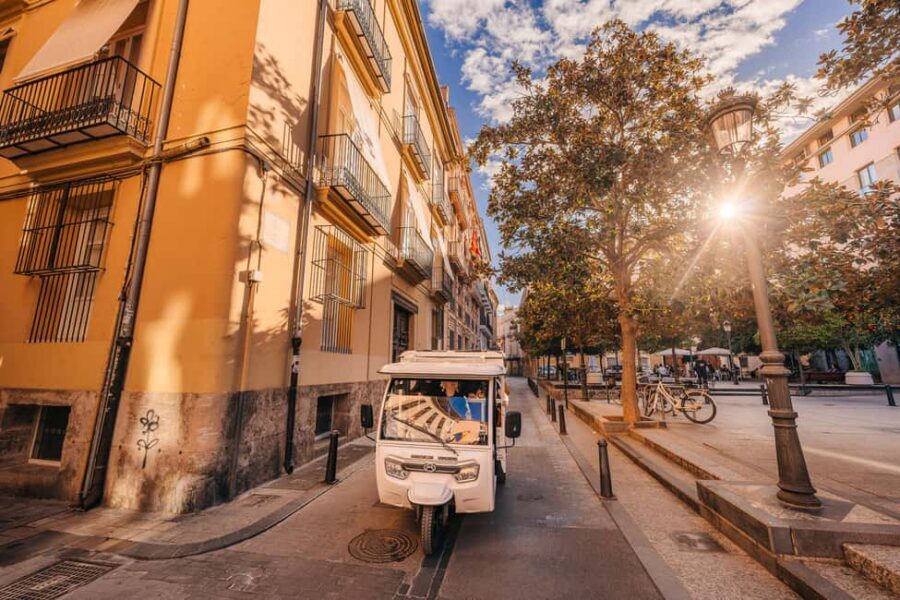
This tour is easy to get into because it starts and ends at the same place: C. de la Blanqueria, 3 in Ciutat Vella. That matters more than it sounds. When your time is limited, you don’t want extra shuttles, extra waiting, and extra confusion at the end of the day.
One practical detail I appreciate: there’s no hotel pickup or drop-off. For me, that makes it best if you’re already based near the central area, or if you’re happy to arrive on your own and spend the rest of the day going wherever you want next. Since you’re returning to the start location too, it’s simple to plan a follow-up stop—walk to a market, head to lunch, or just wander into the next neighborhood.
Also note the weather setup. In winter, the tuk-tuks use protective covers against rain and wind and have blankets to keep you warm. So you’re not standing around exposed while the driver does the work.
You can also read our reviews of more guided tours in Valencia



The 2-hour game plan: a smooth loop through Valencia’s contrasts
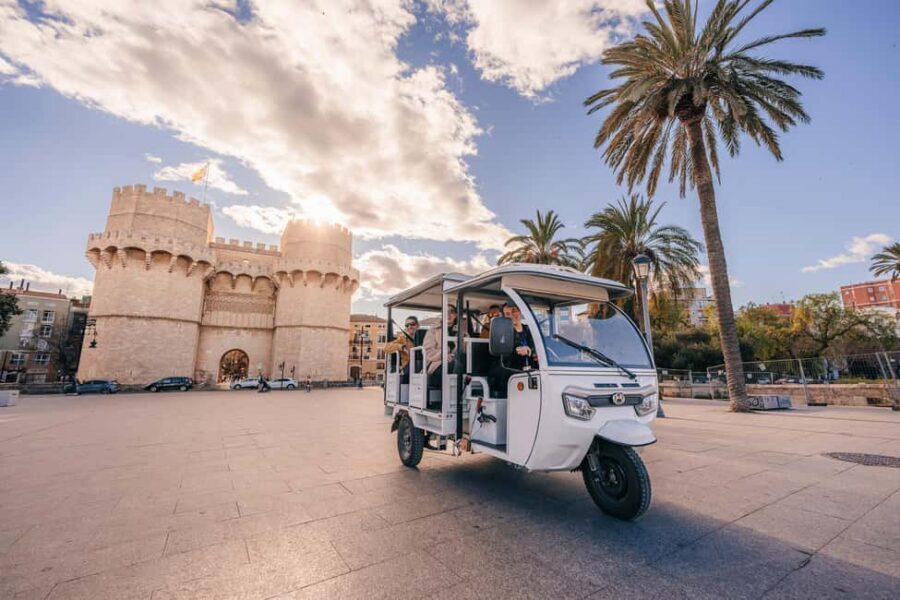
This isn’t a slow “see everything” kind of day. It’s a “get the feel of Valencia fast” tour. The big value is how it connects distant-feeling areas without you doing the long bus-wait or the long uphill walk.
You’ll see a run of classic old-city structure and viewpoints early on—Puerta del Mar and Puente de las Flores—then you move into wider neighborhoods and landmarks. After that, the tour shifts gears toward the sea: Malvarrosa Beach and Platja de Llevant, plus the Cabañal area in the beach-side atmosphere. Then it jumps to modern Valencia with the City of Arts and Sciences, before finishing back through markets and tower landmarks.
The result is that you don’t just collect photos. You get a mental map of how Valencia grew—old gates and bridges, football-stadium energy, harbor life, beach culture, and modern architecture in one compact loop.
Puerta del Mar and Puente de las Flores: first stop, quick city orientation

After meeting at C. de la Blanqueria, 3, the tour begins with a guided look at Puerta del Mar. I like starting here because it’s the kind of landmark that instantly gives you a sense of the city’s shape—where older Valencia feels anchored, and where the streets begin to fan out.
Next is Puente de las Flores, again with a guided stop. Bridges are useful on a highlights tour because they force you to slow down for a moment and notice the space between places. If you’ve ever spent a day bouncing from monument to monument, this kind of stop helps you connect them into a single story instead of a list.
A small note: since these stops are part of a moving driving route, expect the guide to manage time tightly so you don’t get stuck in one spot too long. If you’re the type who likes lingering for 30-minute photo sessions, you may want to know your limits—and then come back later on your own.
Mestalla Stadium and La Marina de València: where Valencia breathes beyond the center
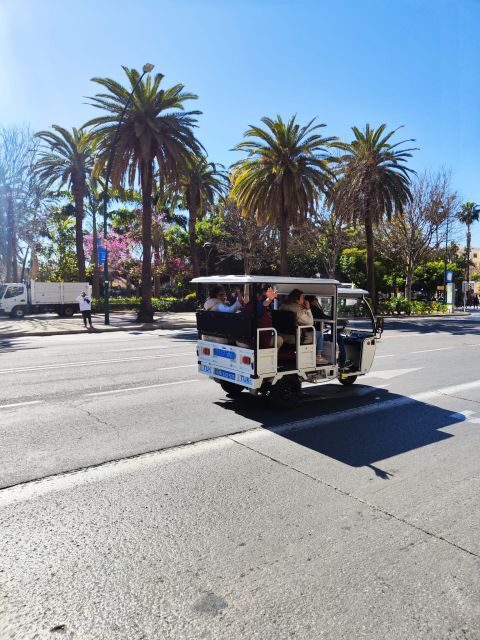
One of the stops that surprised me in the overall balance is Mestalla Stadium. Even if you’re not a sports person, it works on a highlights tour because it shows Valencia as a living, modern city—not just a museum. Stadiums also explain a lot about local energy and how different areas serve different rhythms of life.
After that you head to La Marina de València. This is one of those places where the city feels practical and active rather than purely decorative. The Marina stops are where you start to notice the shift toward wider streets and the kind of open views that make a tuk-tuk feel worth it.
The value of this mid-tour section is momentum. You’re not waiting for the big sights; you’re building toward them. If you’re visiting Valencia for the first time and you only have a few hours, this is the section that helps you understand how quickly neighborhoods change.
Malvarrosa Beach and Platja de Llevant: sea air plus photo opportunities
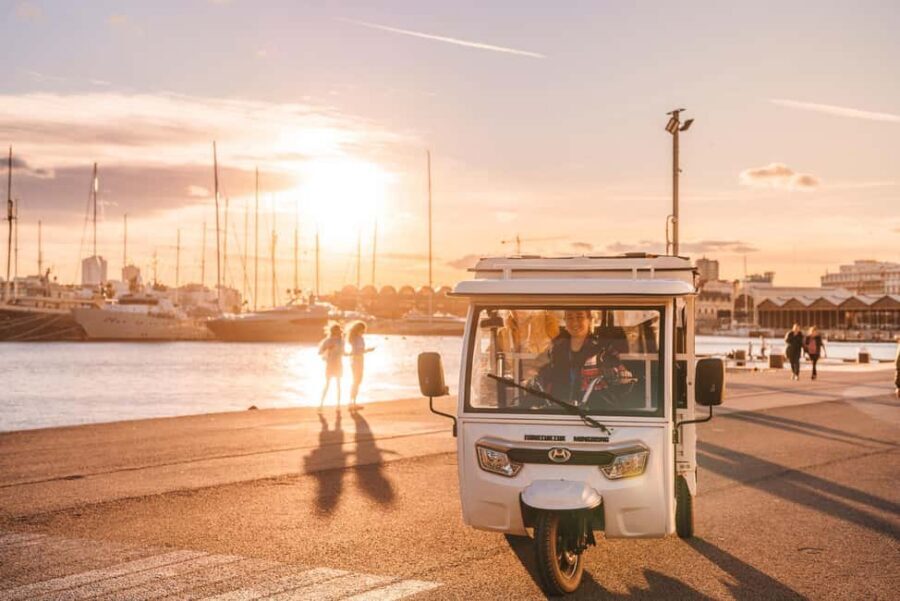
When the route turns toward Malvarrosa Beach and Platja de Llevant, the tour becomes very easy to enjoy. Beaches are already fun, but the real win here is that you’re seeing them as part of a bigger city map, not as a separate half-day trip.
The tour also includes time around the Cabañal neighborhood in the beach area. That matters because Cabañal is more than sand and umbrellas—it’s a lived-in neighborhood feel. This is the part of the tour where you’ll likely feel the most “Valencia” in the everyday way: sea views, street texture, and that relaxed pace you can’t replicate from monuments alone.
Photo-wise, this is where a tuk-tuk approach helps. You get placed at key viewpoints without the long scramble of finding parking or walking from one end of the beach to the other. And the tour is explicit about giving you the chance to take photos during the ride, so you’re not left rushing while everyone else is already back in motion.
If you’re traveling with a strong preference for beach time, keep your expectations realistic. You’re still in a 2-hour tour, so think of this as a highlight taste. Then, if you love what you see, you can build a longer beach afternoon later.
You can also read our reviews of more city tours in Valencia




City of Arts and Sciences plus Mercado de Colón: modern architecture and real local life

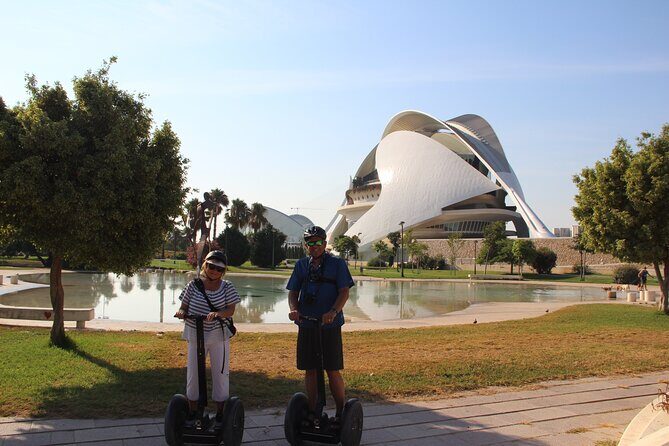
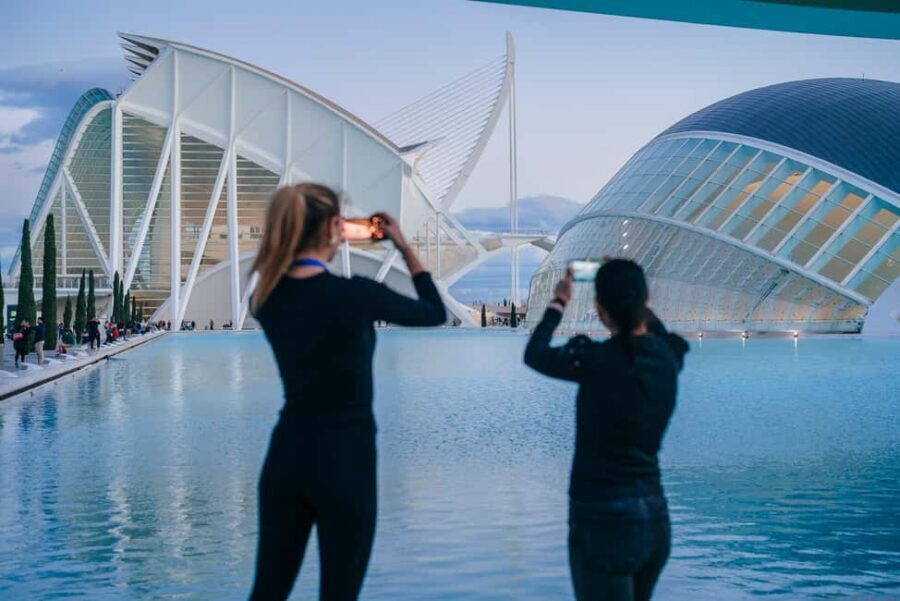
Then comes the big modern pivot: City of Arts and Sciences. On a highlights tour, this is the “wow” stop—the place that makes it obvious Valencia didn’t just preserve history. It also designed a future-facing city center.
What I like about pairing it with the Mercado de Colón later is that it keeps the day human. A market stop tells you what locals do when they’re not chasing landmarks. Even if you just browse for a few minutes, you come away with a better sense of the city’s daily rhythm.
This modern-plus-market combo is a strong value because it protects you from ending up with only iconic structures in your head. After you’ve seen the sea and the modern complex, a market gives you the grounded contrast that makes your photos feel connected rather than random.
If you have limited time, this pairing is a good use of it. If you have extra time, you’ll probably want to return to at least one of these places for a longer look.
The ending stretch: Plaza de Toros, Central Market, and tower viewpoints
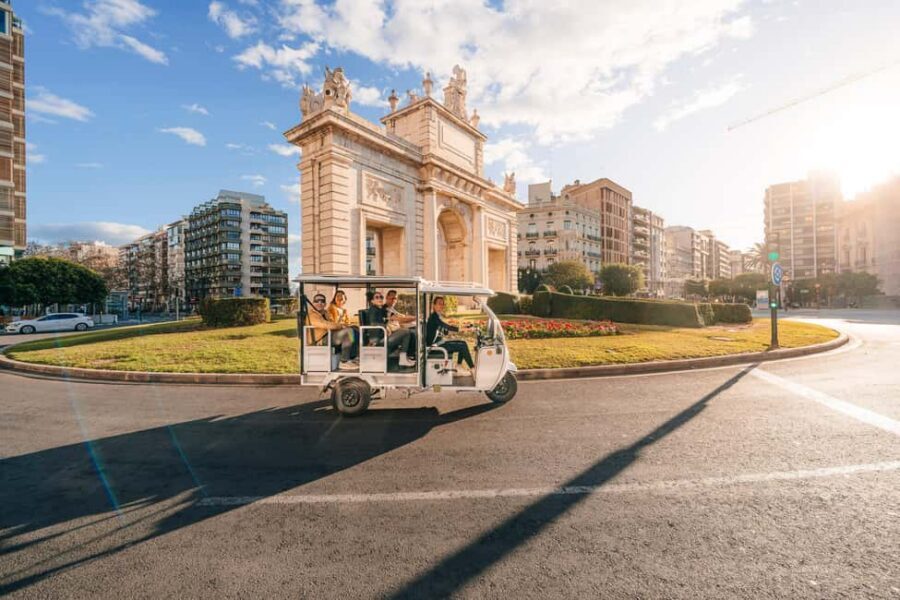
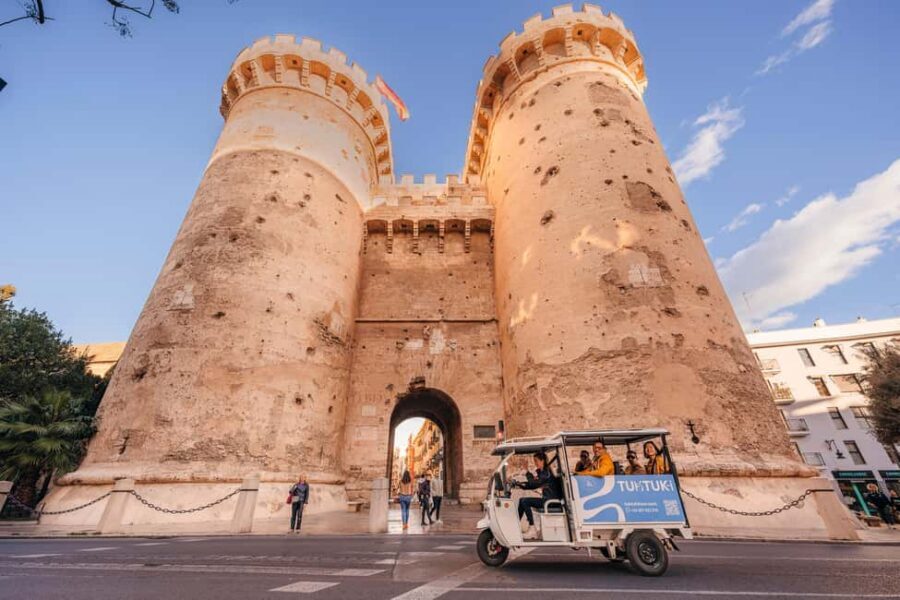
The latter part of the loop includes several classic “last-mile” landmarks: Plaza de Toros de Valencia, The Central Market of Valencia, Torres de Quart, and then you return to C. de la Blanqueria, 3.
Plaza de Toros de Valencia adds another layer to the Valencia picture. Like the stadium stop, it signals a city with traditions and big public spaces, not only small historic lanes.
Then you hit The Central Market of Valencia. Market stops are great on guided tours because you don’t need to guess what matters or where to look. Even if you’re not buying anything, it’s often where you feel the city’s character quickly—colors, smells, movement, and the sense of something practical happening right in front of you.
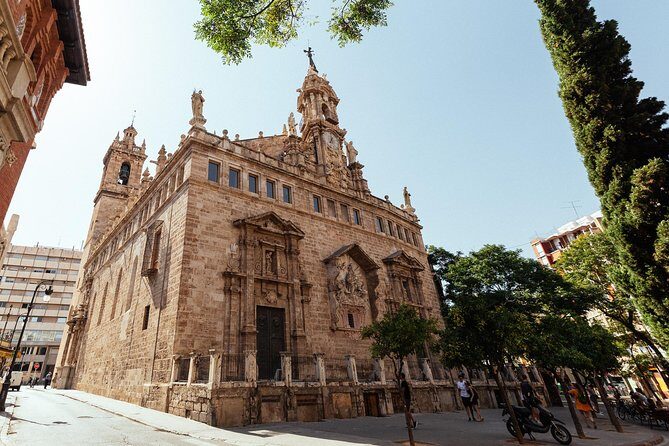
Torres de Quart is a fitting final architectural note. Tower landmarks help you end with vertical perspective, and they’re a good way to close the loop between the older parts of Valencia you saw earlier and the newer areas you toured mid-day.
One small consideration: because the tour includes multiple guided stops close together, you’ll want to wear comfortable shoes and keep your phone charged. You don’t want to miss the best photo angles simply because you ran out of battery halfway through.
Why people rate this tour so highly: guide-driven value in a small window
This is rated 4.7 with 233 reviews, and the pattern in the feedback is clear: the guide experience is the reason it feels better than basic sightseeing.
In particular, guides like Luda, David, Lucas, and Oscar are praised for being helpful, adjusting to real-life changes, and making the tour feel like a private service rather than a scripted drive-by. One reviewer even noted how a guide handled disruptions during a power outage scenario without losing the tour flow. That’s the kind of problem-solving you want in a short tour—because there’s no time to fall behind.
You’ll also appreciate the “photo-first” approach. The tour explicitly offers you the chance to take photographs, and the guides are described as good at giving you time to stop and shoot. That can be the difference between a holiday full of blurry clips and a holiday with actual keepers.
One tech note: a couple of people wished for better ability to hear with microphone systems. Since street noise is real in Valencia, I’d suggest you sit where you can hear best and don’t assume every sentence will land perfectly over traffic sounds.
Who this tuk-tuk highlights tour suits best (and who should think twice)
This tour is built for people who want a strong overview without committing to a full-day walking plan. If you’re in Valencia for a short stay, or if you want to see old city + beach + modern all in one go, it’s a smart format.
It also fits well if you prefer guidance over navigation. You’ll be guided through major stops with live commentary in English or Spanish, and you’ll come away knowing what to visit next on your own.
The big “think twice” categories are mostly about the tuk-tuk constraints. Since tuk-tuks don’t have a trunk, you can’t rely on them for suitcases, large packages, wheelchairs, or children’s chairs. And pets are not allowed.
So if you have mobility needs, bulky luggage, or you need extra seating supports, you’ll want to plan around that limitation before booking. If you’re traveling light and you’re comfortable riding through the city streets, this format is a great fit.
Should you book the 2-hour Valencia tuk-tuk highlights tour?
I’d book it if your goal is a fast, guided orientation that still includes real city variety. For $46 per person over 120 minutes, the value is in the mix: guided stops, private/personalized service, and the practical convenience of reaching distant-feeling sights without long transit time.
I’d skip it if you want lots of unstructured time in a single area, or if you need a transport option that works with strollers, wheelchairs, or larger luggage. The lack of trunk space and the “private but constrained” tuk-tuk capacity can be a deal-breaker for some travelers.
If you’re deciding between a quick bus loop and something more tailored, this one’s easier to justify. It’s designed to be a real highlights tour with stops that make sense together, plus the chance to get photos without constantly fighting where to park or where to walk next.