REVIEW · VALENCIA
Valencia City MO’Bike Tour
Book on Viator →Operated by MObike · Bookable on Viator
Valencia moves fast when you ride. This 3-hour MO’Bike tour threads together the sights that are hard to pack into one walk, from old-town corners to the Turia park and then into the futuristic City of Arts and Sciences. I especially like the photo-friendly stops, where you can park yourself for a shot without sprinting between landmarks. And I love that the route is built for comfort—flat riding through a pleasant, balmy-feeling climate.
One more win: the ride keeps a great tempo, and the guide Marco helped set a pace that feels relaxed but still moves you through the good stuff. The main thing to consider is that a couple of big sights are quick look-ins rather than fully included admissions, so you may want to decide in advance if you’re okay with what’s covered versus what costs extra.
In This Review
- Key highlights worth knowing before you go
- Why this Valencia bike tour feels better than walking
- Getting set up: MO’Bike meeting point and how the ride starts
- Old Town focus: Carrer del Músic Peydró to Central Market
- La Lonja de la Seda: quick architectural context (and ticket reality)
- Plaza de la Virgen: the big three landmark moment
- Torres de Serrans: a city-wall gate with a defensive past
- Jardi del Turia: the one-hour ride that ties everything together
- Palacio de la Música de Valencia: the glass dome moment
- City of Arts and Sciences: Calatrava’s futuristic finale
- Price and pacing: is $48.06 good value for 3 hours?
- Who this MO’Bike tour suits best
- Should you book the Valencia City MO’Bike Tour?
- FAQ
- How long is the Valencia City MO’Bike Tour?
- How much does the tour cost?
- What languages are available?
- What’s included in the price?
- Are tickets included for every stop?
- Where do we meet, and where does the tour end?
- How big is the group?
- Can children join the tour?
- Is free cancellation available?
Key highlights worth knowing before you go
- Cruiser bikes + helmets included, so you start riding without extra gear hunting
- Small group (max 15), which helps the pace stay smooth and social
- More photo stops than a bus-style tour, with chances to frame your own angles
- Central Market + Silk Exchange area, handy for pairing architecture with local food culture
- A full hour in the Turia Gardens, the city’s famous park stretch on a bike
- City of Arts and Sciences photo moment, with time to enjoy Calatrava’s architecture
Why this Valencia bike tour feels better than walking
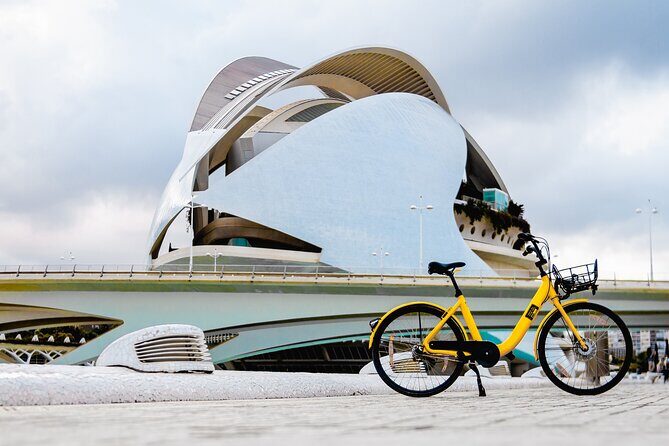
Valencia is a city of layers: medieval streets, grand plazas, then a long ribbon of parkland that cuts right through town. Walking can do it, but you’ll spend a lot of effort just getting from one zone to the next. On a bike, the distance stops feeling like a chore, and you can focus on seeing.
I like that this tour doesn’t pretend you can see everything. In about 3 hours, you hit the core highlights in a logical flow, so you leave with real “I got the overview” clarity. You also get the kind of flexibility that buses don’t: instead of being herded along with everyone at the same pace, you can pause for photos wherever you want—within reason—then roll on when you’re ready.
The other advantage is the flat, easy riding style. The tour is built around comfort, which matters when your “sightseeing time” is limited. You’re not just surviving the route—you’re enjoying it.
You can also read our reviews of more cycling tours in Valencia
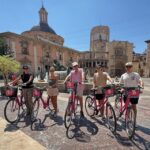
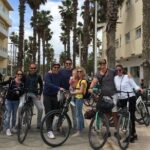
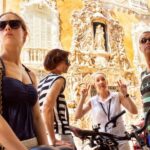
Getting set up: MO’Bike meeting point and how the ride starts
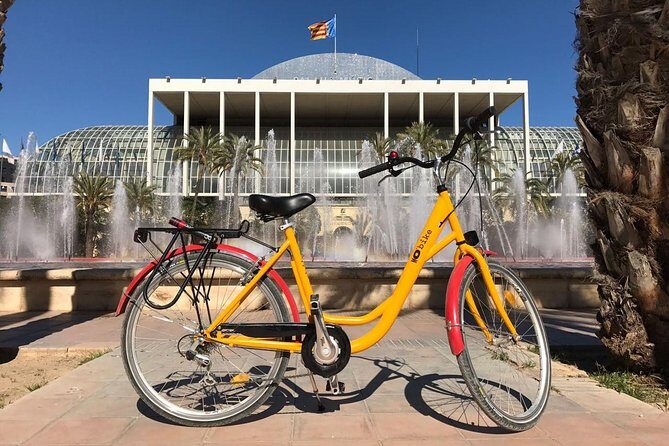
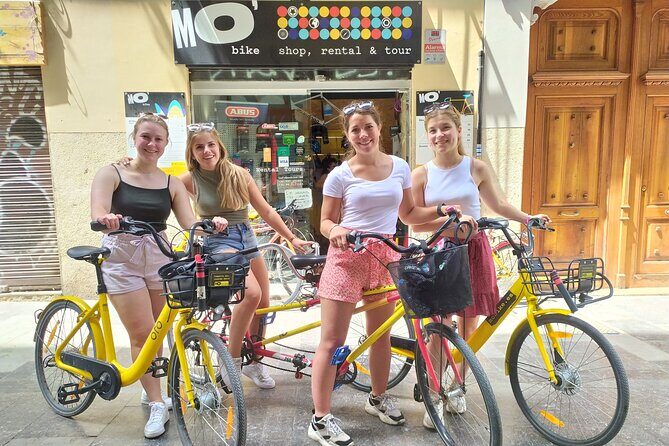
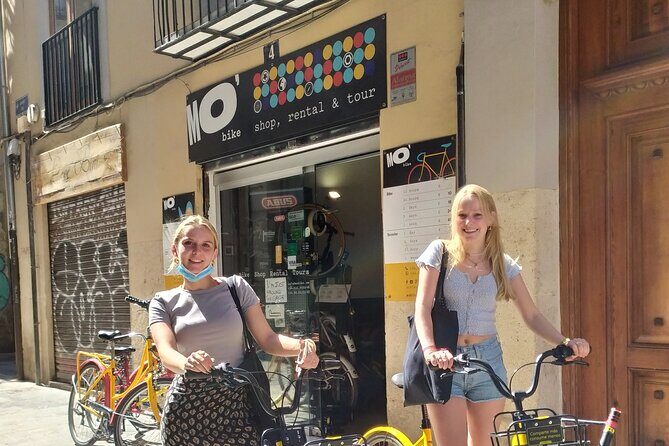
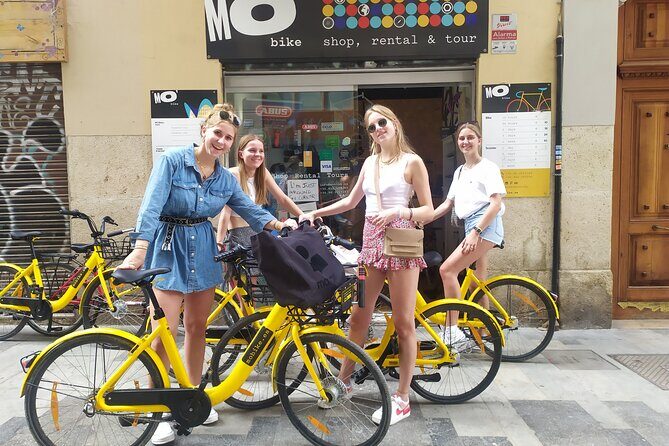
The tour starts at MO’bike – Rent a bike – Repair shop at Carrer del Músic Peydró, 7 in Ciutat Vella. That’s a very practical choice because it puts you close to the older streets where the first sights sit.
Plan to arrive 15 minutes early. That’s your buffer for checking in, getting your bike sorted, and using the helmet that comes with the tour. You’ll also use a mobile ticket, which tends to make the first 10 minutes painless.
Another detail I appreciate: the tour can run with a multi-lingual guide, but it’s offered in English, and the tour listing notes English. If you’re traveling with friends and want a clear explanation of what you’re seeing, this matters.
No hotel pickup is included, so you’ll want to build in enough time to get to the meeting point before your start time. Once you’re on the bike, the tour itself does a good job of keeping things moving without feeling rushed.
Old Town focus: Carrer del Músic Peydró to Central Market
After the setup, your first steps place you into the old-city rhythm immediately. The opening meeting point on Carrer del Músic Peydró is in the Ciutat Vella area, so you’re already close to the kind of narrow streets that make Valencia feel like Valencia.
The first major stop is the Central Market of Valencia, also known as Mercado Central. This is one of the big reasons to do the tour by bike instead of just dropping into one museum at random. Mercado Central is described as a public market located across from the Llotja de la Seda and the church of Juanes. That means you’re not seeing one isolated site—you’re seeing a cluster of landmarks tied to the city’s culture and architecture.
What I’d watch for here: the market’s identity as a standout Valencian Art Nouveau work. Even if you’re not shopping for ingredients, it helps to take a few minutes just to understand the building context. You’ll likely notice how the market sits like a centerpiece to the surrounding historic structures.
It’s also a quick visit (about 10 minutes). That’s not a full market tour, so if your goal is eating your way through Mercado Central, you might use this stop for orientation and then go back later on your own.
La Lonja de la Seda: quick architectural context (and ticket reality)
Next up is La Lonja de la Seda, the Silk Exchange. This building is described as a late Valencian Gothic-style civil structure. That wording matters: you’re looking at civic architecture, not a church, and that helps you see it differently.
The tour gives about 10 minutes here. It’s also flagged as admission ticket not included, which is a real-world consideration. You can still get a meaningful look, but if you were hoping for the full internal visit, you’ll want to check what’s possible on the day or be ready to add tickets separately.
I find that this kind of short stop works well on a bike tour. You get the “where and why” from the guide, then you know whether it’s worth spending more time later. If you’re the type who loves buildings enough to go deeper, you’ll probably use La Lonja as a springboard for a second visit.
Plaza de la Virgen: the big three landmark moment
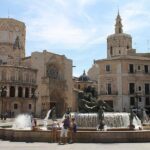
Then you ride into Plaza de la Virgen, one of the most beautiful squares in Valencia. This is one of those stops where the city’s main showpieces come together in one view.
Here, you’re looking at three emblematic buildings: the Cathedral of Santa Maria, the Basilica of the Virgen de los Desamparados, and the Palace of the Generalitat. The value of putting this stop on a bike tour is simple: you can actually see the square as a space, not just as an address you rushed to for a photo.
This stop is listed at about 15 minutes, and it’s marked as free admission. That means you don’t have to decide in advance if tickets are worth it for this moment. You can just slow down, take in the scale, and let the architecture hit you.
The one practical thing to keep in mind: this is a busy square area. Even on a bike tour, you’ll want to stay aware of pedestrians and keep your focus on your guide. You’re there to see, not to navigate like it’s your personal track day.
You can also read our reviews of more city tours in Valencia




Torres de Serrans: a city-wall gate with a defensive past
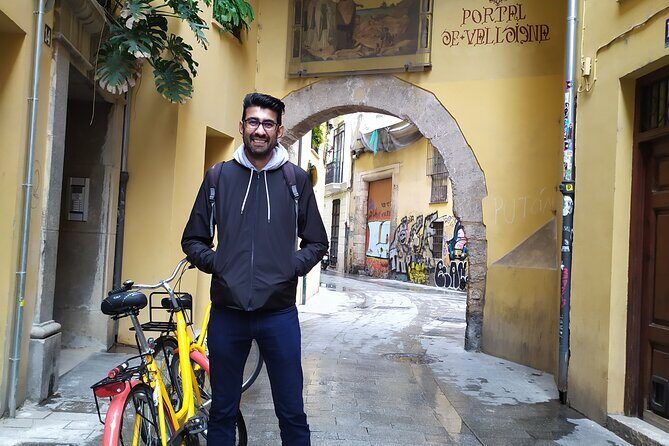
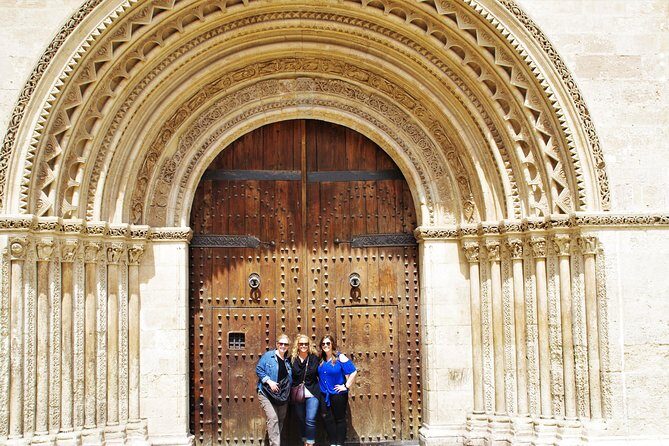
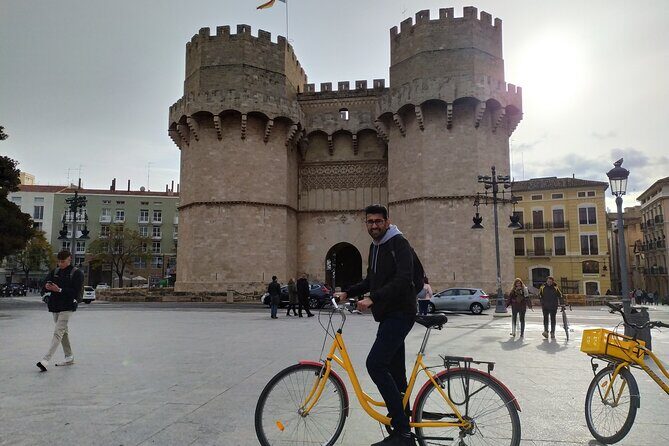
After the plaza, the tour moves to Torres de Serrans, a gate that formed part of the ancient city walls. It’s described as one of twelve gates, and the main entrance to the city, originally built with a defensive function.
This is a short stop (about 5 minutes) and admission ticket not included. So think of it as a historical punctuation mark, not a full sightseeing chapter. But it’s still valuable because it helps connect Valencia’s “old city” identity to something physical you can point at.
On a bike, these quick gate stops work surprisingly well. You don’t lose time searching for the structure or trying to decipher it from a far distance. You get guided context fast, then roll onward.
Jardi del Turia: the one-hour ride that ties everything together
The largest chunk of the tour is the Turia Gardens, listed at about 1 hour. This is where Valencia’s personality shifts from stone streets to an airy long park that runs through town.
The Turia Gardens are described as one of the largest urban parks in Spain, stretching along nine kilometers of green space. You’ll pass footpaths, leisure and sports areas, and romantic spots where people unwind. Another big detail: the park follows the former riverbed, with 18 bridges full of history, and it passes by the city’s main museums and monuments on either bank.
That former riverbed detail matters because it explains why the park feels like a corridor rather than a random cluster of gardens. It also helps you understand why the bridges are so much part of the experience. On a bike, bridges become not just photos, but markers that help you track where you are in the city.
Most of the time, bike tours can feel like “hit and run” on historic stops. Here, the balance changes. You get breathing room, movement through open space, and time to enjoy the park’s feel.
This is also the section where I’d expect the most relaxed energy from the group. If you want to chat, take a longer photo, or just slow down for a second, the Turia stretch is the most forgiving part of the itinerary.
Palacio de la Música de Valencia: the glass dome moment
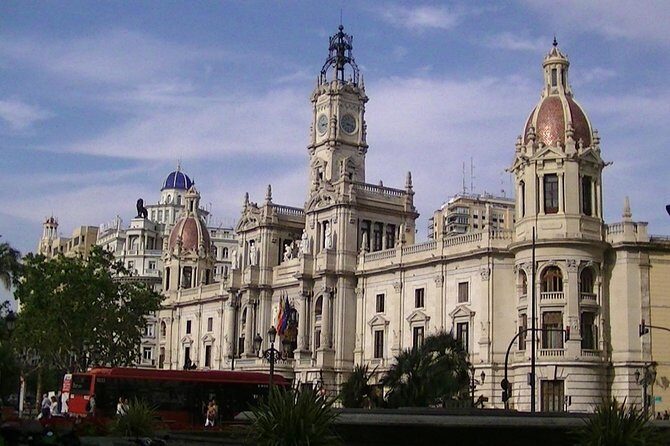
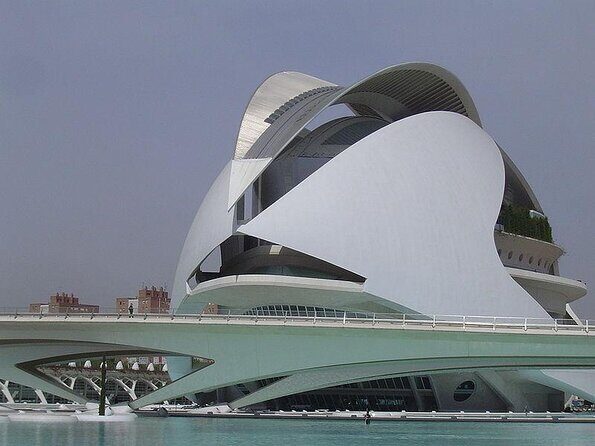
After Turia, you head to Palacio de la Música de Valencia. It’s described as one of Valencia’s most emblematic buildings and among the most important concert halls in Europe.
Even if you’re not catching a performance, this stop is about visual impact. The tour notes an enormous glass dome that runs parallel to the Turia river-bed park and provides the main entrance. That description is key. When you see it in context with the park, it’s much easier to appreciate why this building is so famous.
This is a short visit (about 5 minutes) and free admission. So don’t plan on using this as a deep architectural tour. Instead, use it like a quick “wow” moment, then roll into the final major stop.
City of Arts and Sciences: Calatrava’s futuristic finale
The last big destination is the Ciudad de las Artes y las Ciencias, the City of Arts and Sciences. Expect an “end-of-tour” feeling here, because it’s visually dramatic and unmistakably modern compared to the old town you’ve been riding through.
The tour gives about 30 minutes here, with free admission noted. The site is designed by architect Santiago Calatrava and described as a spectacular, imposing space created for leisure and culture, with avant-garde architecture set firmly in the 21st century.
This stop is also where the photo opportunities peak. The tour highlights a stop for group photos at City of Arts and Sciences, and it makes sense. The geometry and structures give you easy angles, even if you’re not a professional photographer.
One practical thought: give your eyes a few minutes to adjust. Some people go from old-town stone textures to futuristic white shapes too fast and feel a little disoriented. Take it slowly at first, then you’ll enjoy how the whole complex works as a kind of “modern skyline” you can actually get around on a bike.
Price and pacing: is $48.06 good value for 3 hours?
At $48.06 per person for about 3 hours, this tour lands in the sweet spot for people who want structure without spending all day. The price includes a local guide / professional guide, bicycle use, and helmet use. That’s important because it removes the two big practical costs on your end: renting a bike and figuring out safety gear.
You’re also getting route efficiency. You cover multiple major zones: the historic core, then the Turia Gardens stretch, then the City of Arts and Sciences. That’s not just “more sights,” it’s fewer dead minutes. Even if you’d love to explore Valencia slowly, this gives you a guided overview you can build on later.
About admissions: most of the stops are marked free, but La Lonja de la Seda and Torres de Serrans are specifically noted as not included. That means you’re not paying extra everywhere, but you also shouldn’t expect every interior or ticketed area to be covered. Still, the short durations make sense for a 3-hour format—this is designed to guide you through the highlights and set you up for return visits if you want them.
If you’re the type who likes to take photos, the tour’s design pays off. You’re not stuck behind a bus schedule, and you get permission to pause where you want while still keeping the tour rolling.
Who this MO’Bike tour suits best
This is ideal if you want a fun, efficient sampler of Valencia without the stress of planning each stop’s route. I think it’s especially good for you if:
- you like architecture and public squares but don’t want to spend the whole day indoors
- you want a relaxed riding day with photo stops along the way
- you prefer small groups and a guide-led pace
- you want to end with the City of Arts and Sciences as a memorable finale
It also works well if you’re traveling with friends who see differently than you do. Some people focus on buildings, some on parks, and some on photos—and this route has space for all three.
If you’re someone who only cares about one museum or one monument, you might find this too wide-ranging. But if you want the bigger picture plus enough stops to remember later, this tour fits nicely.
Should you book the Valencia City MO’Bike Tour?
Yes, I’d book it if your goal is a structured, comfortable ride through Valencia’s top zones in one afternoon. The value is strongest when you want: easy biking, a guide who helps you connect what you’re seeing, and photo chances that don’t feel rushed.
Before you book, just be honest with yourself about admissions. Two stops are noted as ticket not included, and the visits are short. If you want deep interior time for those specific places, you’ll likely need a separate plan. If you’re happy with guided context and great exterior views plus a big park-and-finale experience, this is a smart pick.
FAQ
How long is the Valencia City MO’Bike Tour?
It runs for approximately 3 hours.
How much does the tour cost?
The price is $48.06 per person.
What languages are available?
The tour is offered in English. It may also be operated by a multi-lingual guide.
What’s included in the price?
The tour includes a local guide/professional guide, use of a bicycle, and use of a helmet.
Are tickets included for every stop?
Not for every stop. La Lonja de la Seda and Torres de Serrans are listed as admission not included, while other stops are listed as free.
Where do we meet, and where does the tour end?
You meet at MO’bike – Rent a bike – Repair shop, Carrer del Músic Peydró, 7, Ciutat Vella, 46001 València, Spain. The activity ends in a different location than where it starts.
How big is the group?
The tour has a maximum of 15 travelers.
Can children join the tour?
Children must be accompanied by an adult.
Is free cancellation available?
Yes. You can cancel up to 24 hours in advance for a full refund, and the tour offers free cancellation.