REVIEW · VALENCIA
Valencia Complete Tour by Tuk Tuk
Book on Viator →Operated by Tuk Tuk Valencia · Bookable on Viator
Valencia in two hours on three wheels. This Valencia Complete Tour by Tuk Tuk gives you a fast route through the big-hitters of the city, from an Art Nouveau rail station to the medieval towers and on to the Port. I love the small group (max 4) feel, and I also love how the stops keep things varied, mixing landmarks, architecture, and photo moments without making you hoof it for hours. One thing to consider: because it’s largely a drive-with-short-stops format, some sights are mostly viewed from the vehicle, and the canopy/roof can affect your angles depending on weather and where you sit.
You’ll ride with a bilingual escort guide in English, and the guides’ style matters here. The tour works well as a first-day orientation, especially if you want a break from walking after travel. If you do love museum interiors, plan to add them on later, since not everything is set up for long inside time.
In This Review
- Key Highlights to Expect
- Valencia by Tuk Tuk: Fast Orientation for a Short Stay
- Price and Value: What $48.37 Buys in Two Hours
- Getting Onboard at Tourism Hub: The Route Starts at Valencia’s Main Station Area
- Art Nouveau to Medieval Valencia: Station, Torres de Quart, and Serranos
- A Quick Hit on Valencia’s Museums: Modern Art, Fine Arts, and What You’ll See From the Road
- Palau de la Música: Valencia’s Turia Riverbed Culture Stop
- Port de València and an Urban Beach Break
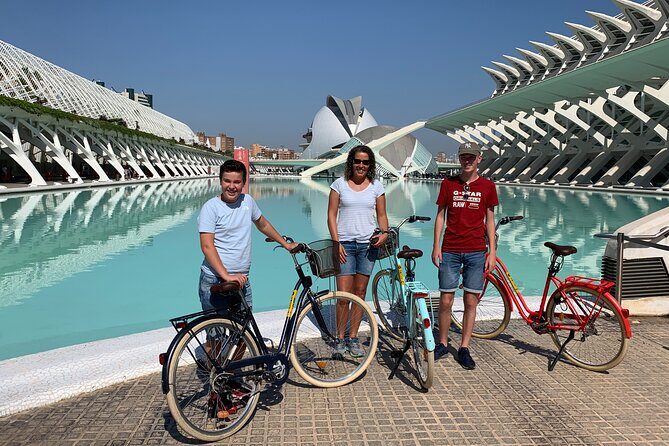
- City of Arts and Sciences: Calatrava and the Forms You Came for
- Passing Major Architectural Landmarks: Modernism, Rococo Ceramics, and a Neoclassical Bullring
- Time on Your Feet: When the Walking Works (and When It’s Limited)
- Guides Make the Difference: Fiona, Laura, Carlos, Adrian, Carmelo, Kino, Quino, Daniela
- Should You Book the Valencia Complete Tour by Tuk Tuk?
- FAQ
- How long is the Valencia Complete Tour by Tuk Tuk?
- How many people are in the group?
- What language is the tour offered in?
- How much does the tour cost?
- What are some of the main places you stop at?
- Are tickets included for the City of Arts and Sciences?
- Where do I meet, and does the tour end nearby?
- Is cancellation free if my plans change?
- What if the weather is bad?
- Can children join the tour?
Key Highlights to Expect
- Max 4 travelers for a calmer, less rushed ride
- A tight route that links Old Town gates, museums, and modern Valencia
- Photo-friendly stops with short “get out and look” moments
- Architectural variety from Art Nouveau and Rococo to medieval fortifications
- Port + urban beach for a quick change of pace
- Not all entrances are included, so you’ll want to choose what to ticket separately
Valencia by Tuk Tuk: Fast Orientation for a Short Stay
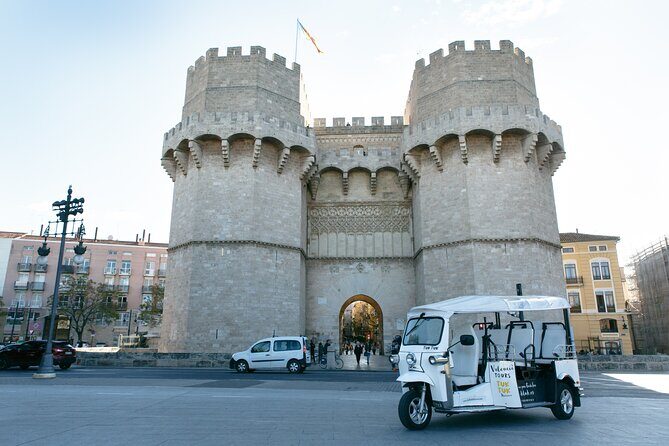
This tour is built for one main goal: helping you understand Valencia’s shape quickly. You don’t just drive in a circle. You connect areas that feel very different from each other—medieval walls and gates, the arts scene, the river-turning-into-a-park story, and then the futuristic City of Arts and Sciences look.
At about two hours, it’s short enough to fit on arrival day, and it’s long enough to feel like you actually saw a lot. The tuk tuk format also keeps your legs fresh. Even when you do walk a bit, it’s usually manageable: step out, take a photo, look around, then back on for the next leg.
The guide also helps you put names and dates to what you’re seeing. That’s the real value of a guided loop like this: you leave knowing what’s where and why it matters, instead of just collecting random photos.
You can also read our reviews of more tours and experiences in Valencia.



Price and Value: What $48.37 Buys in Two Hours
At $48.37 per person for roughly 2 hours, you’re paying for convenience, coordination, and guidance. This isn’t an all-day tour with a deep dive into one neighborhood. It’s a “see the highlights and get your bearings” format—and that’s exactly what the price matches.
A couple things make the value stronger than it first looks:
- Small-group cap (max 4): fewer people means you’re not fighting for attention or dealing with long delays at each stop.
- A guided loop across multiple zones: you’re spared the hassle of planning an order yourself and figuring out how to connect the Old Town with the modern complex.
What you should watch for is the same thing that makes it good value: time pressure. A tight itinerary means quick lookouts, exterior views, and short photo windows. If you want lots of interior time, you’ll likely use this tour to decide what to revisit later.
Getting Onboard at Tourism Hub: The Route Starts at Valencia’s Main Station Area
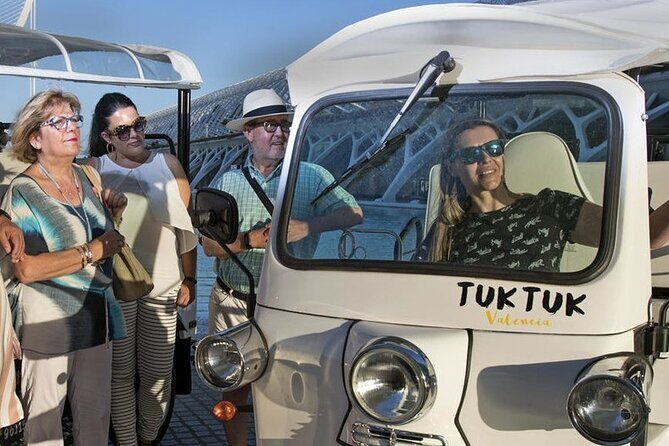
The tour starts and ends back at the meeting point: Tourism Hub, C/ de Xàtiva, 24 (Extramurs), 46007 València. In practice, that location puts you near major transit and the train station area, which is handy if you’re bouncing from rail to hotel.
One practical tip: this is the kind of pickup spot where things can look slightly different depending on nearby construction or street activity. Build in a few minutes so you’re not stressed when you arrive.
The ride itself is straightforward. You’ll cover ground quickly, but you should expect that the most time you’ll spend is usually at the stops where you can step out and look around. If you care about a specific photo angle, it’s smart to tell your guide early so you can line it up during the brief stop.
Art Nouveau to Medieval Valencia: Station, Torres de Quart, and Serranos
The tour opens with the main railway station in Valencia, known for its Valencian Art Nouveau architecture and recognized as Cultural Heritage in 1987. This is a smart first stop because it sets the tone. You’re not starting with a postcard viewpoint—you’re starting with a building that reflects Valencia’s modernizing ambition at the start of the 20th century.
From there, you move into the medieval story with Torres de Quart. These are one of the two remaining fortified gates of Valencia’s old medieval wall system. If you’ve only seen one set of city-gate towers in Europe before, this stop will feel especially tangible: you can actually connect the idea of a walled city to something you can see and measure.
Later, you’ll see the other remaining major gate: Torres de Serranos, also a surviving medieval fortification. It’s been an Asset of Cultural Interest since 1931. Together, Quart and Serranos give you a clear sense of how Valencia defended itself and how those defensive structures shaped the city’s layout.
A small consideration: on an open-air or canopy-covered vehicle, your view may vary. One downside that’s worth planning around is that some seating positions can make it harder to frame certain tower shots cleanly. If that’s a priority for you, aim for the best sightline early—before you’re already mid-route.
A Quick Hit on Valencia’s Museums: Modern Art, Fine Arts, and What You’ll See From the Road
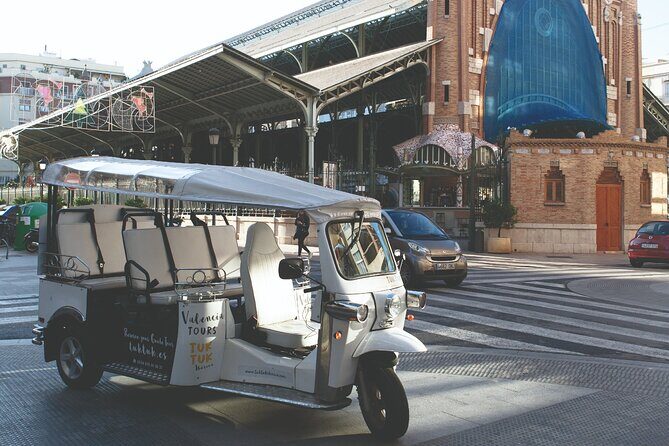
The route includes stops connected to Valencia’s art scene. You’ll encounter a modern art museum and later the Museum of Fine Arts of Valencia (Museu de Belles Arts de València).
That fine-arts museum matters in a big-picture way: it’s a state-owned museum managed by the Generalitat Valenciana, and it’s considered one of the earliest major painting museums in Spain with special reference to old Valencian masters. In other words, it’s not just a building you pass; it’s a real anchor institution for understanding what Valencia valued artistically.
In a tuk tuk format, though, you usually won’t get the same experience as buying a timed museum ticket and spending hours inside. Think of this stop as a “see where it is and decide later” moment. If you’re a museum person, your best move is to use this tour to pick which interior visit you want to prioritize once you’re back on your own.





Palau de la Música: Valencia’s Turia Riverbed Culture Stop
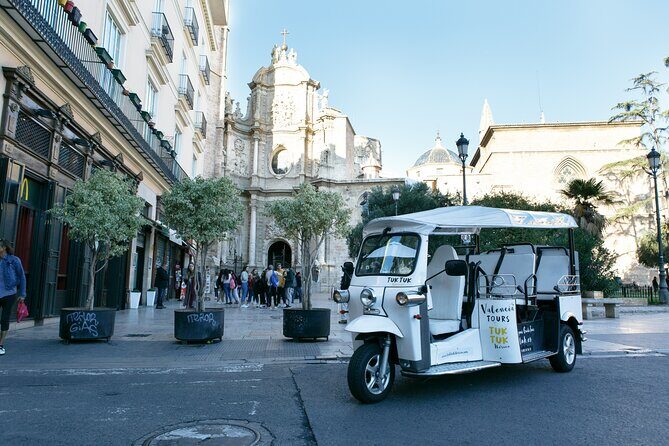
One of the most interesting segments is the visit to Palau de la Música de València. This auditorium sits in the old course area of the Turia river, and it opened in 1987.
Why I like this stop for a short tour: it shows how Valencia reuses its space. The Turia story is about turning a waterway into a civic spine, and the Palau becomes a cultural landmark you can “feel” as part of everyday life, not something isolated behind ticket lines and long commutes.
The Palau is also a place where timing and architecture make a difference. Even if you don’t go inside during this tour, it’s worth stopping to look at how the building fits into the urban flow.
Port de València and an Urban Beach Break
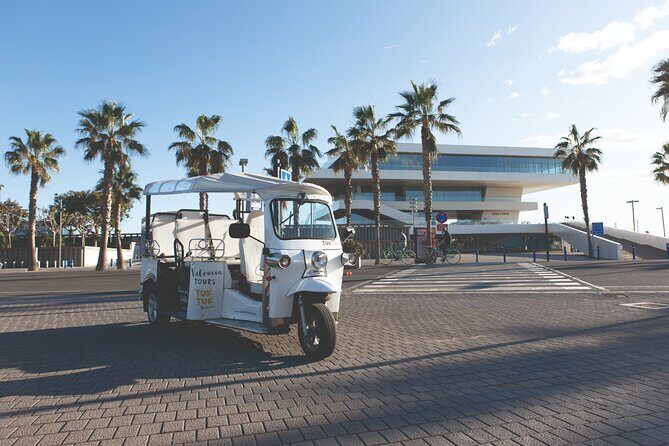
After the historical and arts-focused stops, the tour shifts gears to the water.
You’ll reach Port de València, including Marina Real and the city’s port area. This stop is quick, but it breaks up the route nicely—especially if you started with a lot of stone and towers. The atmosphere here is different: more open views, more “you’re actually in a coastal city” feeling.
You’ll also pass an urban beach area, described as one of the main beaches in Valencia. This is one of those segments that works even if you’re not planning to spend time at the beach. You get a change of scenery, plus a chance to step out and breathe for a minute.
If you’re visiting in hotter months, it’s also a good segment to use for shade strategy and a drink break before heading back into city streets and the modern architecture zone.
City of Arts and Sciences: Calatrava and the Forms You Came for
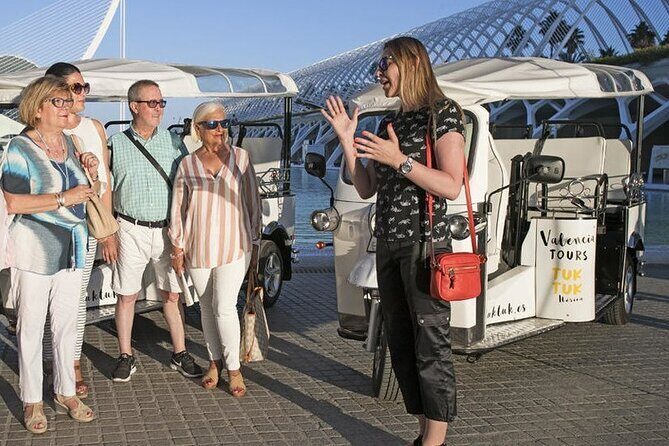
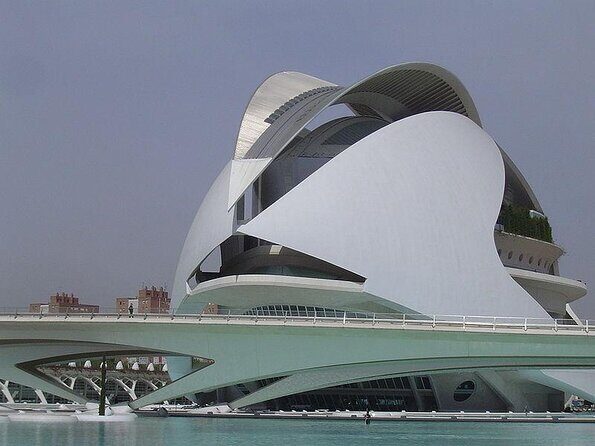
Then comes the part most people picture when they think of Valencia’s modern identity: Ciudad de las Artes y las Ciencias.
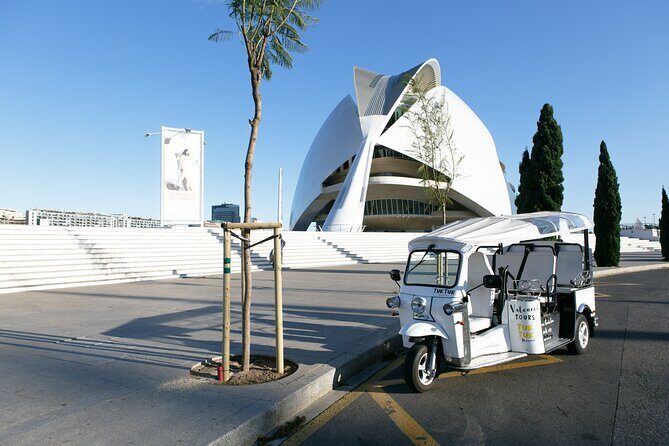
This architectural and entertainment complex is widely recognized for its dramatic design, created with major contributions from architect Santiago Calatrava and engineer Félix Candela (along with the engineers connected to structural design of the roofs tied to Oceanogràfic). You’ll get a stop here for a quick look and photos.
Important practical note: admission tickets are not included for this stop. So you’ll likely see the outside and spend your time at the viewing moments rather than touring interior spaces.
What I like about stopping at Ciutat de les Arts in a short tuk tuk tour is that it stops the “guessing game.” From the street, the complex can look like random futuristic sculptures. But with the right guided context, you start noticing how the pieces connect—how the architecture reads as a single plan instead of separate buildings.
Also, if you’re deciding whether you should buy extra tickets on your own later, this stop helps you do that immediately. You can sense what’s most worth your money before you commit.
Passing Major Architectural Landmarks: Modernism, Rococo Ceramics, and a Neoclassical Bullring
The tour also includes stops focused on architecture beyond the big modern complex. Along the route, you’ll see:
- A Valencian Modernism building conceived by Francisco Mora Berenguer between 1914 and 1916
- The González Martí National Museum of Ceramics, housed in a Rococo palace, with an alabaster marble façade credited to Ignacio de Vergara
- The bull ring of Valencia’s bullfighting complex area, described as neoclassical with a simple Doric style inspired by Roman civil architecture and amphitheaters like the Flavian amphitheater and Nîmes amphitheater
Even if you’re not the type who cares about architectural styles at home, these are the kinds of details that make Valencia feel specific. Different neighborhoods aren’t just different by vibe. They’re different by design language: Art Nouveau flourishes at the station, medieval fortification logic in the towers, then Rococo and Modernism in the city’s cultural buildings, and finally the modern “science-fiction” feel of the City of Arts.
Because this is a short tour, you’ll usually appreciate these buildings best from the outside. If you want interiors (especially for museums), treat this as a guided map to your next step.
Time on Your Feet: When the Walking Works (and When It’s Limited)
This experience is built around minimal walking compared to a traditional walking tour. That matters in two real scenarios:
- If you’re arriving tired, the ride gives you a reset.
- If you’re traveling with kids, the short outings from the tuk tuk make it easier to keep everyone interested.
That said, not every stop is a long stroll. The format is “see and get photos,” then move. If you have a heart set on spending lots of time at any one monument or inside a museum, you’ll need a second plan after this tour.
I also recommend wearing shoes that handle quick walking spurts. Even if it’s light, you’ll still be stepping on and off curbs and walking short stretches.
Guides Make the Difference: Fiona, Laura, Carlos, Adrian, Carmelo, Kino, Quino, Daniela
In a tour like this, the guide’s tone shapes the whole experience. And the tour is staffed with guides who come across as warm, enthusiastic, and proud of Valencia.
You might encounter guides such as Fiona or Laura, and names like Carlos, Adrian, Carmelo, Kino, Quino, and Daniela show up as examples of the kind of guiding style people associate with this experience. The common thread is that they tie the sights to stories, help you understand the city’s layout, and keep the mood fun while still covering the key stops.
If you’re the type who enjoys practical tips—where to go next after the tour—this is also where a great guide earns their keep. You’ll leave with ideas for what fits the time you have left.
Should You Book the Valencia Complete Tour by Tuk Tuk?
Book it if you want a high-coverage orientation in a short window, especially if it’s your first day. This tour shines when you have limited time, prefer light walking, and want the big Valencia names—Old Town gates, port views, and the City of Arts—without building a route from scratch.
Skip or upgrade your expectations if you’re looking for long museum interior time. This is a see-it-and-decide format. The best use is to tour, then come back later for any place you want to experience more fully on your own.
If you’re traveling with family, it’s also a strong choice thanks to the mix of ride time and short, manageable stops.
If your schedule allows only one guided activity in Valencia, I’d pick this one for your “get oriented fast” day, then build the rest of your itinerary from what you loved most on the route.
FAQ
How long is the Valencia Complete Tour by Tuk Tuk?
It runs for about 2 hours.
How many people are in the group?
The tour has a maximum of 4 travelers.
What language is the tour offered in?
It’s offered in English.
How much does the tour cost?
The price is $48.37 per person.
What are some of the main places you stop at?
You’ll stop at highlights including the main railway station, Torres de Quart, a modern art museum, Torres de Serranos, the Museum of Fine Arts of Valencia, Palau de la Música de València, the Port de València (Marina Real), a major urban beach, and Ciudad de las Artes y las Ciencias.
Are tickets included for the City of Arts and Sciences?
No. Admission for Ciudad de las Artes y las Ciencias is not included.
Where do I meet, and does the tour end nearby?
You meet at Tourism Hub, C/ de Xàtiva, 24, Extramurs, 46007 València, and the tour ends back at the meeting point.
Is cancellation free if my plans change?
Yes—free cancellation is available up to 24 hours in advance for a full refund.
What if the weather is bad?
This experience requires good weather. If it’s canceled due to poor weather, you’ll be offered a different date or a full refund.
Can children join the tour?
Yes, but children must be accompanied by an adult.