REVIEW · VALENCIA
Valencia: Essentials and World Heritages Sites Walking Tour
Book on GetYourGuide →Operated by Turiart · Bookable on GetYourGuide
If you want the quick version of Valencia, do this walk. You’ll connect the city’s past and present through three UNESCO World Heritage stories, not just a list of pretty buildings. World Heritage sites come fast, with real context behind why Valencia acts the way it does today.
What I really like is that you get two hands-on style wins: an inside visit to the Lonja de la Seda and a look at Valencia’s civic life via the City Hall stop. The only drawback to flag: it’s a short, two-hour circuit, so you’ll see highlights rather than linger deeply at every corner.
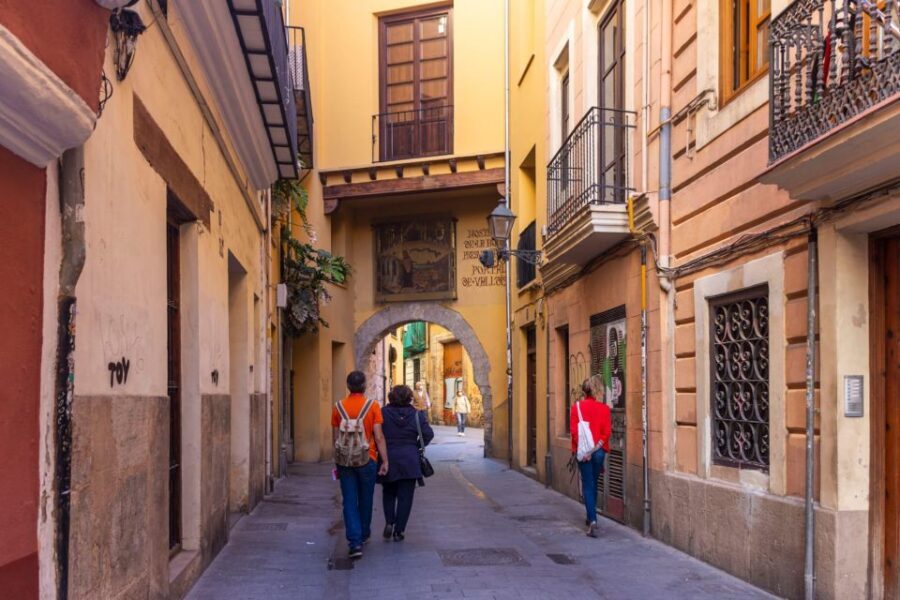
You start at a smart place—Estación del Norte, so you’re anchored in the city from the moment you arrive. Expect a guided walk through the old center with a bilingual local guide in English, plus practical tips that help you plan what comes next. And because this is wheelchair accessible, it’s one of the more inclusive ways to sample the historic core without feeling like you’re white-knuckling cobblestones.
In This Review
- Key points worth your time
- Start at Estación del Norte and get your bearings in Valencia
- The UNESCO trio: what Valencia is really protecting
- Inside the Lonja de la Seda: why silk architecture feels like power
- The Water Tribunal: a centuries-old system for shared water
- Fallas context: the festival beyond fire and fireworks
- City Hall visit: Valencia’s civic voice, not just its monuments
- How the two hours actually feel on your feet
- Price check: is $21 good value for these stops?
- Who should book this Valencia essentials and UNESCO walk
- Should you book this tour?
- FAQ
- How long is the Valencia Essentials and World Heritages Sites Walking Tour?
- What sites are included on the tour?
- Where do I meet the guide?
- What language is the tour guide in?
- What happens if the Silk Exchange (Lonja de la Seda) is closed during the tour?
- Is the City Hall guided visit always included?
Key points worth your time
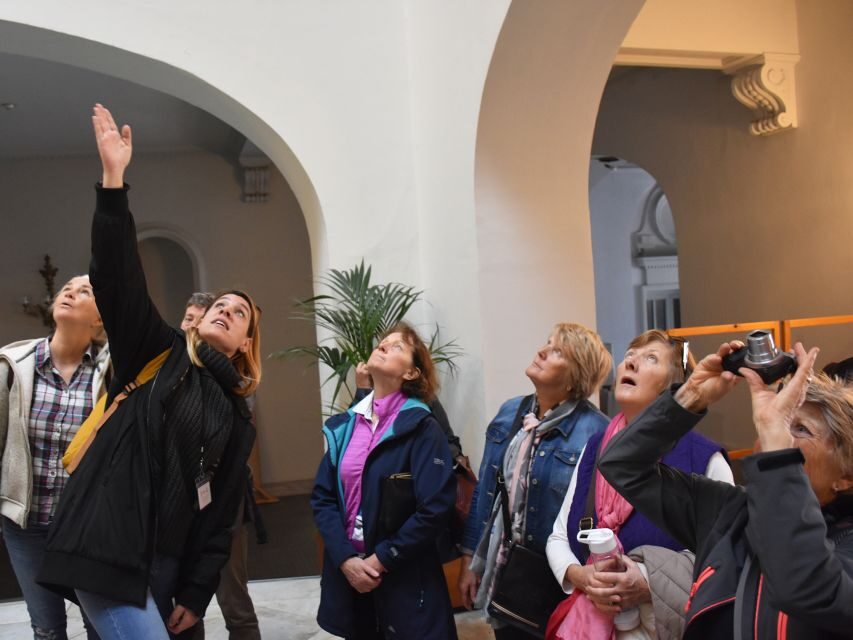
- UNESCO in one loop: The tour centers on Valencia’s three UNESCO World Heritage properties.
- Lonja de la Seda entry: You go inside the Silk Exchange, not just look from outside.
- City Hall visit: Included entrance fee when the building is open for guided visits.
- Water Tribunal + daily life: You learn why the water court matters in a city where water is power.
- Fallas context: Even if you’re not there in festival season, you’ll understand what the tradition really is.
- Guides with strong English: Names like Gabor, Maria, Sara, and Sofia show up in many departures, and the tours are consistently praised for clear guiding.
Start at Estación del Norte and get your bearings in Valencia
The meeting point is at the Tourism Hub at Estación del Norte (north station of Valencia’s main train station). If you face the station, look for the West Tower on the right-hand side; you meet on the ground floor at Carrer de Xàtiva, 24. The metro stop is Xàtiva, which is handy if you’re bouncing around on public transit.
Why this matters: station-side starting points reduce stress. You’re not scrambling across the old town before your guide even begins. In practice, the route is built for orientation. In just two hours, you should feel more confident navigating the historic center afterward—because you’ll know what you’re looking at and what order it all connects in.
A pro move: if it’s your first day, ask your guide early where to go for food and what to avoid. You’ll get the best value when your next hours are guided by what you just learned.
You can also read our reviews of more walking tours in Valencia

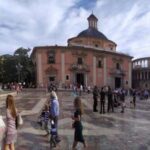
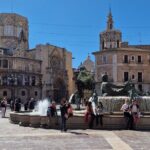
The UNESCO trio: what Valencia is really protecting
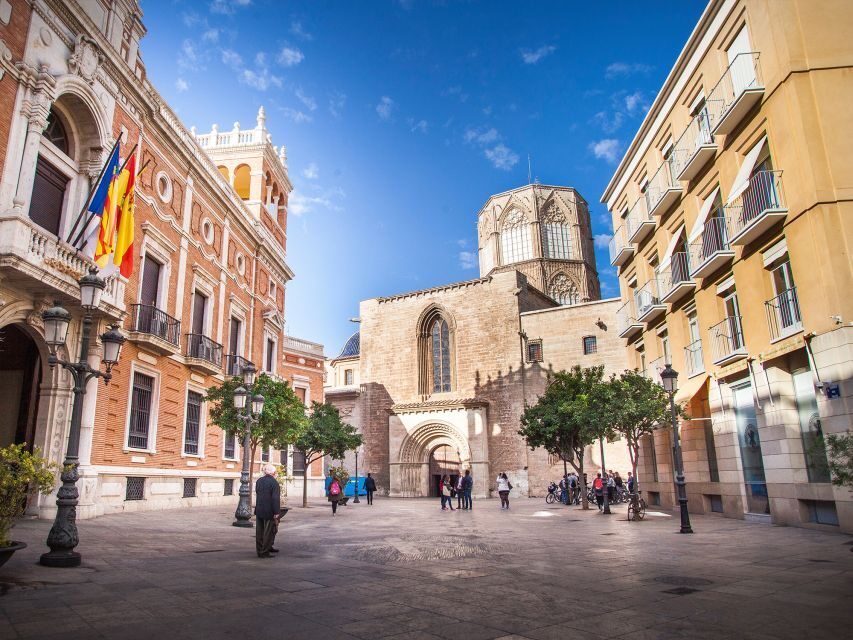
This is not a random walk. The whole experience is organized around Valencia’s three UNESCO World Heritage properties, so you’re always asking the same helpful question: what makes this culture worth preserving?
Here’s how the UNESCO theme shows up during the tour:
- The Silk Exchange (Lonja de la Seda) is about trade, wealth, and how Valencia built connections through commerce.
- The Water Tribunal (Tribunal de las Aguas) explains a living tradition—an ancient institution that still influences how communities manage water.
- Fallas looks at the festival tradition that blends art, neighborhood identity, and spectacle (fire and fireworks are part of the story, too).
What I like about this approach is that UNESCO can sound abstract. Here, it’s grounded. You’ll understand how buildings and traditions grew out of real needs—markets, water management, and community celebrations—not just aesthetics.
Inside the Lonja de la Seda: why silk architecture feels like power
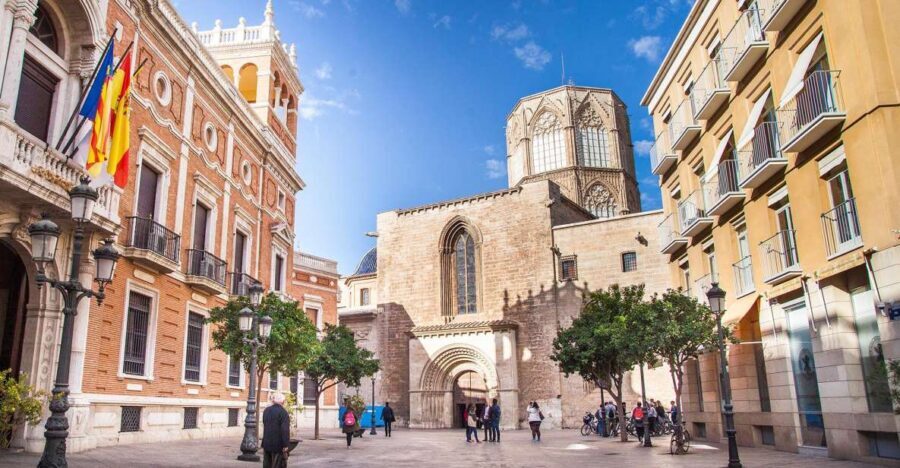
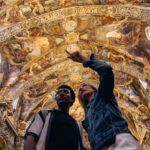
The biggest “wow” stop is the Lonja de la Seda, the Silk Exchange. The tour includes the entrance fee to get inside (when it’s open). Even if you don’t care about finance or trade history, this place has a strong visual punch: it’s built to impress, because it was designed for people who dealt in serious business.
Think of it like a civic stage for commerce. You’re not only seeing stonework; you’re seeing how Valencia used architecture to communicate trust, authority, and status.
One more practical note: the tour has a plan if the Lonja is closed during your visit due to an event. If that happens, you may get tickets sent so you can enter in the afternoon on your own, or the operator may exchange the ticket value for another museum/monument. It’s not the ideal scenario, but it’s reassuring that you won’t just lose that key stop without a workaround.
The Water Tribunal: a centuries-old system for shared water
Next comes the Water Tribunal, the Tribunal de las Aguas, one of those Valencia traditions that sounds legendary until you realize why it’s still relevant. This is the kind of UNESCO story that lives in daily life, not behind velvet ropes.
In simple terms, you’re learning how Valencia’s communities handled water disputes using a formal system. That matters because water is central to how the region works—so conflict resolution isn’t just paperwork; it’s social stability.
What you’ll get from the guide here is context. The Water Tribunal isn’t only a curiosity. It’s a reminder that Valencia’s culture is built on practical rules as much as art and architecture. If you like traditions with function, this is where the tour earns its place on your schedule.
Fallas context: the festival beyond fire and fireworks

Even when you’re not there during peak Fallas week, this tour helps you decode what you’re seeing around town. Fallas are an annual festival featuring ephemeral art, fire, and fireworks, and that mix is not accidental.
Your guide will explain how the festival grows out of neighborhood identity and creative expression. And because the art is temporary, the whole thing becomes a yearly cycle of making, celebrating, and then letting go. That’s an important contrast with other art scenes where the work is meant to last.
Practical tip for your own planning: once you understand the structure of Fallas, you’ll be better at noticing why certain streets, groups, and traditions matter. It turns random scenery into readable culture.




City Hall visit: Valencia’s civic voice, not just its monuments
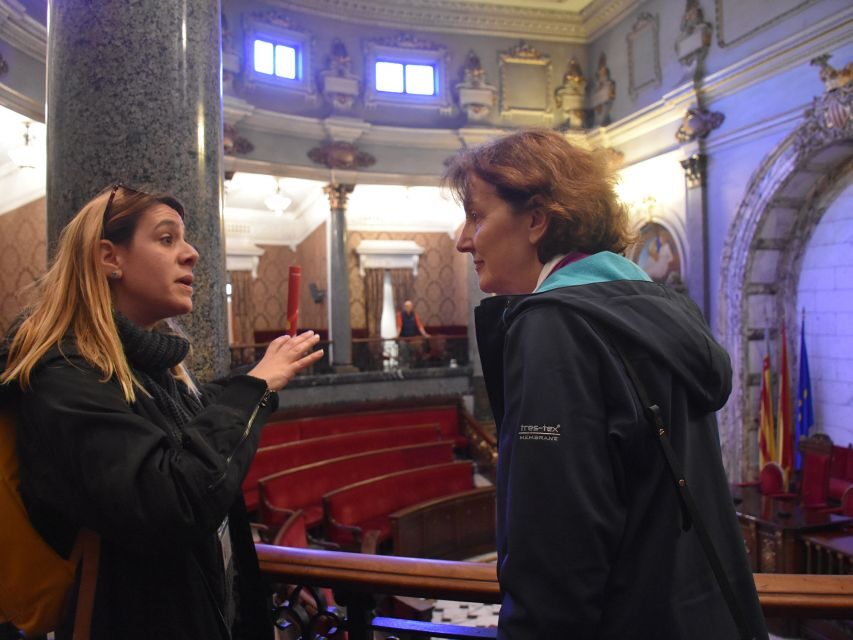
The tour also includes entrance to Valencia City Hall, with the same idea: you’re seeing how power and public life connect to architecture.
You’ll learn that Valencia’s civic identity isn’t stuck in the past. The City Hall guided visit runs on working days, except when an official event is taking place. So if you’re booking around a weekday with an event schedule, be prepared for potential adjustments. Your goal is to get the civic context alongside the UNESCO highlights, and this stop is built for that.
This is a good “balance” moment. After you’ve talked trade (Lonja) and water governance (Water Tribunal), you’ll shift to how the city organizes itself and projects authority. It’s one more reason the tour feels more complete than a typical sightseeing loop.
How the two hours actually feel on your feet
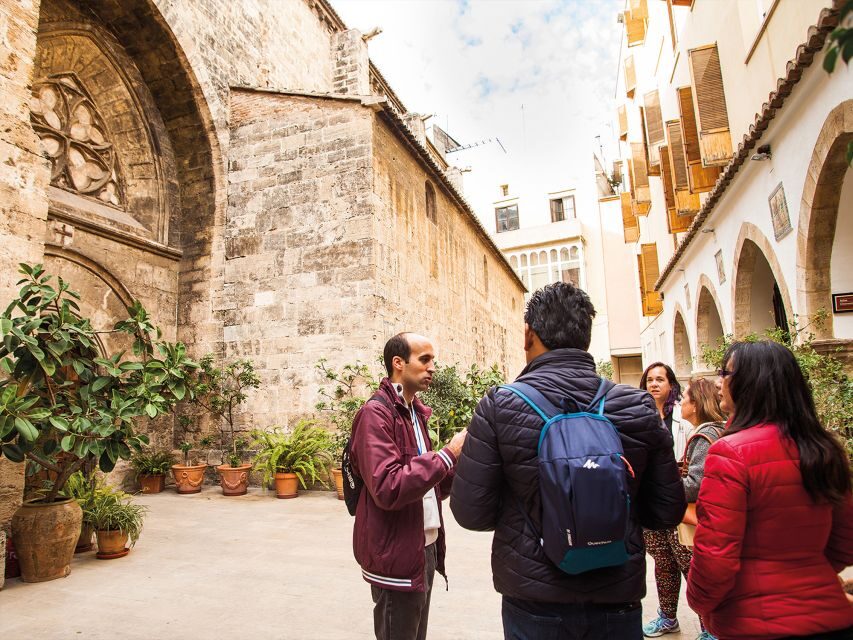
A lot of short walking tours either feel rushed or too scattered. This one aims for a steady pace with minimal walking between stops. That makes it work for most ages and stamina levels, including people who want the experience without a long day of grinding steps.
Also, you’re not just walking between photos. You’re stopping, listening, and then looking differently. That’s why two hours can be enough: you leave with a mental map, plus stories you can carry into the rest of your itinerary.
If you’re the type who likes to take photos, take advantage of the breaks in the story. Ask your guide where the best angles are, especially around the Lonja area and nearby historic streets. Clear tips save time later when you’re deciding what to do next.
Price check: is $21 good value for these stops?
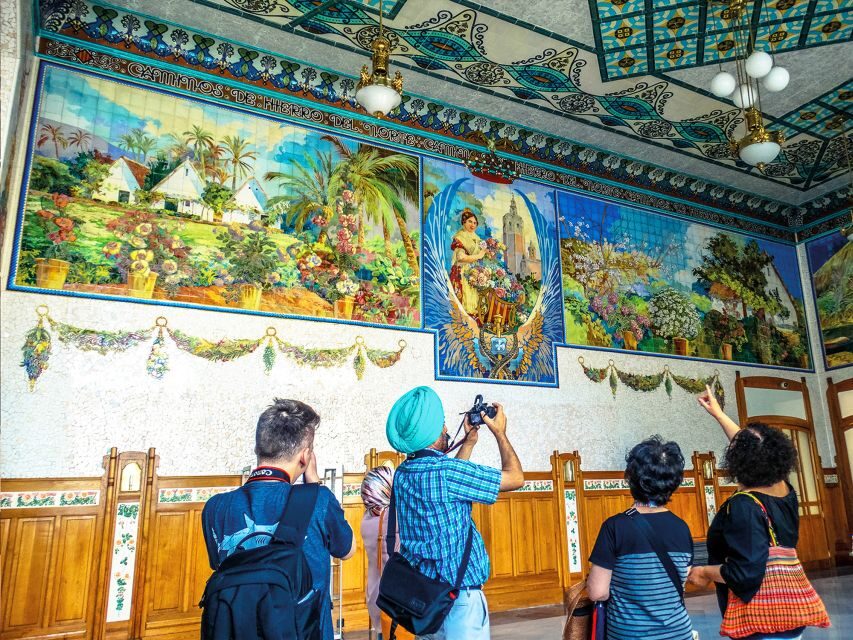
At $21 per person for about two hours, this is priced like an efficient culture hit. The value gets better because the tour includes more than just narration. You’re paying for guided interpretation plus entrance fees for major sites—most importantly the Lonja de la Seda and the City Hall stop (depending on opening times).
Here’s the way to think about it:
- If you were to do these sites on your own, you’d still pay entry fees.
- Add the guided storytelling and you’re no longer just paying to walk inside buildings. You’re paying to understand why they mattered to Valencia’s system of trade, water, and community life.
For a first-time visit, $21 can be a bargain because it helps you avoid wasting time later. You’ll know what you want to revisit and what to skip.
Who should book this Valencia essentials and UNESCO walk
This tour is a strong fit if:
- You’re visiting for a short time and want a fast orientation of Valencia’s historic core.
- You like UNESCO experiences that explain living traditions, not only old stone.
- You want a guide you can ask questions to in clear English.
- You want a walk that works for many ages and doesn’t feel like an all-day hike.
It may be less ideal if you’re already deeply into Valencia’s specifics and you want a slow, detailed architecture session. This is essentials plus stories, not a full day of research.
Should you book this tour?
Yes, if you want the smartest use of two hours in Valencia. You’ll get the big UNESCO anchors—Lonja de la Seda, the Water Tribunal, and the Fallas context—plus a City Hall visit when it’s available. You also start at a convenient hub and finish with enough understanding to plan the rest of your stay without guessing.
If your schedule is tight, book early and treat this as your first-day foundation. And if the Lonja is closed on your day, know that the operator has a fallback plan to help you still enter later.
FAQ
How long is the Valencia Essentials and World Heritages Sites Walking Tour?
It lasts about 2 hours.
What sites are included on the tour?
You’ll focus on Valencia’s three UNESCO World Heritage properties and you’ll have included entrance fees for the Lonja de la Seda (Silk Exchange) and the City Hall, based on opening times.
Where do I meet the guide?
You meet at the Tourism Hub at Estación del Norte (north station). The meeting spot is the West Tower on the right-hand side when facing the station, ground floor, Carrer de Xàtiva, 24. The metro station is Xàtiva.
What language is the tour guide in?
The live tour guide is English.
What happens if the Silk Exchange (Lonja de la Seda) is closed during the tour?
If it’s closed due to an event during your visit, you can be sent tickets to enter in the afternoon by yourself, or the ticket value may be exchanged for another museum/monument of the same amount.
Is the City Hall guided visit always included?
The City Hall guided visit is on working days, except when an official event is taking place.