REVIEW · VALENCIA
Valencia: Fallas Tour
Book on GetYourGuide →Operated by DescubreValencia · Bookable on GetYourGuide
Fallas in Valencia hits different in the street. This 2.5-hour Fallas tour walks you past some of the most talked-about falleras displays while your guide explains the festival’s history and why these scenes matter. I like that you get a clear, guided path to major monument stops instead of wandering randomly, and I also like the way the guide points out street art and gives practical local food tips along the way. One thing to plan for: March crowds can be intense, and noise + weather can make audio harder at times.
You’ll start near the Bullring, then move through the city with an expert who knows what you’re looking at. Expect a fun mix of festival education, landmark spotting, and “oh, that’s why they put it there” moments around the Fallas route. The price is low enough to feel like a smart add-on, not a splurge. The main drawback is that group size and the sound system quality can vary day to day, so bring patience if it’s busy.
Key moments
- Bullring Square start point: easy to find, and it sets you up for an efficient walk.
- Guided Fallas context: you’ll learn the traditions behind what you’re seeing, not just read plaques.
- Major fallas locations: you’ll visit places like Falla Convento Jerusalén and Falla Ayuntamiento (plus others).
- Street art and city viewpoints: your guide points out details you’d miss on your own.
- UNESCO festival framing: you get context for why Fallas is recognized internationally.
- Multi-language guides: Spanish, English, and Italian are available.
In This Review
- From Bullring Square to the Fallas You’d Miss on Your Own
- How the Timing Fits Fallas Season (March 16 to 19)
- Stop 1: Bullring Square and the Easy Start
- Stop 2: Falla Convento Jerusalén and the Story Behind the Scenes
- Stop 3: Falla Ayuntamiento and Valencia’s Public Heart
- Stop 4: Falla El Pilar or Na Jordana (Your Route Choice)
- The Viewpoint Break: Time to Look Back and Reframe the Day
- What Your Guide Actually Does for You
- Rain, Crowds, and Audio: What to Expect in March
- Price and Value: Why €21 Works Here
- What’s Actually Included (and What You Should Plan for)
- Which Type of Visitor Should Book This
- Should You Book Valencia: Fallas Tour?
- FAQ
- FAQ
- Where do I meet for the tour?
- How long is the Valencia Fallas walking tour?
- What language options are available for the guide?
- What Fallas locations can I expect to visit?
- Is the tour offered during specific dates?
- Is food included in the price?
- Does the tour include transport or tickets?
- What should I bring?
- Is the tour wheelchair accessible?
- What happens if the weather is bad?
From Bullring Square to the Fallas You’d Miss on Your Own
Valencia during Fallas is all movement—people, paper details, bold colors, and the constant sense that the city is building a living show. This tour works because it doesn’t treat Fallas as one big photo stop. It turns it into a route, with an expert guiding you through what each location represents and how the festival fits into Valencia life.
I love the structure for two reasons. First, you don’t lose time figuring out where to go next when streets are crowded and signage can get confusing. Second, you get a human explanation of the traditions behind the scenes—why certain displays show particular characters, values, or local references—so you’re not just looking at decorations.
You’ll also benefit from the guide’s habit of “reading the street.” In a festival like this, street art and urban details often feel like background until someone points out the connection. On this tour, that connection is part of the experience, not an extra.
The only real tradeoff is that March 16–19 is peak season. If the day is busy, you may have to accept slower walking and occasional “hold position” moments in tighter areas.
How the Timing Fits Fallas Season (March 16 to 19)
This tour runs during the core Fallas days, from 16th to 19th of March. That matters because the street displays are the heart of the festival, and those days are when the city’s energy is at its highest.
Duration is listed as 2.5 hours, and there’s also a viewpoint segment listed at about 30 minutes. In practice, that means you’ll get a paced walking route plus a period where you stop, look, and take in what’s around you—often the kind of moment that makes the whole walk feel connected.
If you’re scheduling your trip, I suggest choosing a time when you’re not rushing to the next thing. This is the sort of walk where you’ll want a moment to ask questions and slow down for details.
Also, bring comfortable shoes. You’ll be on your feet through busy festival streets, and Valencia in March can be unpredictable.
You can also read our reviews of more tours and experiences in Valencia.



Stop 1: Bullring Square and the Easy Start
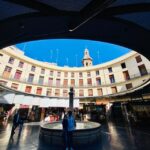
You meet at Bullring Square, near the ticket office. This is a smart meeting point because it’s central and recognizable, and it helps you avoid the “where exactly is this?” stress that can ruin your first 15 minutes.
From there, the tour is set up as a guided stroll through the city. You’ll do a quick meet-and-greet, then move as a group. The guide’s job here is to do what you’d normally do on your own—except faster and with context—so you get to spend more time actually seeing, not just navigating.
If you’re coming in from somewhere else in the city, arriving a few minutes early helps. Fallas crowds can tighten up fast, and you want your group to form before you start moving.
Stop 2: Falla Convento Jerusalén and the Story Behind the Scenes
One of the stops you can expect is Falla Convento Jerusalén. A good fallas display is never just a decorative thing. It’s staged storytelling—built to be read from street level, then remembered once you’ve walked away.
On a guided tour, this kind of stop is valuable because you learn what to look for beyond the obvious. Your guide will explain the history and traditions behind the festival, which helps you understand why the scenes are built where they are and why certain themes show up year after year.
This stop is especially useful if you’re new to Fallas. Without a guide, you can end up with a “cool, interesting” reaction. With a guide, you’re more likely to leave with a “now I get it” feeling.
Stop 3: Falla Ayuntamiento and Valencia’s Public Heart
Another highlight location is Falla Ayuntamiento. This is the kind of place that feels like the festival is speaking loudly to the whole city. Even if you don’t know the symbolism, you’ll usually sense it—more scale, more presence, and a clearer connection to civic life.
What makes this stop better with a guide is interpretation. Your guide will walk you through how Fallas traditions connect to Valencia identity, and they’ll also point out things like local references and street-level details you might otherwise miss while you’re trying to frame photos.
If you’re the type who loves landmarks and city atmosphere, this is where your camera will get used—but so will your curiosity.
Stop 4: Falla El Pilar or Na Jordana (Your Route Choice)
Your route can include Falla El Pilar or Falla Na Jordana. Think of this as your chance to see the festival from a slightly different angle—different neighborhoods, different local character, and different styles of presentation.
These stops also help with one practical reality: Fallas displays don’t all feel the same. Some are more symbolic, some more theatrical, some more tied to local references. When you see more than one, your understanding stops being one-dimensional.
A guide also helps you notice street art along the way. Fallas and street creativity often run on the same cultural wavelength here, and the tour is designed to call that out instead of letting you miss it.

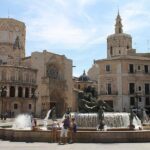

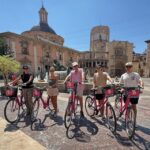


The Viewpoint Break: Time to Look Back and Reframe the Day
You’ll also reach a viewpoint stop (listed as about 30 minutes). Even if you’re not a big “lookout” person, viewpoint time is a smart ingredient in a city walk during a festival.
Why? Because it resets your brain. After seeing display after display at street level, you need a moment where you can step back and understand the shape of the neighborhood, the crowd flow, and where the main sights sit relative to each other.
This is also when you’ll get your best context for the whole experience. Your guide can connect the dots between what you just saw and what you’ll see next, so the tour feels like a story instead of a list.
What Your Guide Actually Does for You
This tour runs with a local guide and is offered in Spanish, English, and Italian. The guide’s role is the difference between “I saw Fallas” and “I understood Fallas.”
Here’s what you can expect the guide to focus on:
- History and traditions behind Fallas—so symbolism lands.
- Street-level observation—especially the street art around the route.
- Practical advice for the day—your guide can share local gastronomy tips while you walk.
I especially appreciate that the guide doesn’t treat the festival like a museum exhibit. The pacing feels made for moving people through real festival streets.
Rain, Crowds, and Audio: What to Expect in March
March weather in Valencia can be tricky. One thing I like about this tour is that it’s built for real conditions—people still have to walk, look, and learn even when it’s raining. In at least one recent case, the guide kept things fun despite bad weather, which matters because Fallas is visually intense even when the sky isn’t cooperating.
That said, there are two practical considerations from experience-style feedback:
- Audio can get harder in noisy areas. If you’re offered extra listening gear (some tours charge a small add-on), it can be worth taking.
- Group size can feel big when crowds are thick. When streets tighten up, the experience can slow down.
If you know you’ll get annoyed by loud crowds or weather, bring a light layer for rain and plan on forgiving a few pauses. That’s part of the trade in peak festival days.
Price and Value: Why €21 Works Here
At $21 per person for about 2.5 hours, this is priced like a high-value city add-on. You’re not paying for a big-ticket attraction with separate entry fees. You’re paying for two things that are hard to replicate on your own during Fallas:
1) a route through key locations, and
2) interpretation that makes the displays understandable.
The tour listing doesn’t include food, transport, or tickets, so you still need to handle your own snacks and get yourself to the meeting point. But that’s also why the price stays low. You can spend your money on a proper Fallas meal instead of buying convenience items on the tour.
If you’re visiting Valencia for a short time, this tour is a fast way to build a base understanding of Fallas in a couple of hours—without committing an entire day to just wandering.
What’s Actually Included (and What You Should Plan for)
Included:
- A local guide
Not included:
- Food
- Transport
- Tickets
That means you should plan to arrive with the basics covered: water, a snack if you want one, and your own way to get around the city. The tour is mainly about walking and learning, not feeding you.
It’s also worth bringing the right mindset. Fallas is temporary. This is a festival moment. If you expect everything to feel calm and orderly, you’ll be disappointed. If you expect a guided street experience with a bit of festival chaos, you’ll enjoy it more.
Which Type of Visitor Should Book This
This tour fits best if you:
- want a guided understanding of Fallas traditions and symbolism,
- like seeing multiple key monument locations without doing complicated planning,
- enjoy street art and city atmosphere as much as the main displays,
- want a short, efficient activity that still feels meaningful.
It’s also a good option if you’re traveling with limited time and want to cover ground between major points in the city. And if you prefer explanations in your chosen language, the Spanish, English, and Italian options make it easier to follow closely.
If you hate crowds or get stressed in dense festival streets, you might want to compare timing options on your schedule. On peak festival days, the city simply turns into a busy place.
Should You Book Valencia: Fallas Tour?
I’d book it if you want an efficient, guided way to see several major Fallas locations and understand what you’re looking at. At $21 for about 2.5 hours, the value is strong because you’re getting interpretation, route planning, and local tips—things that don’t naturally happen when you wander alone.
Skip it (or adjust expectations) if you’re very sensitive to noise, tight crowds, or variable audio quality. Those issues can happen in any outdoor festival, and March is the busiest time of year.
FAQ
FAQ
Where do I meet for the tour?
You meet at Bullring Square, near the ticket office.
How long is the Valencia Fallas walking tour?
The duration is listed as 2.5 hours.
What language options are available for the guide?
The tour offers live guidance in Spanish, English, and Italian.
What Fallas locations can I expect to visit?
You can visit stops such as Falla Convento Jerusalén, Falla Ayuntamiento, Falla El Pilar or Na Jordana, plus other important street locations on the route.
Is the tour offered during specific dates?
Yes. It runs during the Fallas Festival from March 16 to March 19.
Is food included in the price?
No. Food is not included.
Does the tour include transport or tickets?
No. Transport and tickets are not included.
What should I bring?
Wear comfortable shoes, since it’s a walking tour in busy festival streets.
Is the tour wheelchair accessible?
Yes, it is listed as wheelchair accessible.
What happens if the weather is bad?
The tour still runs as a guided walking experience during the festival. If it’s raining, you should expect you’ll still be outside and walking.