REVIEW · VALENCIA
Essential Valencia and World Heritage Sites (English)
Book on Viator →Operated by Turiart · Bookable on Viator
Valencia can feel big until you get a smart route. This short, guided walk strings together the city’s top sights with special focus on its UNESCO World Heritage treasures, including Lonja de la Seda. You also see the older civic Valencia that explains why today’s city looks the way it does.
I especially like the way the guide brings the monuments to life. Guides such as Sara are described as highly prepared, with clear explanations in excellent English, and they even use tablet photos to make details click.
One thing to plan for: it’s a 2-hour walking experience with no included transport, so comfy shoes matter, and it runs best in good weather.
In This Review
- Key highlights you should care about
- What you’re really buying in a 2-hour Valencia walking tour
- Starting at Estació del Nord: a local-style first impression
- Town Hall, Central Market, and the civic Valencia you’ll remember
- Lonja de la Seda: why the Silk Exchange matters
- Tribunal de las Aguas (Water Court): the tradition side of heritage
- Fallas: why ephemeral festival culture belongs on a heritage list
- Finishing in the old center near Carrer del Micalet
- Guides make or break a short walk: Sara, Gabor, and María Eugenia
- Price and value: what $121.91 really means here
- Logistics you should plan for (without overthinking)
- Who should book this and who might skip it
- Should you book Essential Valencia and World Heritage Sites?
- FAQ
- How long is the Essential Valencia and World Heritage Sites tour?
- What World Heritage sites are included?
- Where does the tour start and end?
- Is this a private tour?
- Is transportation included?
- Does the tour run in bad weather, and is it suitable for families or service animals?
Key highlights you should care about
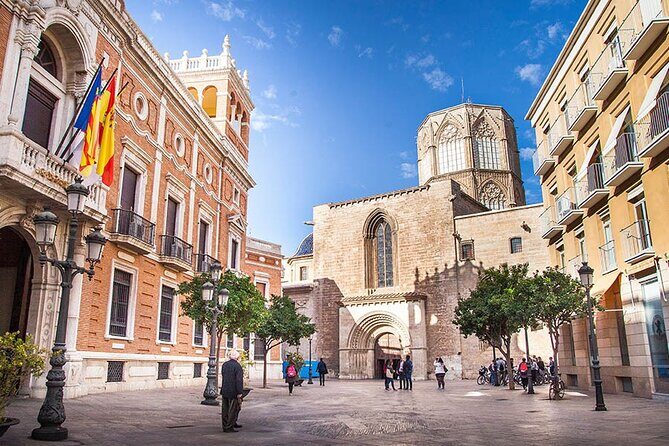
- UNESCO focus in a tight time window: Lonja de la Seda, the Water Court, and the Fallas story
- Historic-center orientation on foot: streets and squares you’ll actually use later
- Guide-led storytelling that includes visuals (tablet photos came up more than once)
- A route that covers more than one type of site: civic Valencia, market life, and heritage monuments
- Private group format: it’s only your group, not a mixed crowd shuffle
- Mobile ticket included: easier entry and less last-minute fuss
What you’re really buying in a 2-hour Valencia walking tour
This isn’t a long museum day. It’s a focused historic-center walk designed to give you context fast, then let you wander smarter later. For Valencia, that matters because the city mixes eras in a very physical way: medieval trade buildings, historic water traditions, and living festival culture all sit close enough that you can compare them just by turning a corner.
You’ll see the “why” behind the “what.” The guide doesn’t just point at famous stonework. You get stories that connect the sites to Valencia’s civic life and daily rhythm. That’s the kind of knowledge that helps you read the city even after the walk ends.
Also, the tour is intentionally short—about 2 hours—which is ideal if you’re on a first trip, have one free morning/afternoon, or want a safe introduction before you start choosing your own neighborhoods.
You can also read our reviews of more historical tours in Valencia



Starting at Estació del Nord: a local-style first impression
The walk begins at Bailén – Estació del Nord (Extramurs). Starting at a major transport hub is a practical choice. It quickly orients you to Valencia’s layout and gives you momentum before the old town tightens around the squares and monuments.
From there, you’ll move through key parts of the historic core, including the area tied to the city’s old center landmarks. This matters because you’re not just sprinting from one photo spot to another—you’re learning the city’s “spine”: where the big civic spaces are, where markets anchor everyday life, and how the older streets connect.
One small tip: if you’re early, use that time to take a deep breath, grab water, and check your route in your head. After you start, the guide’s pace stays steady, and that’s how you fit everything in.
Town Hall, Central Market, and the civic Valencia you’ll remember
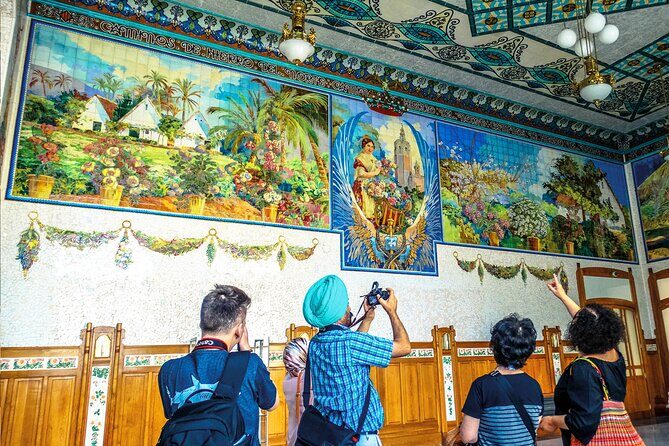
A highlight in the route is the civic and daily-life mix. You’ll pass by the Town Hall area and spend time near the Central Market. Even if you don’t shop, markets tell you a lot. They show what a city values and how people move through their week.
Central Valencia isn’t just about grand monuments. The market area grounds the history in real life. You get a sense of how trade and local supply routes likely shaped the city’s growth. That theme comes back later when you reach Lonja de la Seda.
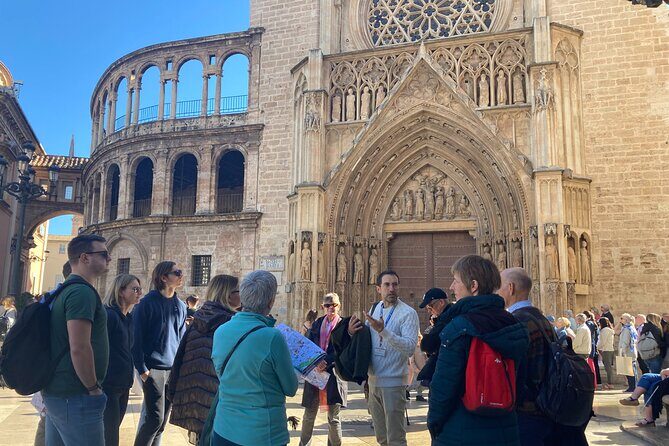
You’ll also walk through major squares—such as Place de la Reine and Place de la Vierge—where the city’s “stage set” becomes visible. Squares in European old towns aren’t random open space. They’re meeting points for power, commerce, religion, and protest. In a short tour, seeing a few of them in sequence gives you a mental map you’ll actually use.
Lonja de la Seda: why the Silk Exchange matters
The Lonja de la Seda (Silk Exchange) is the monument that people usually picture when they hear UNESCO and trade in Valencia. It’s also one of the best places on this route to understand Valencia’s ambition. This is architecture built for business, reputation, and international connections.
In practical terms, you’ll learn what you’re looking at. Guides do well here because the building has layers: form, function, symbolism. When a guide adds context—what trade meant, why certain design choices show status—it stops looking like “beautiful old walls” and starts looking like a record of how wealth and craft moved through the city.
A nice detail: reviews mention that guides sometimes use tablet photos to clarify elements you might miss at walking speed. That’s useful here because some architectural details need a quick visual cue to land.
If you’re the kind of traveler who likes to understand how buildings worked, this stop will feel like the anchor of the whole tour.
Tribunal de las Aguas (Water Court): the tradition side of heritage
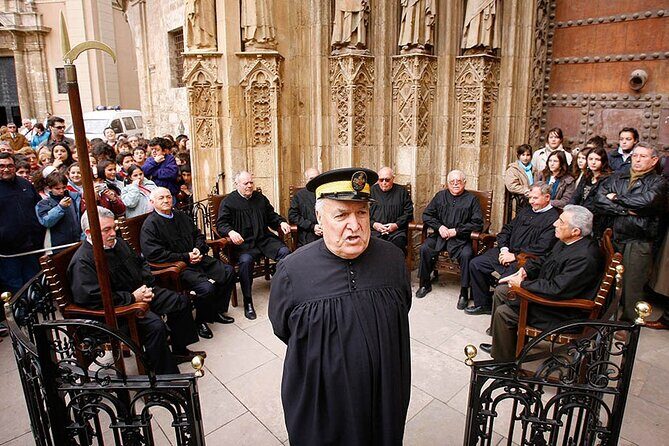
The Water Court (Tribunal de las Aguas) is different from the Silk Exchange. Instead of focusing on architecture and trade, the story centers on a community system that has been kept alive through time.
This is a powerful UNESCO contrast: Valencia doesn’t just preserve stone; it preserves practice. Even if you don’t go deep into legal history in two hours, you’ll walk away with the sense that water management is not only technical. It’s cultural, rule-based, and social. The “heritage” is the continuity.
What I like about including the Water Court in this kind of walk is that it balances the vibe. You get a city built on exchange—goods, ideas, and also water. It’s one of the reasons Valencia often feels more human than purely monumental.





Fallas: why ephemeral festival culture belongs on a heritage list
Next comes the Fallas theme: Valencia’s annual festival on ephemeral art, fire, and fireworks. The key word here is ephemeral. These works are temporary by nature, so heritage can’t only mean permanent buildings.
In this tour, the Fallas element is treated as more than a party preview. You get the cultural logic: how the festival fits into neighborhood identity, how the city organizes creativity and spectacle, and why a tradition like this can be “World Heritage” even though the objects burn away.
This is also where the tour shines for people who worry they’ll miss the festival. You might not be there during the peak days, but you’ll still understand what you’re looking for when you see references around town—so your later self-guided wandering makes more sense.
One more angle: the guides’ storytelling style seems flexible enough to connect heritage to different moments on the calendar. If your visit overlaps with major local dates, you’re more likely to get context instead of a generic overview.
Finishing in the old center near Carrer del Micalet

The tour ends at Carrer del Micalet 7, Ciutat Vella. Ending near the old-city core is smart because it sets you up for follow-on exploring. When a tour ends in the right place, you don’t feel like you need a second plan immediately.
Carrer del Micalet puts you close to the Cathedral area zone, where it’s easy to extend your day—either with a self-guided loop or by grabbing something nearby. Even in a short tour, the ending location affects your whole afternoon.
If you’re building an itinerary, treat this as your “start from here” point for your next stop.
Guides make or break a short walk: Sara, Gabor, and María Eugenia
With only about two hours, a guided walk depends heavily on the guide’s ability to explain without turning into a lecture. The feedback you see repeatedly is that guides like Sara and Gabor keep the tone engaging and the content structured. Their English is consistently described as excellent, which is a big deal on heritage tours where names, dates, and architectural terms can get messy fast.
A few things stand out from the guide styles:
- They keep the group together and make sure everyone can see and hear (important on narrow streets).
- They pack a lot into a short route without losing the thread.
- They connect architecture to culture, not just dates to dates.
- Some guides bring supporting visuals, like tablet photos, to help you notice details.
One practical perk that came up in the feedback: guides often share real-life suggestions, including where to eat. If you’re trying to plan your first paella spot, having a guide point you toward something simple and local can save you time and guesswork.
Price and value: what $121.91 really means here
The price shown is $121.91 per person, for roughly 2 hours. On paper, that can sound steep for a walking tour. Here’s how I’d think about value instead of just cost.
You’re paying for:
- A professional guide (not just a basic city pass)
- A time-saving route that hits major sights and UNESCO themes
- A private format where it’s only your group
- Mobile ticket convenience
- The guide’s interpretation, especially for UNESCO sites that reward context
For families and couples, the private setup can feel like better value because you get the full experience without waiting on a rotating crowd. For solo travelers, it can still be worth it if you value getting your bearings fast and learning enough to explore independently right after.
If you’re already confident moving through Valencia without help, you might skip a guided format. But if your goal is a smart first impression with UNESCO focus, this price can make sense.
Logistics you should plan for (without overthinking)
The walk is in the historic center, which means you’re dealing with sidewalks, street crossings, and the fact that you’re on foot most of the time. The good news is that the structure stays manageable because it’s designed around a short duration.
A few practical points from the tour details:
- Transportation isn’t included, so you’ll need to reach the start point yourself.
- The tour uses a mobile ticket, which helps at check-in moments.
- It runs in good weather, so plan a backup mood if the forecast turns.
- It’s private: only your group participates.
- Service animals are allowed.
- Children must be accompanied by an adult.
Also, book with your calendar in mind. The tour is commonly booked a few months ahead, which usually means demand is steady during peak times. If your trip lines up with festival season, earlier planning tends to help.
Who should book this and who might skip it
This tour is a great fit if:
- You’re in Valencia for a short time and want a structured introduction
- You like history told through real places, not just app-based facts
- You want UNESCO sites explained in plain language
- You prefer a guide to point out details you might otherwise miss while walking
You might skip or swap it for something else if:
- You already know the UNESCO sites well and want a longer, independent itinerary
- You hate walking or have mobility limits that make uneven old streets hard
- You’re traveling with a tight schedule where even a two-hour walk feels too long
Should you book Essential Valencia and World Heritage Sites?
If you want a fast, high-impact Valencia overview, I’d book it. The tour’s biggest strength is the UNESCO framing, paired with everyday historic-center stops like the Town Hall area, Central Market, and major squares. That mix helps you see Valencia as a living city instead of a checklist.
My recommendation depends on one thing: your comfort with a two-hour guided walk. If you can handle that, you’ll come away with a clearer mental map, better context for the monuments, and (often) helpful restaurant guidance for after the tour.
If you’re arriving in Valencia and feel a bit overwhelmed, this is the kind of experience that gives you direction fast—so your next hours are easier to enjoy.
FAQ
How long is the Essential Valencia and World Heritage Sites tour?
The tour lasts about 2 hours.
What World Heritage sites are included?
The tour focuses on Valencia’s World Heritage properties, including the Lonja de la Seda (Silk Exchange), the Tribunal de las Aguas (Water Court), and the Fallas.
Where does the tour start and end?
It starts at Bailén – Estació del Nord (Extramurs), Valencia, and ends at Carrer del Micalet 7 in Ciutat Vella.
Is this a private tour?
Yes. Only your group will participate.
Is transportation included?
No. Transportation to and from the meeting/ending point is not included.
Does the tour run in bad weather, and is it suitable for families or service animals?
The experience requires good weather. If it’s canceled due to poor weather, you’ll be offered a different date or a full refund. Service animals are allowed, and children must be accompanied by an adult.