REVIEW · VALENCIA
Valencia: Hortensia Herrero Art Center Ticket or Guided Tour
Book on GetYourGuide →Operated by Hortensia Herrero, Fundación de la Comunidad Valenciana · Bookable on GetYourGuide
One good reason to go: the building itself is the show. The Hortensia Herrero Art Center turns Valencia’s old Valeriola Palace into a living gallery where contemporary art sits right beside archaeological leftovers. You’ll see work by major names like Andreas Gursky, Anselm Kiefer, and Georg Baselitz, and you’ll also get to read the site through materials you can literally touch with your eyes: original wooden beams and ceramic masonry in the main hall.
What I like most is the way the art and architecture talk to each other, and how the center uses multimedia and pieces created for these specific spaces. One possible drawback: if you only want classic museum-style galleries, this mix of art + history can feel uneven room to room, with some areas landing harder than others.
You can visit with an entry ticket or add a guided tour for context in about 1.5 hours. In practice, that time window works well here because you’re not just collecting artworks—you’re also moving through a site with layered past: the Roman circus remains, an alley linked to the ancient Jewish quarter, plus a Medieval oven and an Islamic fountain. I’d just set your expectations for a curated walk through multiple themes rather than one single uninterrupted “greatest hits” exhibition.
In This Review
- Key things that make this stop worth your time
- Where the contemporary art lives: Valeriola Palace in the middle of old Valencia
- What the palace adds to your understanding
- The main hall details you’ll keep noticing while you walk
- The exhibition route: 17 spaces, made for wandering (with a plan)
- What you can expect to see in the galleries
- A practical tip on pacing
- Contemporary art inside real historical layers (Roman circus, Jewish quarter, more)
- How to experience the archaeology without treating it like a detour
- Multimedia and interactive pieces: why they work well here
- The value of a guided tour in short visits
- Ticket vs. guided tour: which one fits your style?
- My rule of thumb
- Price and value: $14 for art, architecture, and archaeological stops
- Timing, languages, and practical notes for a smooth visit
- Who this is best for (and who might want to skip)
- Should you book the Hortensia Herrero Art Center visit?
- FAQ
- How long does the Hortensia Herrero Art Center visit take?
- What are my options: ticket only or guided tour?
- Where is the Hortensia Herrero Art Center?
- How much does it cost?
- What will I see during the visit?
- How big is the center and how many exhibition spaces are there?
- Is there a language option for the host or greeter?
- Is the guided tour included with the ticket?
- Is it wheelchair accessible?
- Can I cancel and get a refund?
Key things that make this stop worth your time
- Valeriola Palace setting: contemporary art inside an old 17th-century palace environment you can’t replicate elsewhere
- 17 exhibition spaces across two four-story buildings: plenty of variety without needing half a day
- Major international artists: Andreas Gursky, Anselm Kiefer, Georg Baselitz, and works tied to Hortensia Herrero’s collection
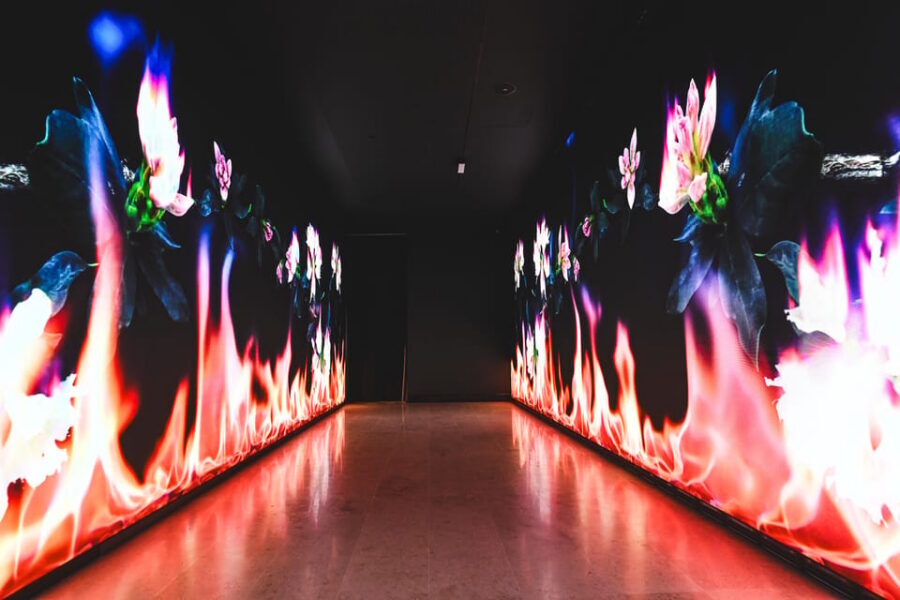
- Interactive and multimedia elements: some pieces change how you move and look, not just what you look at
- You also get archaeology: Roman circus remains, Jewish-quarter alley remnants, a Medieval oven, and an Islamic fountain
- Design details matter: original wooden beams and ceramic masonry give the place a strong “read” as you walk
Where the contemporary art lives: Valeriola Palace in the middle of old Valencia
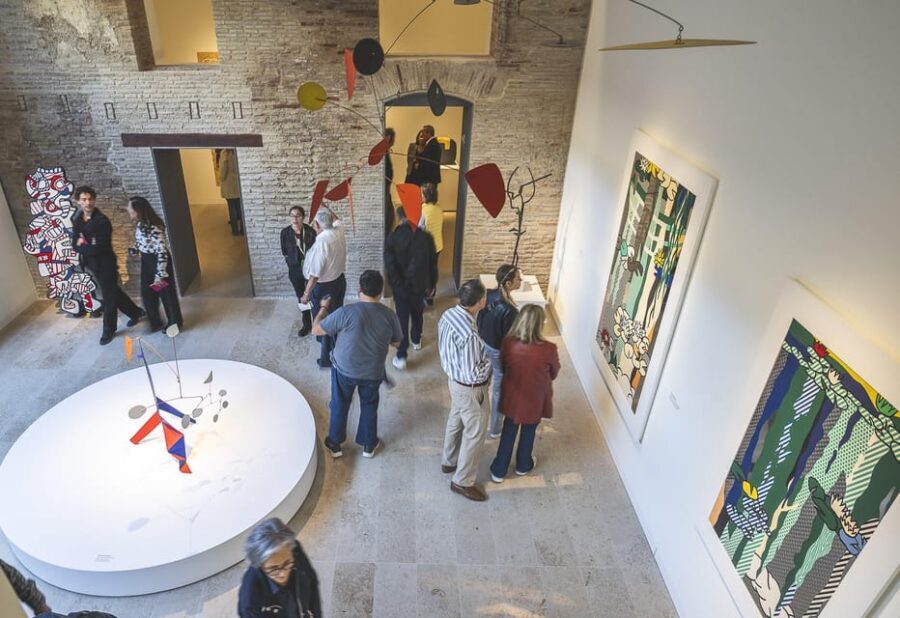
The Hortensia Herrero Art Center is based in the Valeriola Palace, in Valencia’s historic center. What makes this visit different from a standard museum stop is the setting: you’re inside an old palace that already has a strong voice—thick walls, historic structure, and physical evidence of earlier eras.
The center occupies two four-story buildings and spans over 3,500 square meters with 17 exhibition spaces. That size matters because it helps you see the center as an actual route, not just a quick look. With a typical 1.5-hour visit, you’re aiming for “enough depth to feel satisfied,” not “try to see everything perfectly.”
If you pick the guided tour, the host or greeter is available in multiple languages, including English, Spanish, French, Italian, and Catalan. That multilingual setup is useful here because some of the art benefits from a short piece of interpretation—especially multimedia and works made for the palace spaces.
You can also read our reviews of more tours and experiences in Valencia



What the palace adds to your understanding
I love when a venue doesn’t treat history like decoration. Here, the architecture is part of how you read the art. The main hall has original wooden beams and ceramic masonry you can see as you move through. Even if you’re not an art expert, those details help you slow down and realize you’re standing in a layered environment where multiple periods coexist.
The main hall details you’ll keep noticing while you walk
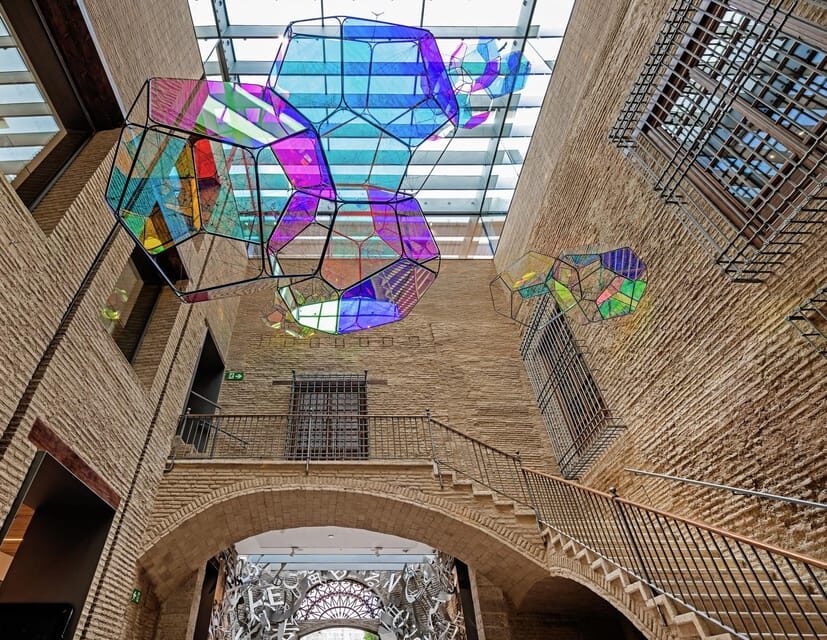
In many museums, the building is background. At the Hortensia Herrero Art Center, the building is part of the story. Two things jump out from the start: the original wooden beams and the ceramic masonry in the main hall.
These details do more than make photos look good. They change your pace. You tend to stop longer, look up, and pay attention to transitions—doorways, corridors, and how the rooms open into each other. The center’s approach makes sense: contemporary art can feel intimidating when you’re rushed. This place counters that with a physical rhythm.
If you’re visiting on a tight schedule in the historic center, the good news is that the building helps you “anchor” your visit. Even if you don’t love every artwork equally, you’ll probably walk away remembering the spaces themselves.
The exhibition route: 17 spaces, made for wandering (with a plan)
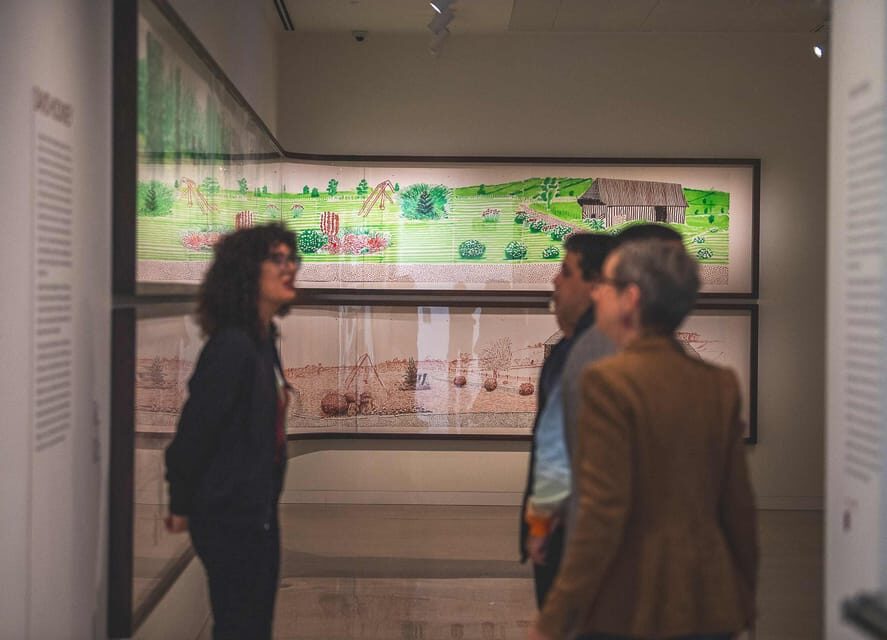
You can enter with just a ticket, or choose the guided tour option. Either way, you’ll explore the exhibition spaces across the two buildings. The key advantage of the guided tour is not extra “time”—it’s direction. In 1.5 hours, having someone point out how to read the collection and how the works relate to the palace can help you avoid the common mistake of just skimming what’s in front of you.
What you can expect to see in the galleries
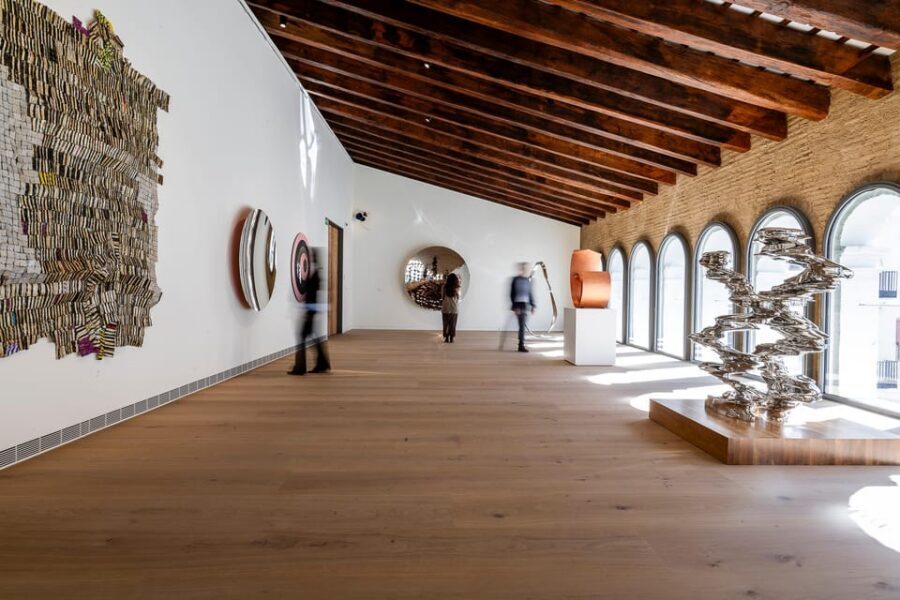
The center is built around contemporary art presented in an architectural setting, including:
- multimedia works and interactive pieces
- works created specifically to fit the palace spaces
- artworks connected to Hortensia Herrero’s private collection
The names given for the collection help you understand the artistic range: you may encounter works associated with Tomás Saraceno, Jaume Plensa, Olafur Eliasson, Cristina Iglesias, Sean Scully, and Mat Collishaw, alongside big international figures like Andreas Gursky, Anselm Kiefer, and Georg Baselitz.
You don’t need to recognize every artist to enjoy the experience. The works are more engaging when you treat them like prompts—how does this piece behave inside this room? How does your viewpoint shift in a space that isn’t a blank white box?
You can also read our reviews of more guided tours in Valencia






A practical tip on pacing
With 17 exhibition spaces, it’s easy to feel like you’re running late. I recommend picking a “two-lane strategy”:
- Lane one: slow down for the works that use sound, video, light, or interactive elements
- Lane two: do a faster pass through the rooms that are more object-based so you still get the full route
That way, you’ll feel like you experienced the center rather than “ticked off” rooms.
Contemporary art inside real historical layers (Roman circus, Jewish quarter, more)
One reason people are drawn to this center is that you don’t just get art—you get archaeology. The visit includes remnants tied to Valencia’s older districts, including:
- the remains of the Roman circus of Valencia
- an alley from the ancient Jewish quarter
- a Medieval oven
- an Islamic fountain
This is the part that can surprise you if you expected only an art museum. The site layers matter because they change how contemporary work lands. Seeing the Roman and medieval elements in the same visit gives your brain a time-travel reference point: art today is not isolated. It’s part of a continuing city story.
How to experience the archaeology without treating it like a detour
It’s tempting to think of the archaeological sections as a bonus. I’d treat them as one of the main threads. When you reach the Roman circus remains or the Jewish quarter alley elements, pause long enough to compare scale and intent. Then go back to the artworks with that “time lens” in mind.
If you’re the type of traveler who likes connecting dots—architecture, urban history, and culture—this center will feel unusually rewarding. If you’re the type who only wants the biggest contemporary names, the archaeology might feel like extra walking. Either way, the palace layout helps you blend both.
Multimedia and interactive pieces: why they work well here
The center’s contemporary selection includes multimedia artworks and interactive experiences. That’s important because this building isn’t neutral. Rooms have character, and video or light works often benefit from the way a space controls attention.
Also, interactive art has a practical bonus: it gives you a reason to slow down. Instead of trying to “read” a complicated piece from across the room, you often engage by moving, looking from different angles, or waiting for a media component to play out.
The value of a guided tour in short visits
If you choose the guided option, you get someone’s help focusing your attention. In a 1.5-hour window, that can be the difference between:
- seeing a lot of rooms
and
- feeling like you understood the center’s logic
The hosts and greeters are listed for multiple languages (English, Spanish, French, Italian, and Catalan), which is great for visitors who want interpretation without needing to switch languages on their own.
Ticket vs. guided tour: which one fits your style?
If you’re traveling independently and you like to set your own pace, the ticket-only option makes sense. You can spend more time where your attention lands and skip the parts you find less compelling. In a palace with 17 spaces, you’ll likely still get variety even without a guide.
If you enjoy context—especially for major contemporary artists or multimedia works—the guided tour option is the smarter move. With only 1.5 hours, guided time helps you avoid the “I saw it, but I didn’t know what I was looking at” feeling.
My rule of thumb
- Choose ticket-only if you want flexibility and you don’t mind reading labels slowly
- Choose guided if you want a faster pathway to meaning and you’re curious about how the art relates to the palace and archaeology
Price and value: $14 for art, architecture, and archaeological stops
At about $14 per person, this visit is priced like a value ticket for a contemporary art experience—especially one that combines:
- 17 exhibition spaces
- major-name contemporary artists (including Andreas Gursky, Anselm Kiefer, and Georg Baselitz)
- multimedia and interactive works
- the palace architecture itself (wood beams and ceramic masonry in the main hall)
- archaeology elements (Roman circus remains, Jewish-quarter alley remnants, Medieval oven, Islamic fountain)
You’re paying for more than a single exhibition. You’re paying for a place. That’s why the value can feel strong even if you’re not an art diehard.
And if you’re choosing between ticket-only and the guided option, think of the guide as a “time-saving tool.” For an hour and a half, it can help you get more satisfaction per minute, not just more facts.
Timing, languages, and practical notes for a smooth visit
This experience lasts around 1.5 hours, and starting times depend on availability. The host or greeter is available in English, Spanish, French, Italian, and Catalan. The site is also wheelchair accessible, which is a real advantage in historic buildings where accessibility can be tricky elsewhere.
If your plans are flexible, you’ll like that cancellations are allowed up to 24 hours in advance for a full refund, and there’s a reserve-now and pay-later style option so you can hold your spot without paying immediately.
Who this is best for (and who might want to skip)
This works especially well for you if you like:
- contemporary art but want it grounded in a real location
- travelers who enjoy architectural details and site-specific ideas
- a mix of art and city history in one stop
- a shorter, high-impact outing in Valencia’s historic center
You might hesitate if you:
- want only one exhibition theme and nothing else
- dislike walking through multiple floors and rooms during a tight time window
- prefer the kind of museum experience where everything is presented in a single consistent style
Even then, the archaeological pieces and palace materials can still make it worth a look, because they’re unique to this venue.
Should you book the Hortensia Herrero Art Center visit?
Yes—if you want a smarter Valencia stop than the usual big-ticket sights, I think this is a strong booking. The combination of contemporary art, palace architecture, and visible archaeological layers gives you a rare “three-in-one” experience for the time and price.
Book ticket-only if you’re independent and enjoy reading on your own pace. Choose the guided tour if you want help connecting the dots between the artworks and the historic spaces they’re placed in.
If you’re deciding last-minute, pick based on one thing: do you enjoy context? If you do, guided is the better value. If you don’t, the ticket still gives you a genuinely distinctive setting to explore.
FAQ
How long does the Hortensia Herrero Art Center visit take?
The experience runs for about 1.5 hours.
What are my options: ticket only or guided tour?
You can book an entry ticket, or choose a guided tour option if you want extra explanation during your visit.
Where is the Hortensia Herrero Art Center?
It’s located in Valencia, in the Valencian Community of Spain, inside the Valeriola Palace in the historic center.
How much does it cost?
The price listed is about $14 per person.
What will I see during the visit?
You’ll explore contemporary art in the palace, including multimedia and interactive works, and you can also see archaeological remains such as the Roman circus of Valencia, an alley from the ancient Jewish quarter, a Medieval oven, and an Islamic fountain.
How big is the center and how many exhibition spaces are there?
The center spans two four-story buildings with 17 exhibition spaces over more than 3,500 square meters.
Is there a language option for the host or greeter?
Yes. The host or greeter is listed for English, Spanish, French, Italian, and Catalan.
Is the guided tour included with the ticket?
A guided tour is included only if you select the guided tour option.
Is it wheelchair accessible?
Yes, it is wheelchair accessible.
Can I cancel and get a refund?
You can cancel up to 24 hours in advance for a full refund.