REVIEW · VALENCIA
Walking in Valencia
Book on Viator →Operated by alapontasins.com · Bookable on Viator
Valencia walks by fast, in the best way. You get a tight 2 to 3 hour Old Town route with included admission tickets, led by the friendly Enrique, and you’ll glide past major architecture without needing to plan a thing; one catch is the stops are short, so if you want a nonstop lecture, you might wish for a bit more story time between photo moments.
I especially like how the walk strings together different eras in a sensible order: station mosaics, Belle Époque facades, Art Nouveau markets, then Gothic towers and Baroque ceramics. It also works well for most people since it’s a mostly straightforward city-center circuit.
You’ll start at Estació del Nord and finish at Mercado de Colon, close to the shopping streets—ideal if you like to keep exploring right after. Just remember this tour is weather-dependent, so pick an evening when Valencia isn’t being dramatic outside.
In This Review
- Key highlights to know before you go
- A smart 5pm route through Valencia’s layers
- Estació del Nord: mosaics first, then you’re oriented
- Plaça de l’Ajuntament and the Post Office: Belle Époque in the 20th century
- Mercat Central de Valencia: Art Nouveau market and trade history clues
- Plaza Redonda: the round square that still feels handmade
- Plaça de la Reina: Cathedral area symbols and the Micalet Tower
- Torres dels Serrans: Gothic towers and the Turia’s role
- Palacio del Marques de Dos Aguas: Baroque façade and ceramics
- Mercado Colon: Art Nouveau, Colón Market, and horchata
- Guide style matters: why Enrique’s approach works
- Value for your time: short walk, included entries, built-in structure
- Who should book this walking tour
- Should you book Walking in Valencia?
- FAQ
- FAQ
- How long is the Walking in Valencia tour?
- Is the tour offered in English?
- Where does the tour start and end?
- What time does the tour begin?
- Are admission tickets included?
- Is the tour weather-dependent?
Key highlights to know before you go
- Estació del Nord mosaics: See Valencia’s ornate station details up close at the first stop
- Belle Époque around Plaça de l’Ajuntament: Town Hall Square and the Post Office set a 20th-century tone
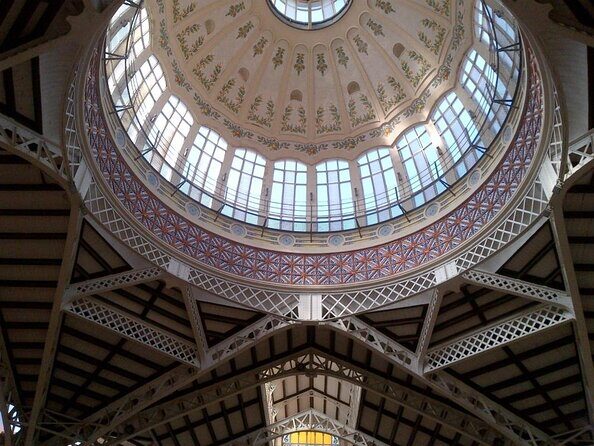
- Mercat Central de Valencia (opened 1928): Art Nouveau market energy plus the Silk Market context nearby
- Plaza Redonda’s old-school craft shops: A renewed classic that still feels handmade
- Serranos Towers and the Turia connection: Gothic architecture explained through the city’s river history
- Colón Market horchata stop: Art Nouveau ends with a practical taste of the city
A smart 5pm route through Valencia’s layers
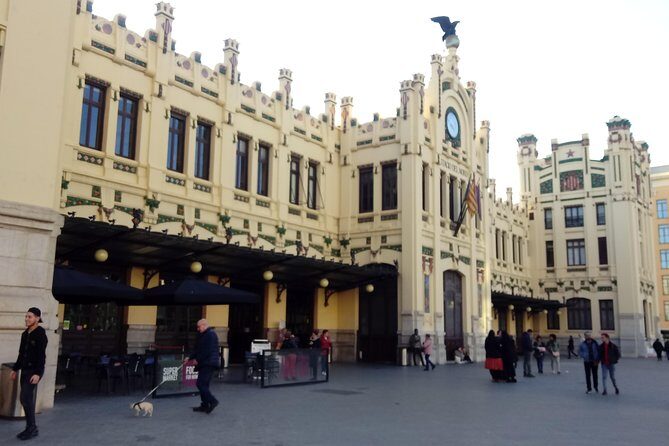
This walking tour is built for evening light and easy pacing. It starts at València-Estació del Nord around 5:00 pm, then threads through the Old Town until it ends at Mercado de Colon, a good spot to grab a drink and keep wandering on your own.
Why I like the format: the route isn’t just a checklist of famous sights. It links places that look unrelated at first glance—train station mosaics, Belle Époque public buildings, and Art Nouveau markets—then gives you a reason to see them together. That makes the city feel like one story instead of separate photo stops.
The tour also makes it practical: it’s private, so only your group is on the move, and it’s offered in English. A mobile ticket is used, which is one less thing to juggle on your phone.
You can also read our reviews of more walking tours in Valencia

Estació del Nord: mosaics first, then you’re oriented
Most big cities start with a landmark. Valencia’s start here is Estació del Nord, and the highlight is the mosaic pictures. It’s a great first step because it does two jobs at once: you’re in the right part of town, and the architecture sets the tone for what you’ll keep seeing.
At this stop, you also get the visual cue that Valencia likes ornament—before the tour ever reaches squares and towers. If you’re the type who likes to understand a city by its details, this opening hits the right note.
A small practical bonus: starting at a major station makes it easier to arrive and meet on time, especially if you’re using public transportation.
Plaça de l’Ajuntament and the Post Office: Belle Époque in the 20th century
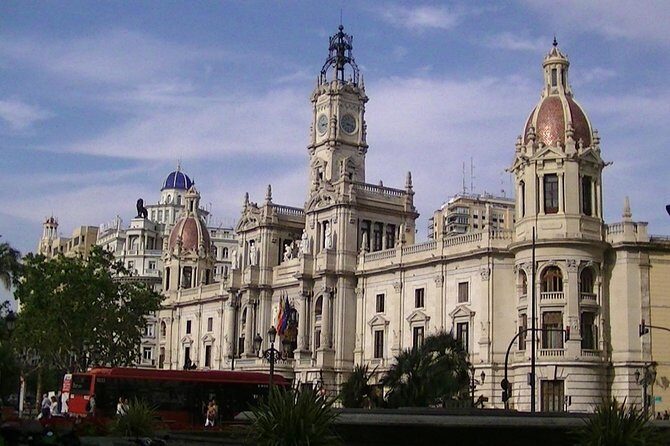
Next comes Plaça del Ajuntament, plus the Town Hall Square and the Post Office. Here the focus shifts from mosaic decoration to grand civic architecture. You’ll see how these buildings reflect the Belle Époque look of the city in the 20th century, and that helps you connect Valencia’s growth to what was happening culturally and economically.
This is also one of the stops where the tour structure works well. You’re given a short explanation, then you can look at the façade details and get what the guide is pointing out. If you tend to skim over buildings on your own, this section trains your eye.
Possible consideration: since each stop is brief, you’ll want to be ready to move again once your questions are answered.
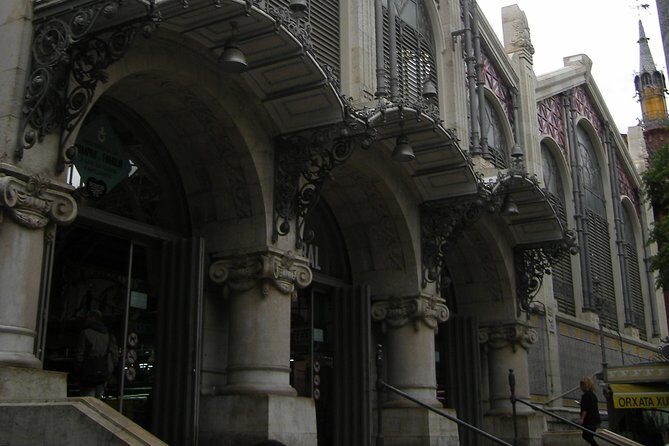
Mercat Central de Valencia: Art Nouveau market and trade history clues
Then you’re in the center of the action at Mercat Central de Valencia, an Art Nouveau building that was opened in 1928. The market setting is a big part of why this stop lands: it’s one thing to read about Valencia’s architecture, and another to see it in a living food space.
You’ll also hear the market’s broader trade context. The tour mentions the Silk Market from the 15th century, plus the idea of the market facing the diamond of Valencia. Even if you’re not a history buff, that framing helps. It explains why Valencia cared so much about commerce—and why the buildings around it feel permanent.
One tip: if you’re hungry, keep your expectations practical. This is more about architecture and context than a long sit-down meal, so treat food here as optional unless the tour time allows for a quick snack.
Plaza Redonda: the round square that still feels handmade
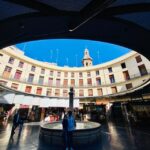
At Plaza Redonda, you’ll see the Round Square, described as the first and oldest mall in Valencia. The building has been renewed, but the shops are said to still offer handwork like a hundred years ago.
I like this stop because it’s not another big monument. It’s a place where commerce and craftsmanship overlap. If you enjoy shopping for small objects that feel local—rather than generic souvenirs—this is the section most likely to reward your wandering.
Why it works on a walking tour: it gives you a break from towers and cathedrals, and it lets you slow down just enough to look at shopfront details. You’ll finish this section with a better sense of how Valencia used to do business and how it does it now.



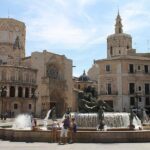

Plaça de la Reina: Cathedral area symbols and the Micalet Tower
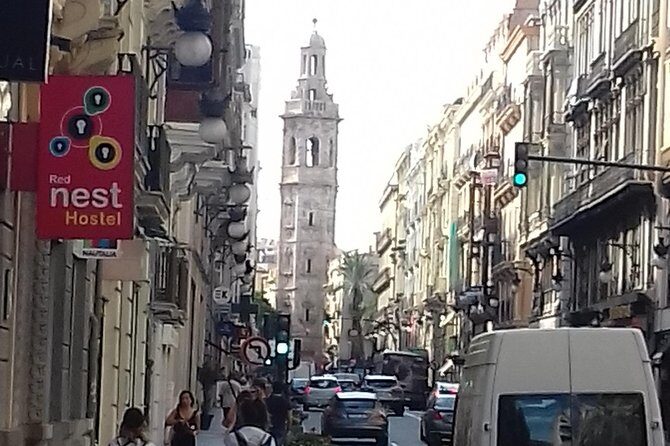
The tour then heads to Placa de la Reina, the Queen Square area. This is where Valencia’s Old Town symbolism shows up clearly: the Cathedral, the Micalet Tower, and the Virgin Square are called out as key icons, along with art and culture.
This stop matters because it ties together the city’s spiritual and civic identity. Earlier you looked at public buildings and markets. Here, the city’s cultural focus takes center stage.
Practical advice: take a moment to look up. With towers, domes, and façades, the details can be easier to miss when you’re walking straight through. Even in a short stop, you can usually get one solid look at the architecture from a nearby angle.
Torres dels Serrans: Gothic towers and the Turia’s role
Next is Torres dels Serrans, reached after walking through Serranos Street. These are described as Gothic and the tour explains how important the Turia River was for the evolution of Valencia.
This is one of those “place plus explanation” moments. On your own, you might see impressive towers. With the tour, you’re given a city-planning lens—how the river shaped growth, movement, and the way Valencia built around risk and opportunity.
If you like architecture but also like understanding why it exists, this is a strong stop. It’s also a good one for photos, since towers naturally give you dramatic angles.
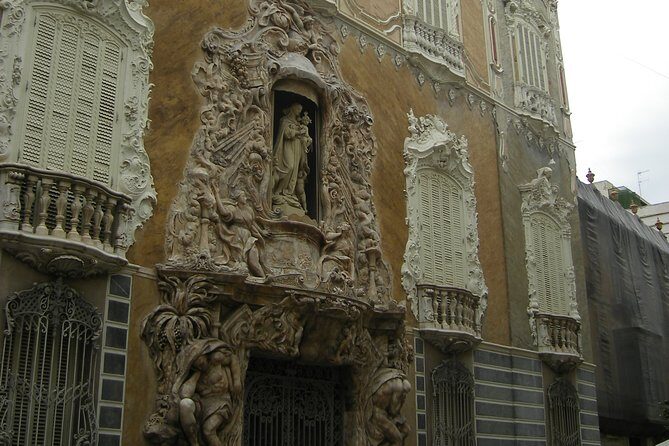
Palacio del Marques de Dos Aguas: Baroque façade and ceramics
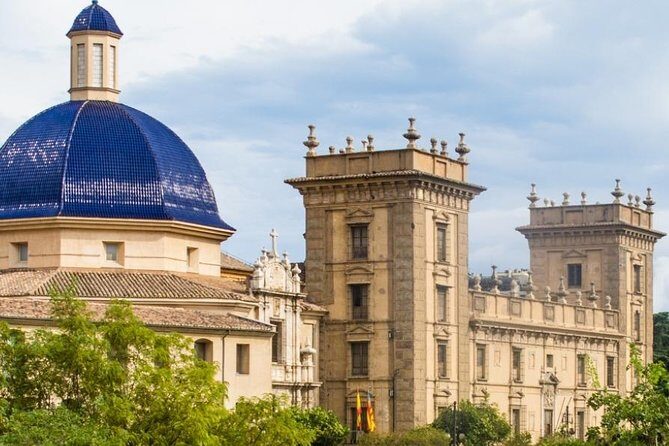
The tour heads to Palacio del Marques de Dos Aguas next. Even if you only see the façade, it’s described as amazing, with a Baroque art style. The stop also points out that the building hosts the National Ceramic Collection.
This is a smart pairing: Baroque design is one reason the façade grabs attention. Ceramics are another reason Valencia feels different from other Spanish cities. If you’ve seen a few cathedrals already, the ceramics focus gives your brain a new kind of detail to process.
One consideration: because this is still a walking tour with short stops, you’ll likely get a focused look rather than a long museum-style visit. If you’re seriously interested in ceramics, you might want to plan additional time later.
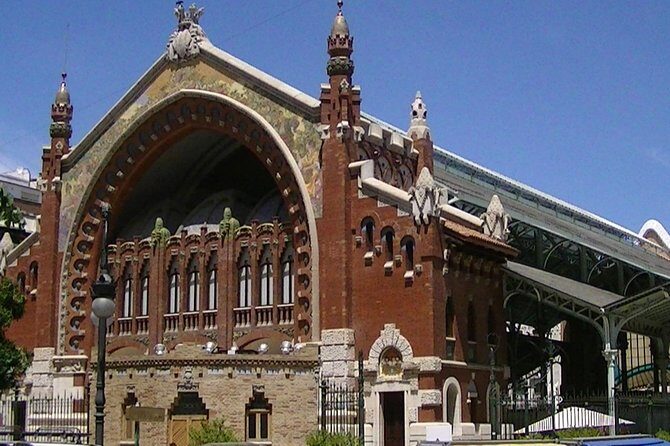
Mercado Colon: Art Nouveau, Colón Market, and horchata
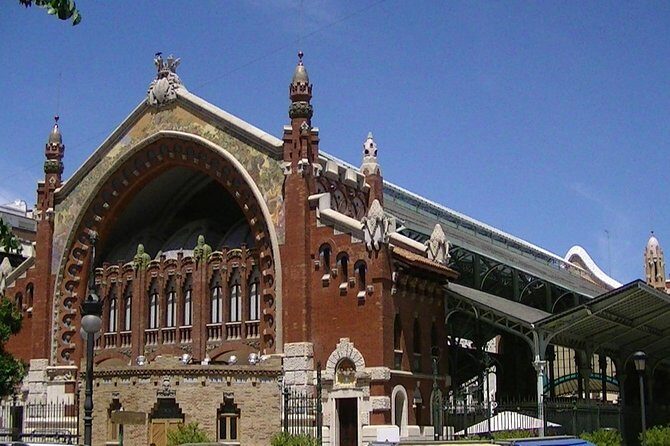
The end point is Mercado Colon, an Art Nouveau building opened in 1916 and renewed in the 21st century. The tour frames it as a perfect meeting point, and it ties in a practical local taste: horchata.
This finish is exactly what you want after two to three hours of walking. The market area is central, easy to re-enter for another look, and it gives you something low-pressure to do right away. If you’re in the mood for a sweet, refreshing drink, horchata fits the moment.
Practical tip: since it’s your last stop, don’t spend all your energy taking photos. Leave yourself a little room for the experience the tour is pointing you toward—food and drink are part of how Valencia makes these buildings matter.
Guide style matters: why Enrique’s approach works
A tour lives or dies by the guide. Here, Enrique’s style shows up in a few concrete ways: he’s described as punctual, friendly, and able to answer questions while keeping the group moving. The tour is also said to work in multiple languages, which matters if you don’t want to feel left out mid-sentence.
I also appreciate that the pacing is generally structured. When stops are short, you don’t want to spend ten minutes wandering without direction. This walk keeps you oriented.
The one downside you may notice: if you like lots of constant storytelling, you might find some moments between explanations feel a bit longer. The fix is simple—ask questions. In a private tour, that’s often the fastest way to turn a slower interval into something personal and interesting.
Value for your time: short walk, included entries, built-in structure
This is a short walking experience, roughly 2 to 3 hours, and the route is dense with famous and character-filled places. The value comes from three things:
- Included admission tickets at every listed stop, so you’re not constantly deciding whether it’s worth paying again
- A route that covers multiple architectural styles without backtracking
- A private group setup, so your guide can keep the pace matched to your comfort level
Without knowing the exact price, I’d still call it a good deal if you want guided context. You’re saving effort (planning, finding entrances, juggling tickets) while also getting someone to explain what you’re looking at.
If you prefer total freedom with a self-guided plan, you could technically replicate parts of this route on foot. But this one is designed to make sure you see the right things in the right order and understand the why, not just the what.
Who should book this walking tour
This tour is a great fit if you:
- Want an English guide and clear explanations while walking
- Like architecture, markets, squares, and street-level city life
- Prefer a private experience over joining a larger group
- Are traveling with friends or family and want everyone moving together
It’s also listed as suitable for most travelers and allows service animals. If you’re comfortable walking through central Valencia, you’ll likely enjoy it.
Should you book Walking in Valencia?
Book it if you want a structured, high-value Old Town walk with included admissions and a guide who makes the city easier to read. It’s especially worth it for the way it connects different styles across the walk—station mosaics to market architecture to Gothic towers to Baroque ceramics—without turning the afternoon into a marathon.
Skip it or at least go in with expectations if you’re the kind of person who needs long time at each stop. This is designed for quick, guided hits. You’ll get the main ideas, but you may want extra time on your own afterward—especially around the big-icon areas like the Cathedral zone and if you’re curious about ceramics.
FAQ
FAQ
How long is the Walking in Valencia tour?
The tour lasts about 2 to 3 hours.
Is the tour offered in English?
Yes, it is offered in English.
Where does the tour start and end?
It starts at València-Estació del Nord on Carrer d’Alacant, 25 (Extramurs) and ends at Mercado de Colon, near the shopping area on Carrer de Colón.
What time does the tour begin?
The start time listed is 5:00 pm.
Are admission tickets included?
Yes. Admission tickets are included for the tour stops described.
Is the tour weather-dependent?
Yes. It requires good weather, and if it’s canceled due to poor weather, you’ll be offered a different date or a full refund.