REVIEW · VALENCIA
Essential Valencia and its World Heritage sites
Book on Viator →Operated by Turiart · Bookable on Viator
Valencia’s World Heritage, on foot. This tight 2-hour Old Town walk connects headline monuments with the living UNESCO stories behind them, especially La Lonja de la Seda and the city’s traditions.
I especially liked the pacing and the people: guides such as Gábor and Sara (and often Zsofi in reviews) keep things clear, friendly, and never rushed. And I like that you get a mix of big sights and smart context, from an Art Nouveau station to market life and Gothic trade halls.
One consideration: part of the route is only on weekdays, since the Ajuntament de Valencia stop is limited to weekdays.
In This Review
- Key highlights you should know
- Two Hours to Get Oriented in Old Valencia
- Estacio del Nord: Art Nouveau Start That Sets the Tone
- Fallas at Plaça de l’Ajuntament and Ajuntament de València (Weekdays Only)
- Mediterranean Diet on the Move at Mercat Central
- Step Inside La Lonja de la Seda and the Trade-Callers’ Hall
- Cathedral Area Highlights: Holy Grail Context and the Thursday Water Tribunal
- Price and Tickets: What $21.36 Buys You in Real Value
- Weather, Days, and Small Practicalities That Matter
- Who Should Book This Valencia Heritage Walk
- Should You Book Essential Valencia and Its World Heritage Sites?
- FAQ
- What’s the duration of the tour?
- What’s included in the price?
- Where does the tour start and end?
- Is the Valencia Cathedral included?
- Is La Lonja de la Seda admission included?
- Does the tour work on weekends?
- What if La Lonja de la Seda is closed during your visit?
Key highlights you should know
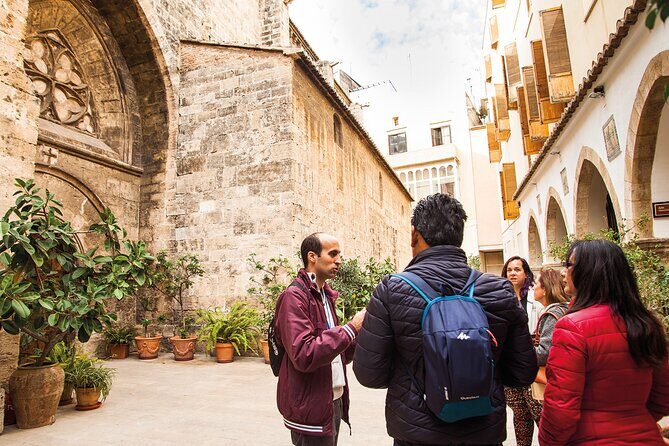
- Small group feel (max 25) for a more relaxed, question-friendly walk
- La Lonja de la Seda entry included, including time in the Sala de Contratación
- World Heritage + Intangible Heritage focus, not just sightseeing photos
- Fallas explained in the exact places tied to the festival, with context you can carry into the rest of your trip
- Water Tribunal timing, every Thursday at midday at the Cathedral’s Door of the Apostles
- Mobile ticket for an easy start and fewer ticket headaches on the go
Two Hours to Get Oriented in Old Valencia
If it’s your first day in Valencia and you want to stop guessing, this is a smart plan. The route is about two hours long and built as a walk through the core of Ciutat Vella and its edges, ending back in the old center. It’s also designed so you can jump on public transport without turning your day into a logistics puzzle.
The meeting point is the Tourism Hub on C/ de Xàtiva, 24 (Extramurs), with a 10:00 am start. The walk ends at Plaça de la Mare de Déu, 4 in Ciutat Vella. You’ll want comfy shoes, and you’ll want your curiosity turned on—because the guide is there to translate what you’re seeing into why it matters.
You can also read our reviews of more historical tours in Valencia


Estacio del Nord: Art Nouveau Start That Sets the Tone
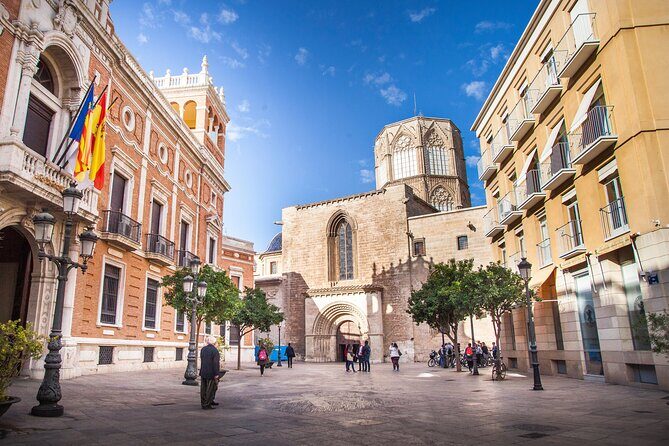
You begin at Estació del Nord, with both external and internal viewing. Even if you’ve walked through a lot of train stations in your life, this one has personality: it’s an Art Nouveau style station, and the contrast is immediate. Outside you see the design cues; inside you get a sense of the space and how it works as a civic building, not just a doorway.
This first stop matters because it frames how Valencia likes to mix eras. You’re not only chasing one museum highlight. You’re learning a pattern: architecture and public life are tightly linked here.
Plan for about 20 minutes, and keep your eyes open for details your brain usually skips over in big transit hubs.
Fallas at Plaça de l’Ajuntament and Ajuntament de València (Weekdays Only)
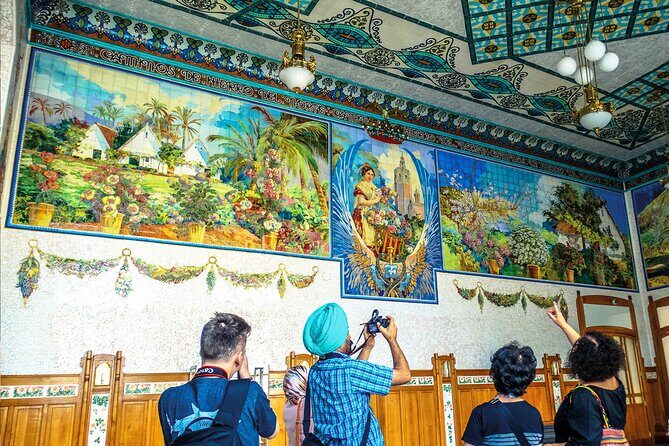
Next you’ll hit Plaça de l’Ajuntament and talk Fallas—an Intangible Heritage tradition added to UNESCO in 2016. Even if you’re not traveling in March, the guide’s explanation helps the festival make sense as more than noise and fireworks. Fallas transform the city into an open-air museum of ephemeral monuments, paired with music, traditional costumes, and the famous smell of dust.
Then comes the Ajuntament de València stop. This one is only on weekdays, so if your trip lands on a weekend, you may have a slightly different flow. The upside is that this location is exactly where the festival story feels anchored. The guide uses the architecture and the square’s role to explain the festival’s values and how the tradition shows up in everyday spaces.
If you happen to be in Valencia between 15 and 19 March, you’ll likely feel like you’re reading the city with a cheat sheet. Even outside those dates, you’ll leave understanding what you’re seeing when you later notice Fallas posters, imagery, or hints in shop windows.
Mediterranean Diet on the Move at Mercat Central
You’ll take in the Mercat Central de València from the outside, with a quick but meaningful story about the Mediterranean Diet—another UNESCO Intangible Heritage. This isn’t a food tour where you sample everything. It’s more about learning the cultural logic behind the diet: how it shows up in daily choices and why local food traditions are worth protecting.
The market itself is Art Nouveau, so you get an architectural moment even without going inside. And that’s useful because it connects the idea of heritage to a real, everyday setting. Food doesn’t live only in paintings; it lives in places people actually use.
Expect around 10 minutes here. It’s short on purpose, so you can keep your energy for La Lonja.
Step Inside La Lonja de la Seda and the Trade-Callers’ Hall
This is the World Heritage centerpiece: you enter La Lonja de la Seda (the Silk Lonja). The building is a masterpiece of civil Gothic architecture, and it was declared a World Heritage Site in 1996. The difference between seeing a building from the street and standing inside one is huge, and the guide uses that moment well.
Your highlight time is the Sala de Contratación, often described as the fabulously dramatic contract hall. You’ll notice columns, vaults, and ribs—structural details that don’t just look cool. They also explain how the space supported trade, meetings, and civic life in Valencia’s prosperous golden age.
Plan for about 30 minutes inside. If you’re the type who likes to understand what you’re looking at, this stop rewards you. And if you’re not, you still get the wow factor because the interior shape of the room is visually loud in a good way.
Tip for your visit: pause mid-hall and look upward. The ceiling design is part of the point.





Cathedral Area Highlights: Holy Grail Context and the Thursday Water Tribunal

After the Silk Lonja, you’ll move into Cathedral territory, and the tour keeps it practical. First, you get an external look at Valencia Cathedral, where the Holy Grail is kept. The cathedral itself is not part of the included admission here, so you’re not walking through it on this tour. But the outside context helps you place it in the city’s bigger story.
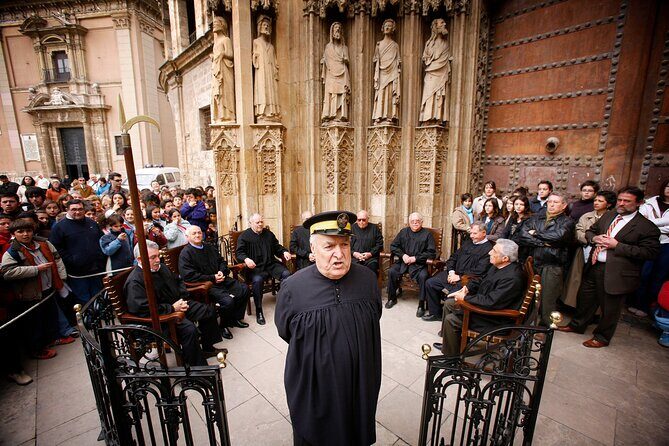
Then comes Plaza de la Virgen, and this is where Valencia’s living tradition really shows itself. You’ll learn about the Water Tribunal, an Intangible Heritage recognized since 2008. Here’s the key detail you can actually plan around: the Water Tribunal takes place every Thursday at midday in the Door of the Apostles of the Cathedral.
That means the tour isn’t only about monuments frozen in time. It’s about a civic ritual that’s still happening. Even if you don’t catch the tribunal during your trip, knowing it exists turns the cathedral area into something more meaningful than a postcard stop.
Expect about 15 minutes for this final heritage moment.
Price and Tickets: What $21.36 Buys You in Real Value
At $21.36 per person, you’re paying for more than a walk. You’re paying for a guide plus timed access where it counts. Here’s how the value typically breaks down based on what’s included:
- A professional guide for the full about-2-hour route
- La Lonja de la Seda entry included for the interior time in the contract hall
- Several other stops are free to attend as part of the experience flow, including Estació del Nord and key Old Town squares
- Valencia Cathedral is external only on this tour (the Holy Grail visit would be separate since admission is not included)
When I think about value in a tour like this, I focus on one thing: do you get at least one major “ticket-requiring” moment handled for you? Here, you do. Getting into La Lonja is the kind of upgrade that makes a short tour worth your time.
Also, the tour uses a mobile ticket, which is the small but real kind of convenience that keeps your day from turning into printed-paper scavenger hunts.
Weather, Days, and Small Practicalities That Matter
This experience runs on good weather. If conditions are poor, the tour can be canceled and you’ll be offered another date or a full refund. That matters because it’s a walking format and you’ll want the Old Town streets comfortable, not miserable.
You also want to check your calendar for the weekdays-only Ajuntament de Valencia stop. If you’re visiting on a weekend, don’t assume every square-based component will hit exactly the same way. The tour still makes sense as a World Heritage introduction, but your timing could slightly affect that particular segment.
Finally, if you want a language change, it’s possible only if available, with an additional €5 per person. If that matters to you, decide early so you’re not scrambling.
Who Should Book This Valencia Heritage Walk
This tour fits best if:
- You want a first-day orientation and you’re short on time
- You like learning how traditions connect to specific places
- You’re interested in both World Heritage (La Lonja) and Intangible Heritage (Fallas, Water Tribunal, Mediterranean Diet)
- You prefer a guided pace that doesn’t feel like sprinting between landmarks
It’s also a good choice for families with kids, since children must be accompanied by an adult and the walk is structured to keep things manageable.
If you’re the kind of traveler who loves one big museum and then exits fast, you might want something different. This one is about context and pattern recognition across multiple heritage stories.
Should You Book Essential Valencia and Its World Heritage Sites?
I’d book it if you’re arriving in Valencia and want your bearings fast—without skipping the meaningful parts. The combination of La Lonja de la Seda interior access plus clear explanations of Fallas and the Water Tribunal gives you a strong, usable understanding of Valencia in one go.
I’d skip or rethink it only if:
- You need guaranteed weekday access to the Ajuntament stop and your dates land on a weekend, or
- You’re traveling when weather looks rough and you hate walking plans that might get adjusted.
If you’re aiming to understand Valencia beyond the skyline photos, this is an efficient, well-focused way to do it.
FAQ
What’s the duration of the tour?
The tour runs for about 2 hours.
What’s included in the price?
You get a professional guide, and admission for La Lonja de la Seda is included. Other areas in the route are free to view as part of the walk.
Where does the tour start and end?
It starts at the Tourism Hub, C/ de Xàtiva, 24, Extramurs (46007 València) and ends at Plaça de la Mare de Déu, 4, Ciutat Vella (46001 València).
Is the Valencia Cathedral included?
You’ll see the Valencia Cathedral from the outside, and admission is not included for the cathedral.
Is La Lonja de la Seda admission included?
Yes, you enter La Lonja de la Seda, and the Sala de Contratación is part of the included visit.
Does the tour work on weekends?
The Ajuntament de Valencia stop is only on weekdays, so your exact experience may vary by day.
What if La Lonja de la Seda is closed during your visit?
If Silk Exchange closure affects an event during the tour, you’ll be offered the option to send tickets so you can enter in the afternoon, or the company will try to exchange them for another ticket of the same amount for a different museum/monument.