REVIEW · VALENCIA
Valencia: Top 25 Highlights Guided Bike Tour
Book on Viator →Operated by Bikes & Tours · Bookable on Viator
In This Review
- A Flat, Fast Way to See More Valencia
- What You’ll Really Get From This 2.5-Hour Bike Ride
- Key Highlights Worth Noting Before You Pedal
- Entering Valencia by Bike: Why This Route Works
- Meeting Point in L’Eixample and the Small-Group Flow
- Russafa: Where Valencia Feels Current
- Estació del Nord: Tiles, Florals, and a Train Station You’ll Want to Photograph
- Plaza de Toros and Placa de l’Ajuntament: Classic Landmarks With Today’s Use
- Mercado Central: A Modernist Market That Still Feels Like the Heartbeat
- La Lonja de la Seda and Valencia Cathedral: Medieval Prestige, Different Layers
- Placa de la Mare de Deu and Torres dels Serranos: Squares and City Walls
- Jardí del Turia: The Ride That Feels Like a Break From the City
- Palau de la Música: Art Built for the City
- City of Arts and Sciences: Hemisferic and Calatrava’s Signature Shapes
- L’Umbracle and Queen Sofía Palace: Sculpture Garden and Opera Hall
- Oceanogràfic and Museo de las Ciencias Príncipe Felipe: Tickets Come With the Wow
- L’Ágora: A Modern Event Hall With a Light-Control Roof
- Choosing Regular Bike vs E-Bike Without Stress
- Price and Value: Is $32.67 a Good Deal?
- Who This Tour Fits Best (and Who Might Want Something Else)
- Quick Practical Tips to Get the Most
- Should You Book the Valencia Top 25 Highlights Guided Bike Tour?
- FAQ
- How long is the Valencia Top 25 Highlights Guided Bike Tour?
- How much does the tour cost?
- Where does the tour start?
- Is the tour in English?
- What is the group size?
- Are separate tickets needed for some stops?
- Is the tour flat and easy to ride?
- What is the maximum weight limit?
- What happens if the weather is bad?
- Is there a mobile ticket?
A Flat, Fast Way to See More Valencia
A bike route is the easiest way to get your bearings fast. This 2.5-hour guided ride strings together Old Town landmarks and the futuristic City of Arts and Sciences, so you see two different sides of Valencia without spending your whole day commuting. I especially like the mostly flat cycling (great for relaxed pedaling) and the tight photo-friendly stops. One thing to consider: a handful of top sites have separate entry tickets (not included), so you’ll want to decide on the fly if you want to go inside.
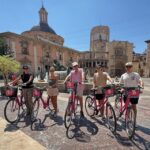
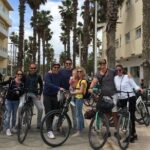
If you like a plan that feels light, this is the right kind of outing. The pace keeps moving, but the stops are long enough to hear the context and grab pictures. With a max group size of 14, the guide can still keep an eye on the pack.
What You’ll Really Get From This 2.5-Hour Bike Ride
The meeting point is in L’Eixample (C. de Puerto Rico, 23), and the tour ends back there, so you’re not stuck figuring out transit afterward. English is the offered language, and you’ll use a mobile ticket. Booking is usually smooth, and it helps to reserve ahead since this tour is commonly booked about 19 days out.
You can also read our reviews of more cycling tours in Valencia

Key Highlights Worth Noting Before You Pedal
- A small group (up to 14 people): easier to stay together and manageable on busy streets
- Two worlds in one loop: medieval Old Town stops plus the City of Arts and Sciences
- Mostly flat cycling: ideal for an easy day on two wheels
- Tour guides with real storytelling: I’ve seen guides like Daria, Jorge, Liliana, Shakti, Martin, Victor, Steven, and Luis lead this route
- Some major attractions aren’t included: Hemisferic, Oceanogràfic, and the Prince Felipe Science Museum require separate tickets
- Turia Park is a standout ride: you’ll pedal through the long green ribbon along the old riverbed
Entering Valencia by Bike: Why This Route Works
Valencia is one of those cities where a bike tour just makes sense. The streets connect major sights in a way that’s hard to match on foot—especially if you only have a day or two. This ride covers a lot of ground in about 2 hours 30 minutes, so it’s a strong “first look” option.
The balance is the big win: you’re not stuck doing only museums or only squares. You start in neighborhoods where Valencia feels lived-in, then you roll into the high-design world of Santiago Calatrava’s City of Arts and Sciences. It’s a quick lesson in how the city evolved.
Also, the tour avoids the heavy planning trap. You don’t have to choose a dozen tickets up front just to get value from the experience. You can enjoy the architecture and viewpoints, then decide later what’s worth an interior visit.
Meeting Point in L’Eixample and the Small-Group Flow
You’ll meet at C. de Puerto Rico, 23, L’Eixample, 46004 València. The tour ends back at the same spot, so it’s easy to chain with lunch or an evening walk in the Old Town. It’s also set near public transportation, which matters if you’re arriving from another part of the city.
The group size is capped at 14, and that shows in how the ride feels. You’re not bouncing around in a mega-pack, and the guide can stop long enough for facts and photos. If you’ve ever done a city bike tour where the leader disappears ahead, you’ll appreciate this one’s tighter control.
Timing is another practical point. The tour runs about 2.5 hours, and it’s designed as a continuous circuit with stop-and-go segments. If you’re the type who hates rushing, arrive early and don’t cut it close at the start.
Russafa: Where Valencia Feels Current
The first stop is Russafa, a historic neighborhood that today is known for culture, food, and nightlife. Even if you don’t go inside any places, the area gives you a sense of what Valencia is like when the day is moving.
This stop works as an opening “vibe check.” You’ll get context early, so later landmarks—especially older ones—land better. Russafa also helps you reset your legs for the ride, since you’re not thrown immediately into only heavy sightseeing.
You can also read our reviews of more guided tours in Valencia





Estació del Nord: Tiles, Florals, and a Train Station You’ll Want to Photograph
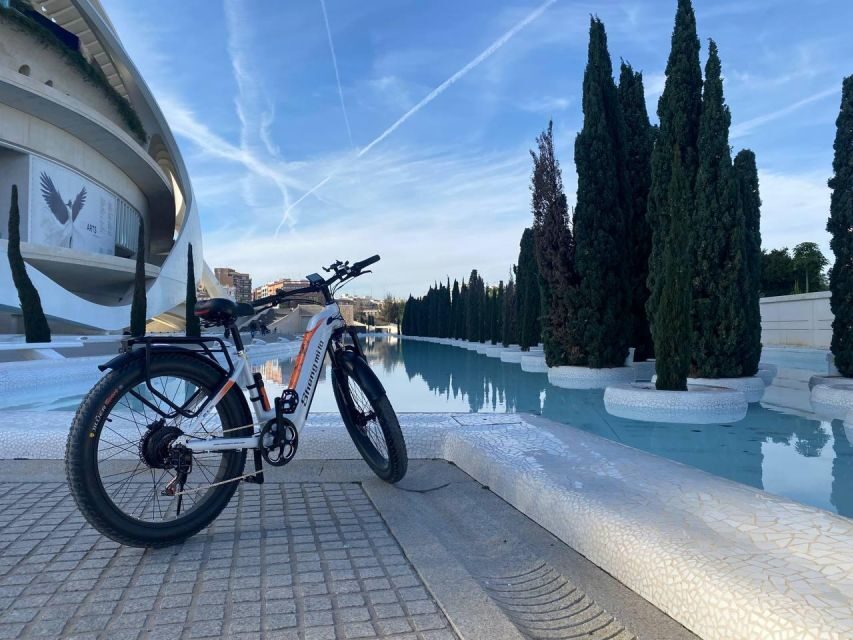
Next up is Estació del Nord, a modernist masterpiece designed by Demetrio Ribes, opened in 1917. Look for the colorful tile work and floral motifs that reflect Valencian identity.
It’s a smart inclusion because it’s not just a pretty backdrop. You get an architecture moment early in the tour, and it’s a reminder that Valencia’s design energy isn’t only in museums. This is a working station too, so the building feels like part of daily life.
Plaza de Toros and Placa de l’Ajuntament: Classic Landmarks With Today’s Use
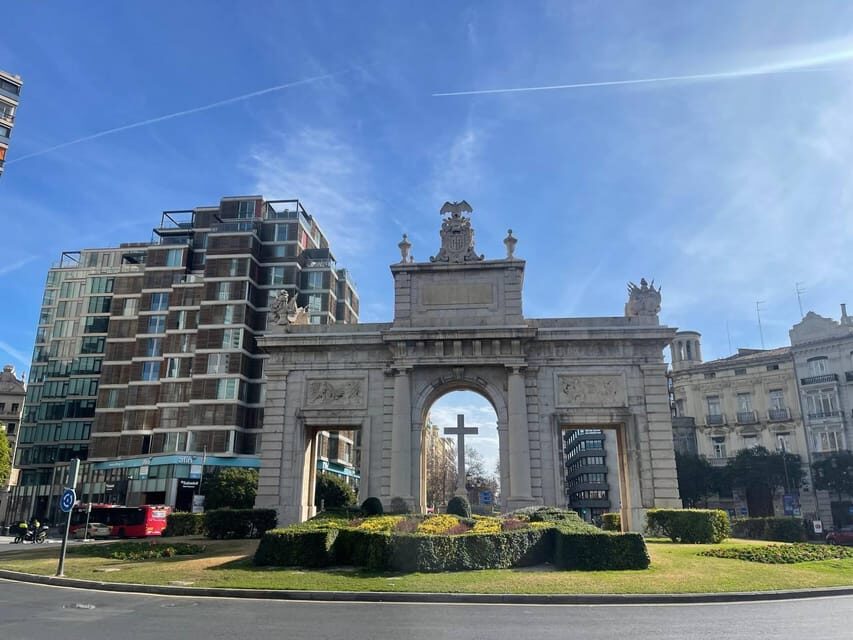
You’ll pass Plaza de Toro, designed in a neoclassical style with a grand symmetrical façade. The space is traditionally tied to bullfighting, but it now hosts concerts and cultural events. So even if you’re not into history tied to sports, you still get a sense of how old structures find new purpose.
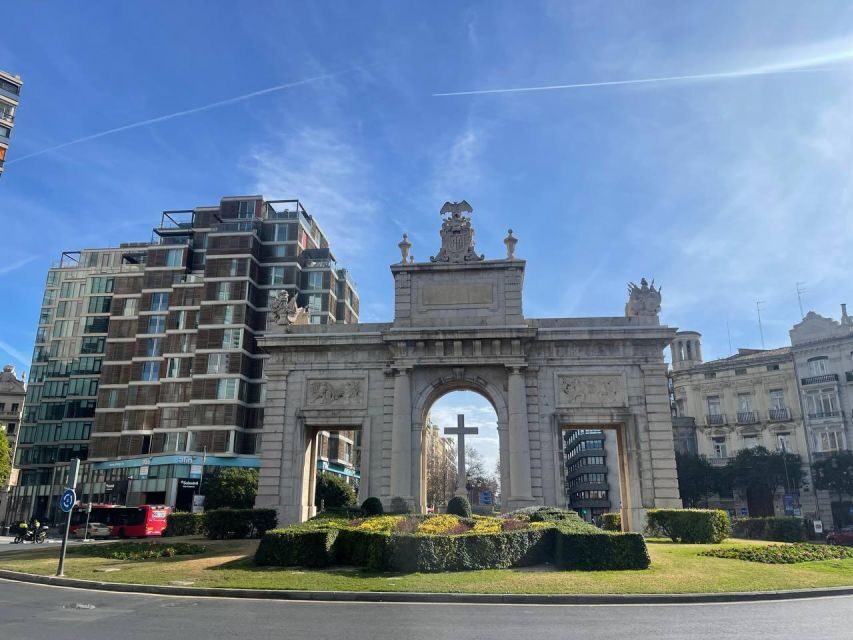
Then the route opens out at Placa de l’Ajuntament, Valencia’s largest square. You’ll see the fountain and the surrounding 19th- and early 20th-century buildings that shape the square’s look.
These two stops are good for photos and orientation. When you’re moving through a city quickly, wide squares act like navigation anchors. You’ll remember where you were once the tour reaches the more complex lanes of the Old Town.
Mercado Central: A Modernist Market That Still Feels Like the Heartbeat
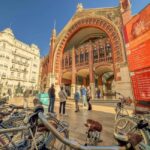
At Central Market of Valencia (Mercado de Central), you’re looking at a major modernist building designed in 1914 by Francisco Guardia and Alejandro Soler. The market is one of the oldest and largest in Spain.
Even if you’re not shopping for anything, it’s worth a close look. Markets show a city’s rhythm in a way monuments can’t. The building itself helps you understand why Valencia is proud of its craftsmanship and public spaces.
If you’re planning your meals during your trip, this is a great stop to set direction. You’ll leave with a better idea of where food fits into the city’s daily movement.
La Lonja de la Seda and Valencia Cathedral: Medieval Prestige, Different Layers
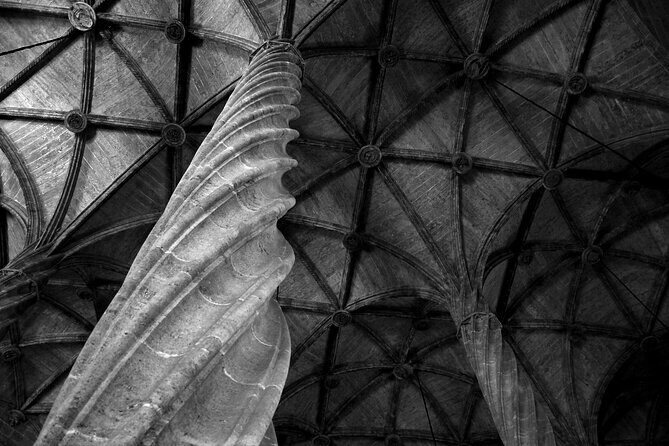
La Lonja de la Seda is next, built in the 15th century and listed by UNESCO. It was once a silk exchange, and the Gothic architecture reflects the prosperity of medieval Valencia. Entry isn’t included, so if you want to go inside, budget for a separate ticket.
Then you head toward Valencia Cathedral. The site is a mix of styles—Gothic, Baroque, and Renaissance—and the building history is layered. It was originally a Roman temple and later became a mosque for a period.
Inside, the cathedral complex includes places tied to devotion and tradition, including the Santo Caliz Chapel and what’s associated with the Holy Grail. Even if you don’t go deep into interiors on the tour, you’ll understand why this cathedral is central to the city’s identity.
Placa de la Mare de Deu and Torres dels Serranos: Squares and City Walls
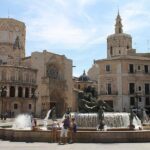
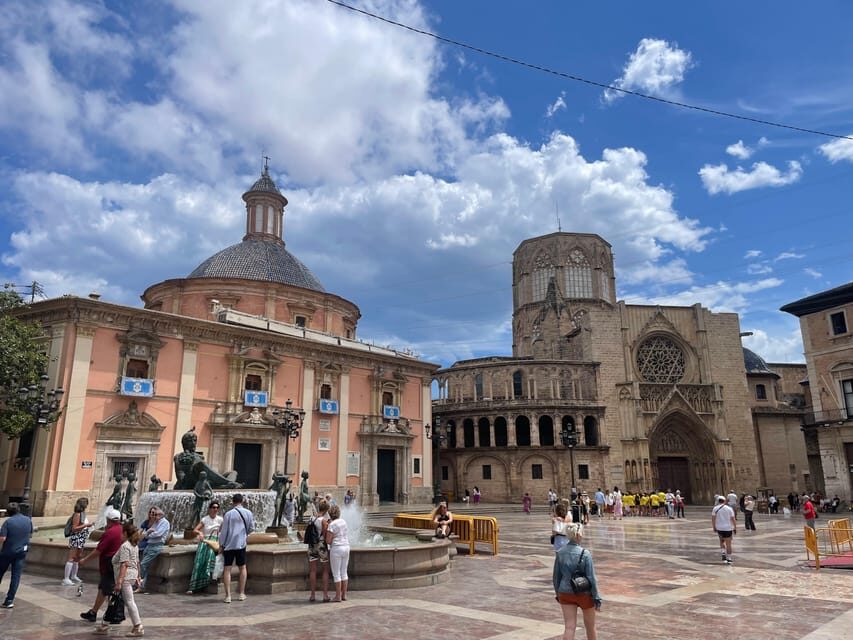
At Placa de la Mare de Deu, you’re in the Old Town core. In the center is the Fuente del Agua de la Acequia, set within a square framed by historic buildings like the cathedral and basilica.
This stop is another “pause and look” moment. Squares like this give you breathing room after faster streets, and they help you connect the medieval core to the later garden and science districts.
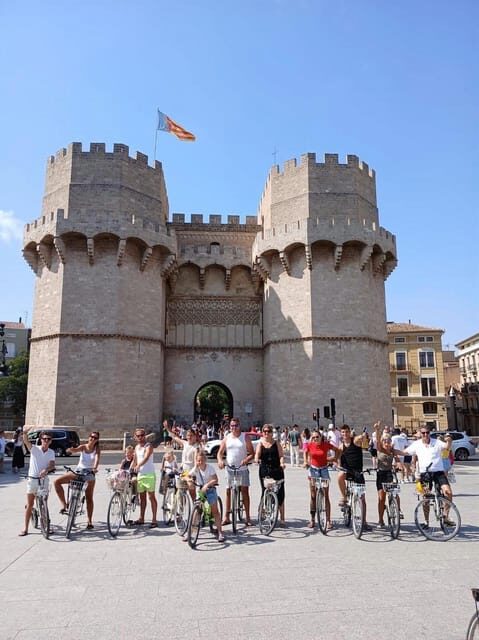
Then you reach Torres dels Serrans. Valencia originally had 12 gates in its walled Old Town, and most were destroyed in the 19th century. Today you’ll find only two major surviving gate towers, including Torres de Serranos (and the other one, Torres de Quart).
Jardí del Turia: The Ride That Feels Like a Break From the City
Now for one of the best parts of the whole outing: Jardí del Turia. The Turia Gardens run for about 9 kilometers through the city, built in the old riverbed. The riverbed had once been planned for a highway after a flood, but Valencia chose a greener future.
This section isn’t just pretty—it changes the whole feel of the tour. The ride becomes smoother and calmer, especially if you like cycling where cars aren’t crowding the space. One of the easiest ways to enjoy this is to keep pedaling at a relaxed pace and focus on the long open lines of the park.
It’s also where you get a sense of how locals use the city’s outdoor spaces. Even on a guided ride, the garden environment makes it feel less like a checklist.
Palau de la Música: Art Built for the City
Along the Turia park route you’ll pass Palau de la Música de València, the Valencian concert hall. The building is tied to architect Ricardo Bofill, and the hall itself was finished in 1987.
This is a great stop if you’re into architecture details. Concert halls are often designed to be both functional and visually expressive, and Palau de la Música fits that idea. Even if you only see it from outside, the building shape helps you understand why Valencia invests in arts spaces.
City of Arts and Sciences: Hemisferic and Calatrava’s Signature Shapes
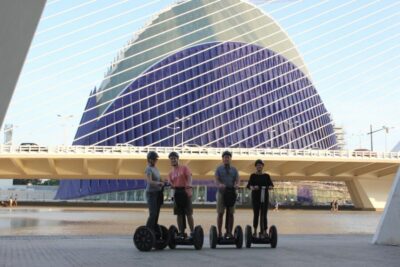
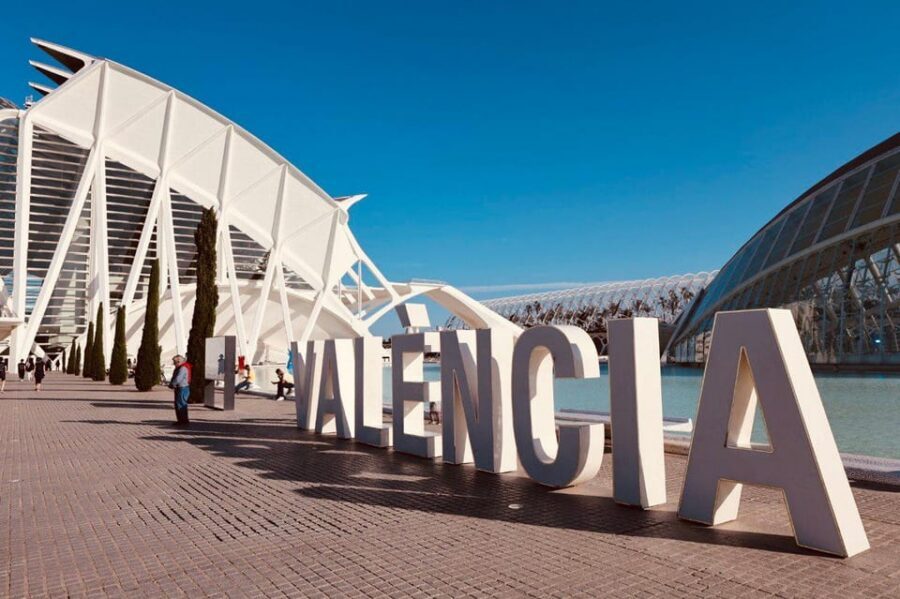
The tour then swings into the futuristic City of Arts and Sciences area. The first stop here is Hemisferic, often called the eye of knowledge. It was designed by Santiago Calatrava and completed in 1998, with the building shaped to resemble a human eye.
Admission to Hemisferic isn’t included. If you care about the inside experience—like its cinema format—plan to buy a ticket separately. If not, you can still enjoy the outer design and the quick context your guide provides.
L’Umbracle and Queen Sofía Palace: Sculpture Garden and Opera Hall
Next is L’Umbracle Terraza, designed by Calatrava as a sculpture garden and entrance area for the complex. There’s an outdoor art-gallery feeling here, with sculptural works placed along the walk.
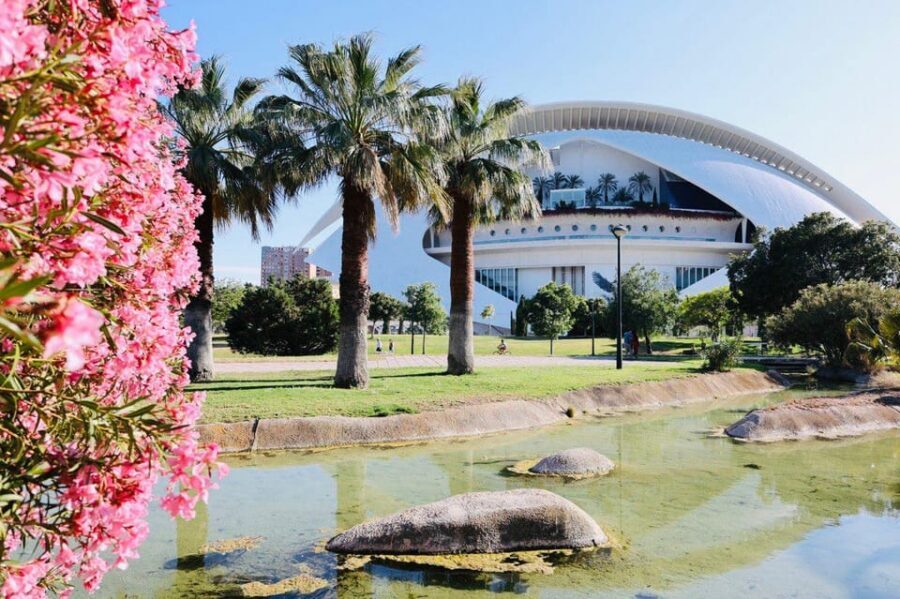
Then you reach the Queen Sofía Palace of Arts. The structure is designed to remind people of a Roman helmet, and it functions as an opera house and performing arts center. It opened in 2005.
These two stops are about atmosphere. Even if you’re not attending a performance, you’ll feel the “designed-city” mood shift. It’s a good segment for slow photos, especially if the daylight is kind.
Oceanogràfic and Museo de las Ciencias Príncipe Felipe: Tickets Come With the Wow
At Oceanogràfic Valencia, you’re in the world of big exhibits. It’s the largest aquarium in Europe and designed by Félix Candela. It includes one of the world’s biggest dolphinariums, and the site covers over 45,000 animals across more than 500 species. Admission isn’t included, so if you want to go in, set aside extra time and budget.
Then you pass Museo de las Ciencias Príncipe Felipe, an interactive science museum. The building is designed to resemble a whale skeleton and spans over 42,000 square meters. It opened around 2000 and admission isn’t included.
This is where you should decide what kind of trip you’re building. If you want a science-heavy Valencia day, it may be worth turning these into separate visits with longer time inside. If you’re doing this as an overview tour, you can treat these stops as architecture and planning cues.
L’Ágora: A Modern Event Hall With a Light-Control Roof
The final City of Arts and Sciences stop is L’Ágora. It’s a multifunctional covered space designed by Calatrava, with an open-plan layout and a seating capacity of over 6,000. It has a glass roof along a spine and includes a movable structure to manage natural light.
Even if you don’t go inside, L’Ágora gives you a final snapshot of how Valencia’s modern planning uses big indoor spaces with thoughtful light. It’s a fitting closer before you cycle back.
Choosing Regular Bike vs E-Bike Without Stress
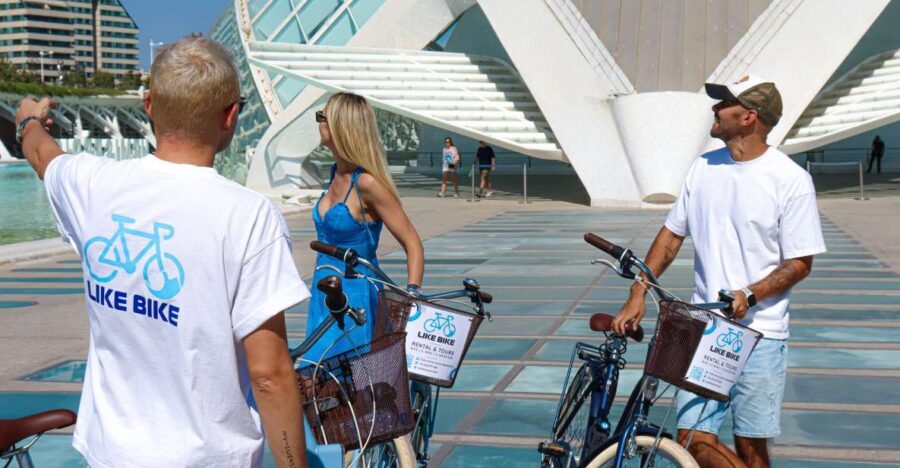
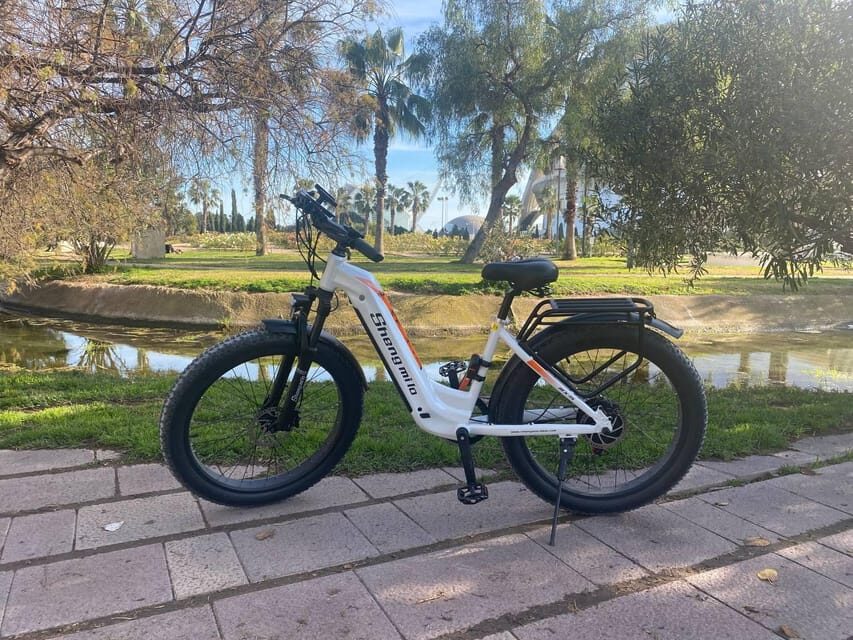
This tour includes an option to ride either a regular bike or an e-bike. Valencia’s streets are mostly flat, so either choice can work well. One practical note: the ride can include a mix of e-bikes and regular bikes, so you may feel slightly uneven if your pace expectation doesn’t match the group’s momentum.
If you’re comfortable on a bike and you like a steady rhythm, a regular bike can feel more natural. If you’d rather reduce effort—especially for longer days after travel—an e-bike can help you keep the experience relaxed instead of tiring.
Bike handling matters too. Some riders find it tricky getting on and off heavier bikes, so if you’re newer to cycling, ask for the right setup early and take a moment to find comfort before rolling.
Price and Value: Is $32.67 a Good Deal?
At $32.67 per person for about 2.5 hours, the value comes from efficiency. You get a guided route that covers a lot of major landmarks across multiple parts of Valencia without needing to plan transit between them. The small group size also helps because it keeps the experience more personal and easier to manage.
The main value trade-off is tickets. Several big attractions on the route have admission not included—things like Hemisferic, Oceanogràfic, and the Science Museum (Príncipe Felipe), plus La Lonja de la Seda and Plaza de Toro. You’re still seeing the sites, but you’ll decide later which ones are worth paying extra to enter.
If you treat this as a smart orientation ride and then pick one or two inside attractions for a longer visit later, you’ll likely feel the money was well spent.
Who This Tour Fits Best (and Who Might Want Something Else)
This is a strong match if you want:
- an easy introduction to Valencia in one afternoon or morning
- a mix of Old Town architecture plus modern City of Arts and Sciences design
- a guided way to understand what you’re looking at without reading a guidebook for hours
It may be less ideal if you hate moving constantly. The tour is structured around multiple stops, so it won’t feel like a slow stroll. It also isn’t built around deep time inside major venues; entry tickets (when offered separately) are your decision after the tour.
If you prefer a quieter bike day, the Turia Garden stretch is your reward, but the earlier Old Town squares and city-center areas can be more pedestrian-heavy. A comfortable pace matters.
Quick Practical Tips to Get the Most
- Bring water in your day bag even if the schedule includes pauses, just in case you prefer flexibility.
- If you want interior visits at the ticketed sights, look at your trip timing and choose one or two—don’t try to cram them all.
- Don’t over-plan your day right after. This tour is efficient, but you’ll likely want time for lunch or a follow-up walk once you’re back at the meeting point.
Should You Book the Valencia Top 25 Highlights Guided Bike Tour?
I’d book this if you’re doing Valencia for the first time or you want a fast, friendly way to see both medieval and modern Valencia. The route makes sense: start with neighborhoods that feel real, then move toward the grand squares and cathedral area, and finish with the science-and-design district.
Book it if you value guided context, a manageable group size, and an easy cycling profile in a city built for walking. Skip it (or pair it with something more museum-time focused) if you want a ticket-by-ticket day where you go inside every attraction.
If you want to get your bearings fast, pick a morning or early afternoon slot, and reserve ahead—this one tends to fill.
FAQ
How long is the Valencia Top 25 Highlights Guided Bike Tour?
The tour runs for about 2 hours 30 minutes.
How much does the tour cost?
The price is listed as $32.67 per person.
Where does the tour start?
The meeting point is C. de Puerto Rico, 23, L’Eixample, 46004 València, Spain.
Is the tour in English?
Yes, the tour is offered in English.
What is the group size?
The tour has a maximum of 14 travelers.
Are separate tickets needed for some stops?
Yes. Admission is not included for several sites on the route, including Plaza de Toro, La Lonja de la Seda, Hemisferic, Oceanogràfic, and the Museo de las Ciencias Príncipe Felipe.
Is the tour flat and easy to ride?
The ride is described as suitable for most people, and the route includes long, flat stretches, including the Turia Garden area.
What is the maximum weight limit?
The maximum weight limit is 120 kg.
What happens if the weather is bad?
The experience requires good weather. If it’s canceled due to poor weather, you’ll be offered a different date or a full refund.
Is there a mobile ticket?
Yes, the tour uses a mobile ticket, and you’ll receive confirmation at the time of booking.