REVIEW · VALENCIA
Valencia: Tuk Tuk Historical Tour
Book on Viator →Operated by Tuk Turia · Bookable on Viator
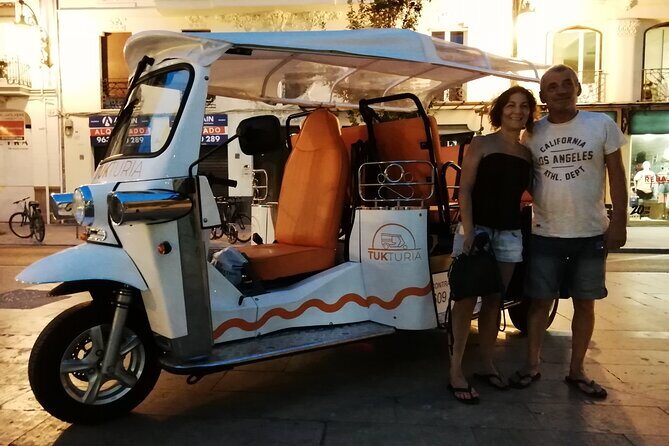
Short ride, big landmarks. This Valencia Tuk Tuk Historical Tour is a smart way to get your bearings quickly, with photo-stop views and city stories flowing as you roll through central streets. I especially liked the mix of major monuments and local neighborhoods, and the guide energy that keeps the ride from feeling like a checklist. The Tuk Tuk itself is a comfortable, low-effort way to cover ground in about an hour.
Two things I really liked were the fast access to famous sights like the Serrano Towers and Valencia Cathedral area, and how the guide (Lucas) can shape the tour around how you want it pitched. One drawback to consider: if traffic noise is heavy, it can get harder to hear every detail through the ride.
You’ll also be glad this is a private experience for your group, so you’re not squeezing your photos between strangers. That said, it’s still a city ride with street views, not a slow walking tour with long stops—so build your expectations for quick snapshots and short looks.
In This Review
- Key Highlights Worth Knowing
- Getting Oriented in 60 Minutes on Valencia’s Tuk-Tuk
- Serrano Towers and the Cathedral-Axis Views You’ll Remember
- Dos Aguas to the Bullring: More Than Pretty Facades
- Central Market and La Lonja Area: Best Use of Your Short Time
- Quart Towers and the Carmen Neighborhood Streets
- IVAM and the Modern-Art Angle You Might Not Expect
- Plaza de la Mare de Déu: Cathedral, Micalet, Túria Fountain, Generalitat
- Almudín and the Market Loop: How the City Actually Flows
- Price and Logistics That Matter (Without Making It Complicated)
- Who This Tuk-Tuk Tour Fits Best
- Should You Book This Valencia Tuk-Tuk Historical Tour?
- FAQ
- How long is the Tuk Tuk Historical Tour in Valencia?
- Is hotel pickup available, and when should I be ready?
- What language is the tour offered in?
- Is this tour private?
- Do I need a printed ticket?
- Are service animals allowed?
Key Highlights Worth Knowing
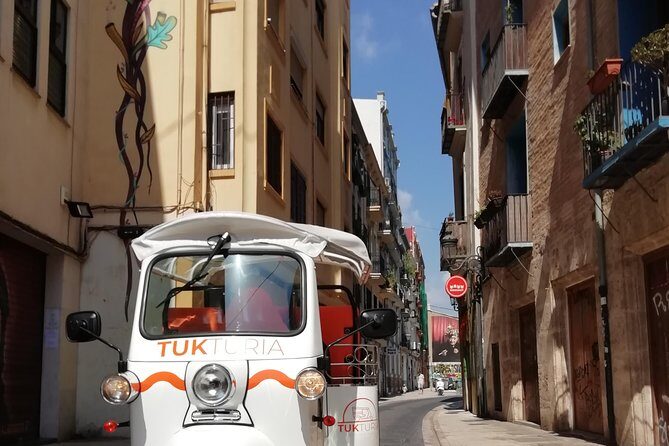
- Pickup in downtown Valencia: hotels and tourist apartments are picked up about 5 minutes before the start.
- A tight one-hour route: you’ll see major landmarks without burning a whole day on transit or long walks.
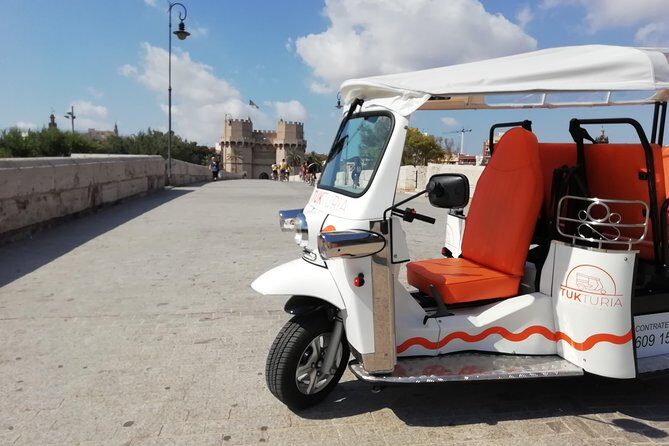
- Strong monument coverage: Serrano Towers, Santa Catalina/Cathedral area, Quart Towers, and central plazas.
- Market-and-art stops: close to Mercat Central, La Lonja views, and the Valencian Institute of Modern Art.
- Photo-friendly timing: several stops are listed as short (around 5 minutes) and focused on the best views.
- Lucas as a key reason to go: guides in this style tend to be energetic, flexible, and helpful.
Getting Oriented in 60 Minutes on Valencia’s Tuk-Tuk
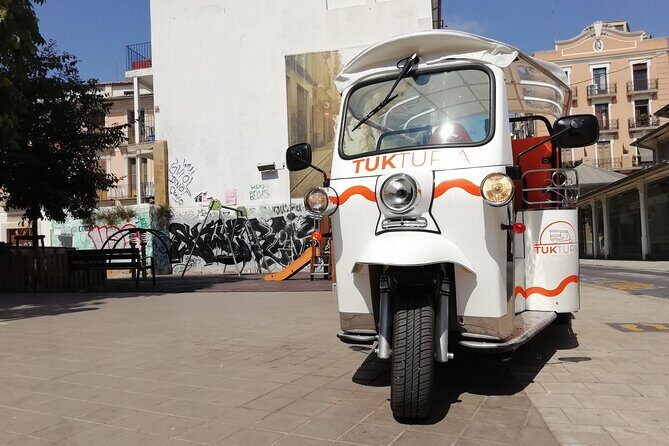
Valencia can feel big when you first arrive, even though the sights you want are concentrated. This tuk-tuk format is built for orientation: you move steadily through the center while you get a guided tour of what matters where. In practice, that means you leave with a mental map of the city, plus a list of places you’ll want to revisit later on your own.
The ride also has a nice rhythm. You’re not stuck waiting around at a single stop for ages, and you’re not racing from one place to another either. Most of the tour is built around quick view points—enough time to understand what you’re looking at and grab photos—then you’re off again.
If you’re traveling with someone who moves slower, this style can work well because the “walking” is mainly optional. One guide interaction I saw described Lucas as very helpful for a wheelchair user, which is a good sign that the company thinks about needs as they arise. Still, since you’ll be on a vehicle in public streets, consider your comfort with getting on and off in curbside areas.
You can also read our reviews of more historical tours in Valencia



Serrano Towers and the Cathedral-Axis Views You’ll Remember
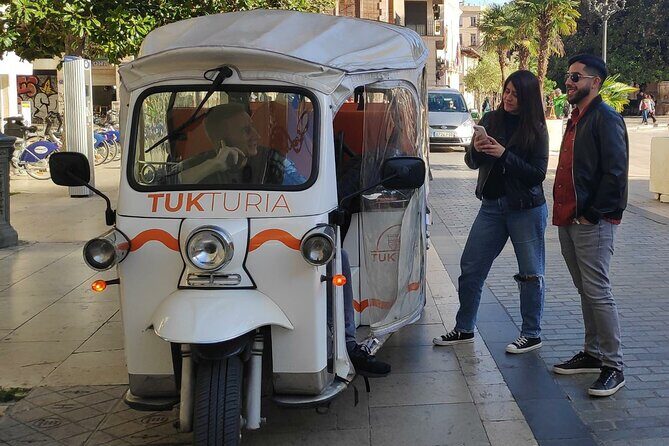
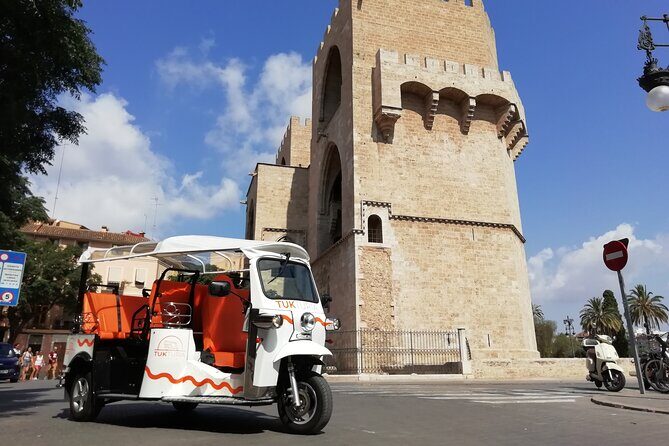
The tour starts with you getting eyes on the skyline and the historic spine of the old center. The Serrano Towers viewpoint is a classic “you’re really in the old city now” moment. Even if you don’t know much about fortifications, the towers give instant context for how Valencia defended itself and grew beyond its walls.
From there, you shift toward the religious core with views of the Church of Santa Catalina and the Cathedral of Valencia. What I like about this approach is that the guide isn’t just naming buildings. You get a guided way to look at the relationships between places: where one major landmark sits compared to another, and what that says about old Valencia’s layout.
This is also the part of the ride where the timing matters. You’re not going inside on a long schedule here (at least not implied by the stop format); instead, you’re set up to see the architectural shapes and take in how the streets funnel your view toward the cathedral area. If you’re the kind of traveler who wants to understand before you enter, this is a smart order.
Dos Aguas to the Bullring: More Than Pretty Facades
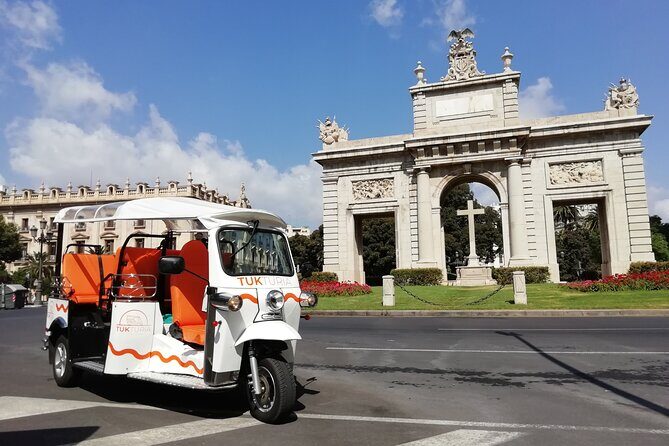
Next comes a set of views that connect neighborhoods to institutions and traditions. You’ll get a look at the Marquesate of Dos Aguas, which is tied to the current González Martí National Museum of Ceramics and Sumptuary Arts. Even from outside, you’ll get the “why it matters” angle, because this stop links art, objects, and daily life to a place you can actually see.
Then you roll past a different kind of landmark: the bullfighting ring. This stop adds balance because not every major historical site is religious or museum-based. It reminds you that Valencia’s public life historically included spectacles and civic spaces, not only churches and palaces. You don’t have to agree with everything you learn about culture to appreciate the context—this is more about understanding how a city functioned than endorsing any one tradition.
The benefit of these mixed stops is that your brain stops treating “old Valencia” as a single theme. You’re seeing how wealth, arts, and public entertainment each shaped the cityscape.
Central Market and La Lonja Area: Best Use of Your Short Time
One of the most practical parts of the route is the segment near Mercat Central de Valencia and the Lonja (La Lonja). This is the sweet spot for travelers who want both architecture and atmosphere, without spending hours searching for streets.
The tour keeps you moving, but you’re positioned close enough to understand why these areas are so important. Mercat Central is a visual anchor, and the nearby Lonja area gives you a second reference point so you can connect the dots between trade, city growth, and the kind of wealth that funded the built environment.
There’s also a practical edge here: this is a part of Valencia where it’s easy to get turned around on your own the first time. With the tuk-tuk route, you get a guided path that points out the most useful angles. You’ll come away with better photo targets and less walking detour hunting.
If you want to continue on your own later, this stop helps you figure out what to prioritize. You can use the guide’s orientation to decide whether you want more time with the market spaces, the Lonja area, or the streets around them.
Quart Towers and the Carmen Neighborhood Streets
After the market area, the tour brings you views of the Quart Towers, another major gate structure that helps explain Valencia’s historic defensive network. These viewpoints are useful because they show how the city boundaries weren’t just abstract ideas. They were physical markers that shaped movement and where important streets led.
Then you head through the Carmen neighborhood, crossing main streets with temples and museums along the way. This section is where the tour starts to feel like real city life instead of only monuments. The guide’s job here is to help you read the street: what changes as you move deeper into the neighborhood, and why certain buildings cluster the way they do.
One thing I value in this kind of tour is that you don’t just see objects. You see context. The Carmen route gives you the sense of “this is how people actually move through the city,” which is what makes it easier to return later and explore on foot.





IVAM and the Modern-Art Angle You Might Not Expect
You also pass by the Valencian Institute of Modern Art (IVAM). For many visitors, Valencia is first associated with older churches, plazas, and markets. Adding IVAM changes the story. It shows you that Valencia’s culture isn’t stuck in the past—it’s still actively creating and presenting new work.
Even if you don’t go inside (the tour is a ride-and-view style), it’s a helpful prompt. It tells you: there’s another Valencia happening, and it’s not an afterthought. If you enjoy museums, this kind of stop can steer you toward a smart follow-up decision later that day or on your next visit.
Plaza de la Mare de Déu: Cathedral, Micalet, Túria Fountain, Generalitat
This is the big plaza moment. The tour shifts to Placa de la Mare de Deu, a central stage where multiple landmarks sit close enough to make it feel like a city theater set. You’ll see the Royal Basilica, a key entry feature called the Door of the Apostles, and the Micalet.
The best part of stopping here on a tuk-tuk is that you can take in the whole “stack” of landmarks without trekking between them. The ride also frames the Túria Fountain and the Palace of the Generalitat so you understand the square as more than just a pretty place to stand.
Two practical tips for this phase:
- Plan to pause for photos in the moments the guide points out. Your time here is short.
- If you want to return later, note the angles you like. That plaza rewards specific viewpoints, and the ride gives you a map for finding them.
There’s also a nearby stop related to the Almudín building and its square, which keeps the momentum going from cathedral-scale grandeur to the river-canal cultural identity Valencia is known for.
Almudín and the Market Loop: How the City Actually Flows
The final part of the ride gives you views around the Almudín area and then a route that loops by the market. This matters because it’s not just about the famous monuments. It’s about seeing how the city connects: plazas to commerce, civic space to street life.
That loop can help you understand why Valencia feels organized even when you’re surrounded by complexity. You get a “route logic” that makes self-guided exploring less stressful later. Once you’ve been shown the connections, you can walk the next day and feel like you already know where you’re going.
Price and Logistics That Matter (Without Making It Complicated)
The price is $30.12 per person for about one hour. In tour-world math, that’s not trying to squeeze you with a half-day commitment, which is part of why it’s good value. You’re paying for a concentrated orientation ride plus guided context at several high-interest photo stops.
Also, booking availability tends to be solid but not infinite; one signal you should take seriously is that this kind of tour is often reserved about a month ahead. If you’re in town during peak periods, booking earlier helps you lock in a time that doesn’t collide with your dinner plan.
Logistics are straightforward:
- You can have hotel pickup in the downtown area, about 5 minutes before the tour starts.
- You agree to be ready 10 minutes before the start time.
- The meeting point is on C/ del Pla de la Saïdia, 5, La Saïdia, 46009 València if pickup isn’t used or doesn’t apply.
You’ll also get a mobile ticket, and the tour is offered in English. It’s a private tour/activity, meaning only your group participates, which is a quiet but meaningful quality upgrade if you dislike crowds.
One small practical consideration from experience with this style: hearing can be tricky. Traffic noise can compete with the guide’s voice, so if you want to catch every detail, hold close to the guide when moving between stops and keep expectations realistic if the street noise is loud.
Who This Tuk-Tuk Tour Fits Best
This is a great match if you:
- Want a quick, guided orientation rather than a long walking day.
- Like seeing a lot of landmarks with minimal effort.
- Enjoy a guide who reacts to what you want. Lucas in particular is described as someone who asks how you want the tour pitched and then delivers accordingly.
- Would rather spend time choosing what to do next after the tour, instead of trying to plan perfectly on day one.
It’s also a good option for first-time visitors to Valencia who want to get a feel for the old center and the city’s main cultural landmarks quickly.
Should You Book This Valencia Tuk-Tuk Historical Tour?
I’d book it if you’re trying to solve the first-day problem: where to go, what to see, and how to structure the rest of your visit. The route hits a strong spread of famous viewpoints (Serrano Towers, cathedral area, market zone, main plaza) and adds useful balance with things like the Dos Aguas museum connection, the bullring view, and IVAM.
Skip it or think twice if you’re the type who hates short stops and prefers long on-foot time in a single area. This tour is built for snapshots and guidance, not extended exploration.
If your schedule is tight, the one-hour timing is forgiving, and the ability to cancel up to 24 hours for a full refund (if plans change) makes it a low-risk try.
If you do book, do one smart thing: decide in advance what you want more of—architecture, markets, or city streets. Based on Lucas’s approach, that preference can shape the ride in a way that makes the hour feel even more personal.
FAQ
How long is the Tuk Tuk Historical Tour in Valencia?
The tour lasts about 1 hour.
Is hotel pickup available, and when should I be ready?
Pickup is offered in the downtown area from hotels and tourist apartments. You’re picked up about 5 minutes before the start, and you agree to be ready 10 minutes before.
What language is the tour offered in?
The tour is offered in English.
Is this tour private?
Yes. Only your group participates, so it’s a private tour/activity.
Do I need a printed ticket?
No. The experience uses a mobile ticket.
Are service animals allowed?
Yes. Service animals are allowed.