REVIEW · VALENCIA
Vegetable Paella cooking class, tapas and Ruzafa market visit
Book on Viator →Operated by My First Paella · Bookable on Viator
Paella can be plant-based and still satisfying. This Valencia class ties together fresh market shopping in Ruzafa with a hands-on vegetable/vegan paella cooking session, plus tapas, sangría, and a sweet ending.
I really like the small-group chef attention. The pace is interactive, and the teaching style gets called out again and again, with names like Guillermo and Cristina showing up in the mix. One thing to plan around: the Ruzafa market isn’t visited on Sundays because it’s closed, so expect a different flow that day.
In This Review
- Key things worth knowing before you book
- Valencia’s veggie paella day: market first, then the stove
- The meeting point at Parroquia de San Valero: get there early
- Ruzafa Market: shopping for paella ingredients like a local
- Tapas and sangría workshop: the warm-up before cooking
- Vegetable and vegan paella: hands-on technique you can repeat
- What you eat after the paella: tomato salad, wine, sweets, coffee
- Price and value: why $78.44 can make sense here
- Who should book this, and who might hesitate
- Tips to get the most out of your paella day
- Should you book this vegetarian paella class?
- FAQ
- How long is the paella cooking class in Valencia?
- What time does the experience start?
- Is the paella vegetarian or vegan?
- Do you visit the Ruzafa market?
- What language is the class offered in?
- What’s included in the price?
- What’s the cancellation policy?
Key things worth knowing before you book
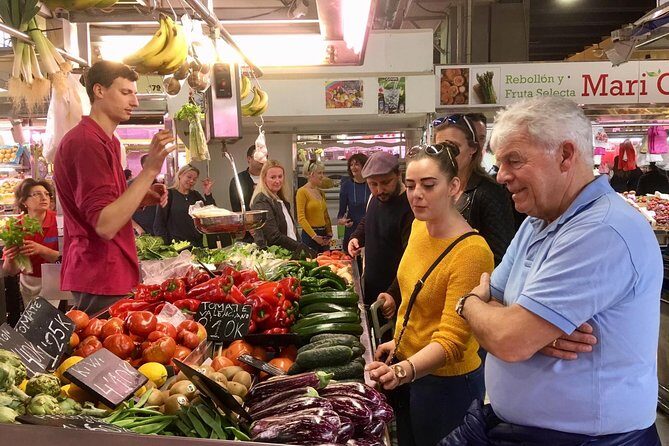
- Ruzafa market + ingredient shopping: you buy what you’ll cook, instead of starting with a pre-prepped mystery box.
- Small class size (up to 20, with extra care in a max-18 cooking group): you get real help while chopping, seasoning, and cooking.
- Vegan paella as the main event: you’re not learning a concept—you’re making an actual plant-based paella to eat.
- Sangría workshop plus tapas up front: you start with drinks and small plates before the stove time.
- A full Valencian plate, not just paella: tomato salad, seasonal fruit, sponge cake, sweet wine, coffee.
Valencia’s veggie paella day: market first, then the stove
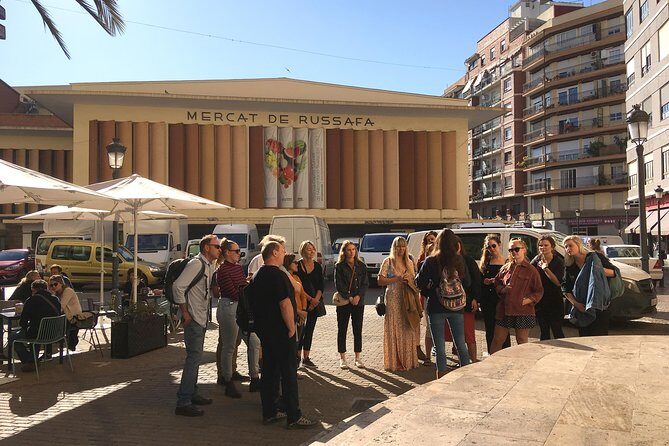
If you want a food experience that feels like Valencia—without hiding behind a restaurant table—this works well. You begin at the Parroquia de San Valero (Carrer del Pare Perera, 6), then head to the Ruzafa market to select the produce you’ll use. That small shift matters: paella tastes different when the ingredients are fresh and chosen with intention, not grabbed from a supermarket shelf.
The whole outing runs about 3 hours 30 minutes and starts at 11:00 am. The group stays small (max 20), and the class is designed for a conversational style where you’re actively making the food, not just watching someone else do it.
You’ll also see strong emphasis on mixing cooking with context: during the shopping part, you’ll hear origins and Valencian customs tied to paella and the local food culture. That makes the final meal land harder, because you understand what you’re eating—not only how to make it.
You can also read our reviews of more shopping tours in Valencia
The meeting point at Parroquia de San Valero: get there early
You meet at Parroquia de San Valero in L’Eixample, not far from where a lot of visitors spend their day. It’s a practical starting spot: it’s easy to find on foot, and it helps you avoid the stress of “where’s the kitchen van?” situations.
Plan to arrive a few minutes early so you can settle in before the group heads out. The experience uses a mobile ticket, and you’ll want your confirmation ready on your phone.
If you’re traveling with kids, note this one specific condition: children must be accompanied by an adult. That matters because the schedule includes cooking work and food handling, so you’ll want to plan accordingly.
Ruzafa Market: shopping for paella ingredients like a local
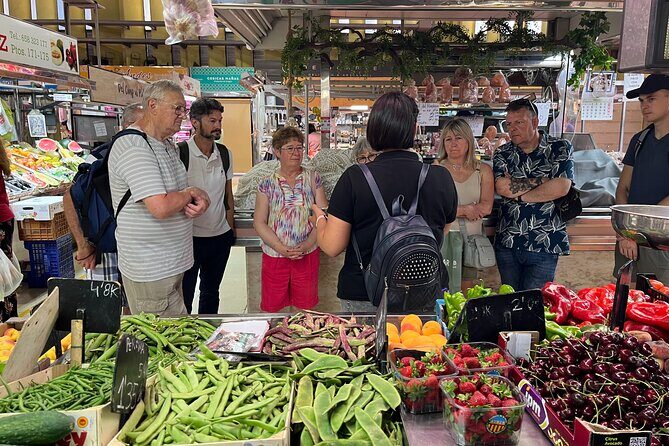
The Ruzafa market stop is the heart of the morning setup. You’ll go together, walk through the stalls, and buy the fresh products you need for a good vegetable paella. This is where you learn the “why” behind the dish: which ingredients make sense for Valencia-style flavor, and how paella fits into local routines and food habits.
What makes this portion valuable is that it’s not treated like a quick photo stop. You’re actually gathering components for the next stage. That gives the market visit a clear purpose, and it helps you connect flavors with ingredients while you cook.
There’s one catch to keep in mind: the market isn’t visited on Sundays (it’s closed). If your travel dates fall on a Sunday, you may not get the same shopping experience. If you really want that market browsing feel, aim for a weekday.
Tapas and sangría workshop: the warm-up before cooking
After shopping, you walk about 8 minutes to the kitchen. Then the chef is waiting with tapas and drinks to settle the group in. This isn’t a “sit quietly and watch” introduction. It’s a full start to the meal: tapas plus sangría workshop, accompanied by beer, water, and soft drinks.
The tapas lineup can include items such as:
- Patatas bravas with sojanesa
- Jamón serrano
- Manchego cheese
- Steamed mussels
- Olives
Even if the main event is vegan/vegetarian paella, this tapas part gives you a broader picture of how Spanish dining works: small plates, shared flavors, and a relaxed pace that usually comes before the main dish.
The sangría workshop part is also useful because it frames the drink as part of the table culture, not just something poured for fun. You’re there to learn and taste in the same moment—exactly the kind of combo that makes the rest of the cooking steps easier to follow.
Vegetable and vegan paella: hands-on technique you can repeat
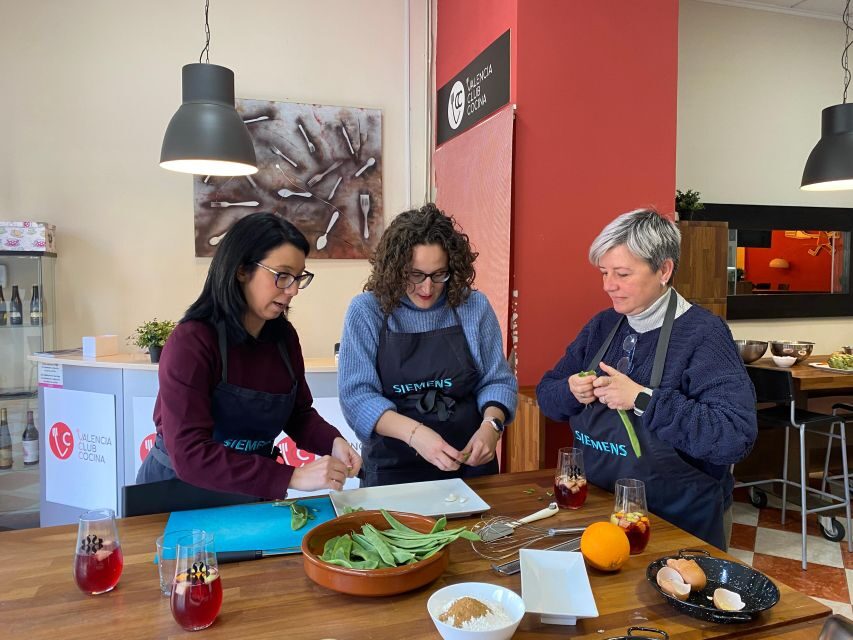
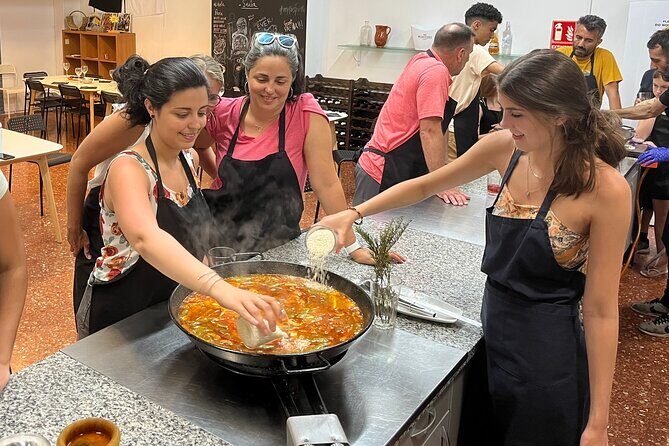
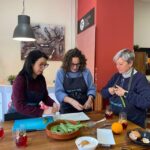
Here’s the best part: the chef walks you through the vegetable paella preparation step by step, and you cook with the group. This is the moment when the whole experience becomes more than a meal—you start building skills.
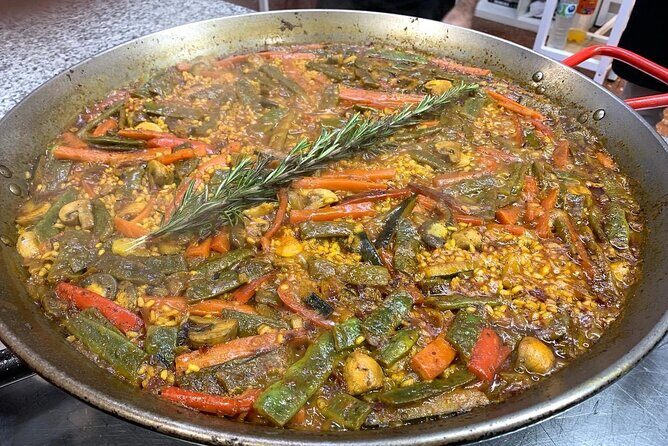
You’ll be making vegan paella and eating it once it’s finished. That’s a big deal if you’re usually intimidated by paella because you think it has to include seafood or meat. In this class, the goal is clearly a plant-based version that still feels like real paella, not a compromise.
You also get a direct link between earlier steps and final flavor. Since you shop for produce first, you can often spot which ingredients carry through into the paella itself. That makes your takeaway practical.
One of the most consistent themes in feedback is that the class feels highly interactive—people get involved, and the hosts keep the energy moving while still being responsive to what individuals want. You can tell they designed it for mixed groups, including families with teens and even younger kids (as long as they’re accompanied by an adult).
You can also read our reviews of more tours and experiences in Valencia


What you eat after the paella: tomato salad, wine, sweets, coffee
Once the paella is ready, you sit down to a full Valencian-style spread. Paella is the centerpiece, but the sides and desserts are what make it feel like a real meal instead of a cooking demo.
You’ll accompany the paella with Valencian tomato salad (and you’ll taste it alongside the vegan paella). There’s also a drinks-and-dessert rhythm built in:
- Valencia wines
- Seasonal fruit
- Typical Valencian sponge cake
- Sweet wine (often called mistela in Spanish settings)
- Coffee
Sample menu details also include dessert components such as seasonal fruit and Valencian cake, followed by sweet wine and coffee. The experience is structured so you don’t leave with just “I made paella once.” You leave with the whole meal sequence as a template for how locals think about timing: drinks before cooking, paella at the center, then sweets and coffee to close the loop.
And because you’re getting to taste what you cooked, you can judge seasoning, texture, and balance right away. That’s how you build confidence for making it again later.
Price and value: why $78.44 can make sense here
At $78.44 per person for about 3.5 hours, this isn’t a bargain-basement cooking class. But you also get more than a basic cooking session.
Your value drivers:
- Market shopping included (with ingredient purchase tied directly to the meal)
- Chef-led instruction with a small group
- Tapas before cooking
- Sangría workshop plus multiple drink types (sangría, beer, water, soft drinks)
- All ingredients and equipment for the paella
- A full sit-down finish: tomato salad, dessert (cake + fruit), mistela, and coffee
If you’ve ever booked a class and realized you mostly paid for watching while someone else cooked, this one aims to be different. The small size and hands-on style matter for the price. You’re paying for time, instruction, and a complete meal flow, not just recipe steps.
Who should book this, and who might hesitate
This is a strong fit if:
- You want a vegetarian/vegan paella experience that still feels like authentic Valencian eating.
- You enjoy food learning that includes ingredient selection (not only stove time).
- You’re traveling with teens or mixed ages. The class format is interactive enough that people tend to stay involved.
It might be less ideal if:
- You’re very sensitive to a schedule that includes drinks and a “social meal” format. There’s a sangría workshop and tapas as part of the experience, so the pace isn’t purely instructional.
- You’re visiting specifically on a Sunday and you care a lot about the market visit. Since the Ruzafa market is closed that day, your experience may be different.
Tips to get the most out of your paella day
A few practical moves will make the day smoother:
- If you’re serious about recreating paella later, pay close attention during the step-by-step cooking section. Ask questions while you’re still at the station—not after you sit down.
- Take a moment at the kitchen start to watch how the chef organizes tasks. The class timing depends on people working together.
- Come hungry. You’ll snack on tapas, then you’ll eat the paella and finish with sweets and coffee.
Should you book this vegetarian paella class?
I’d book it if you want a Valencia food day with real structure: market ingredients, chef instruction, hands-on cooking, then a proper sit-down meal. The small group size and the focus on making a vegan paella you can actually taste are the reasons it feels worth the money.
Skip it only if your top priority is a quiet, no-social, purely classroom cooking experience—or if your dates land on Sunday and the market visit is a dealbreaker for you.
FAQ
How long is the paella cooking class in Valencia?
It lasts about 3 hours 30 minutes.
What time does the experience start?
The start time is 11:00 am.
Is the paella vegetarian or vegan?
The main dish is a vegan paella, and the experience is centered on vegetarian/vegan cooking.
Do you visit the Ruzafa market?
Yes, you visit Mercado de Ruzafa to buy fresh products for the paella. On Sundays, the market isn’t visited because it is closed.
What language is the class offered in?
It is offered in English.
What’s included in the price?
You get tapas, a sangría workshop with wine, beer, soft drinks, and water, plus tomato salad, all ingredients and equipment to cook, dessert, coffee, and mistela.
What’s the cancellation policy?
You can cancel for a full refund with free cancellation up to 24 hours before the start time.